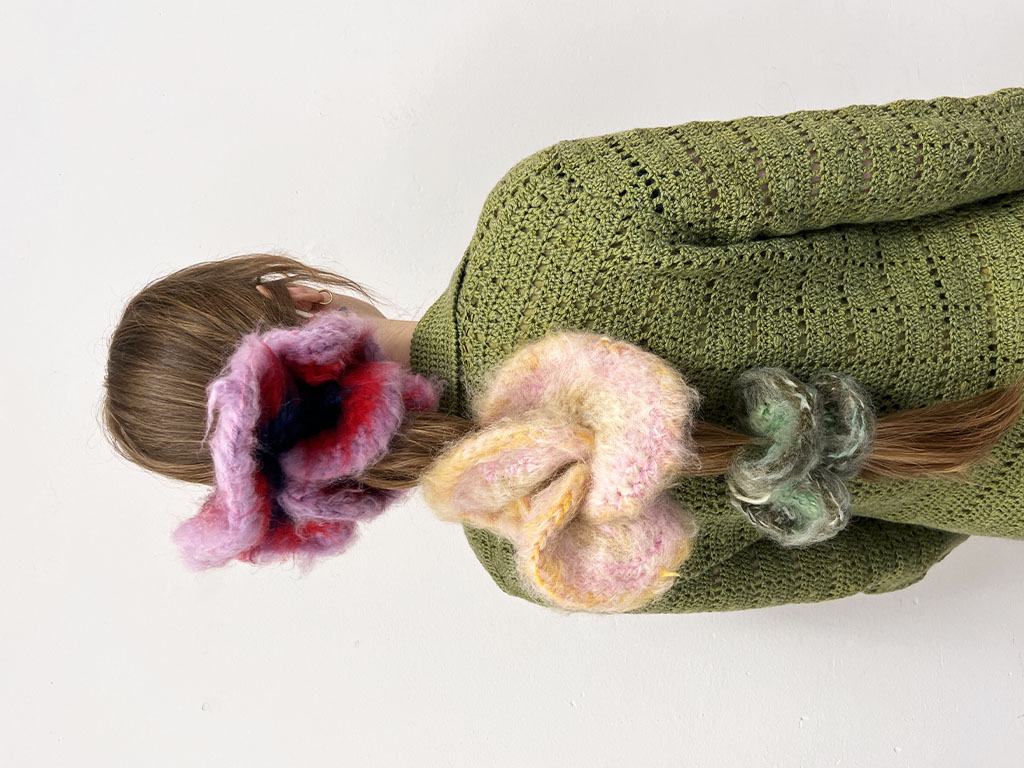
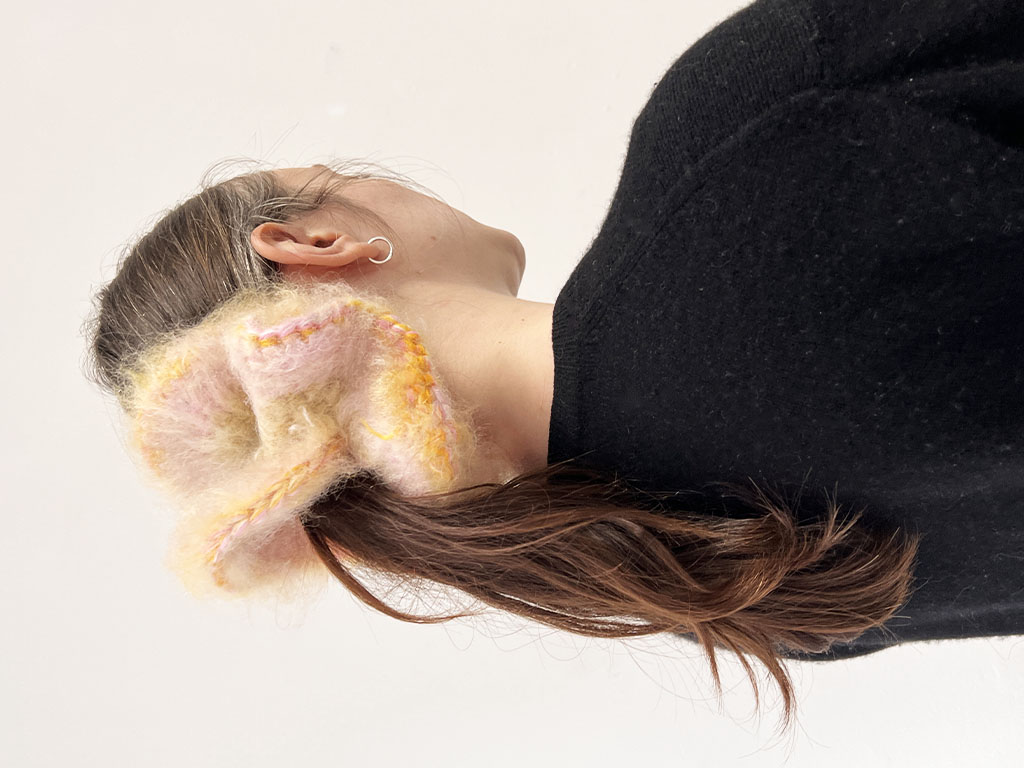
Crochetted Scrunchie - orange
By Jeanne Guillet
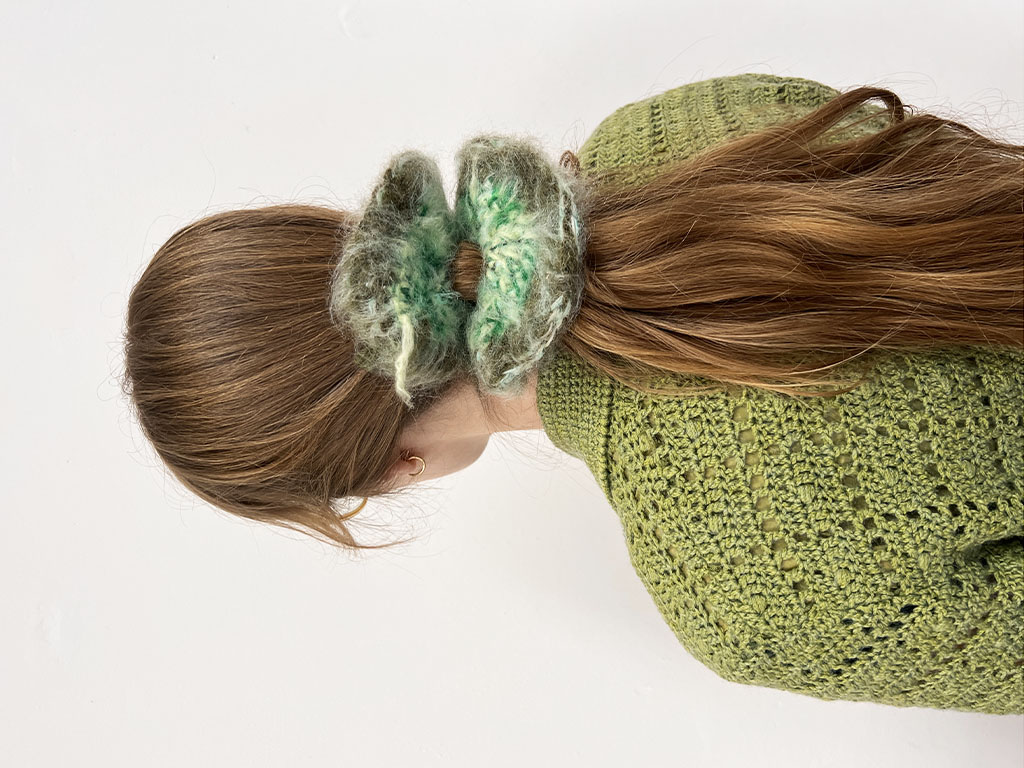
Crochetted Scrunchie - green
By Jeanne Guillet
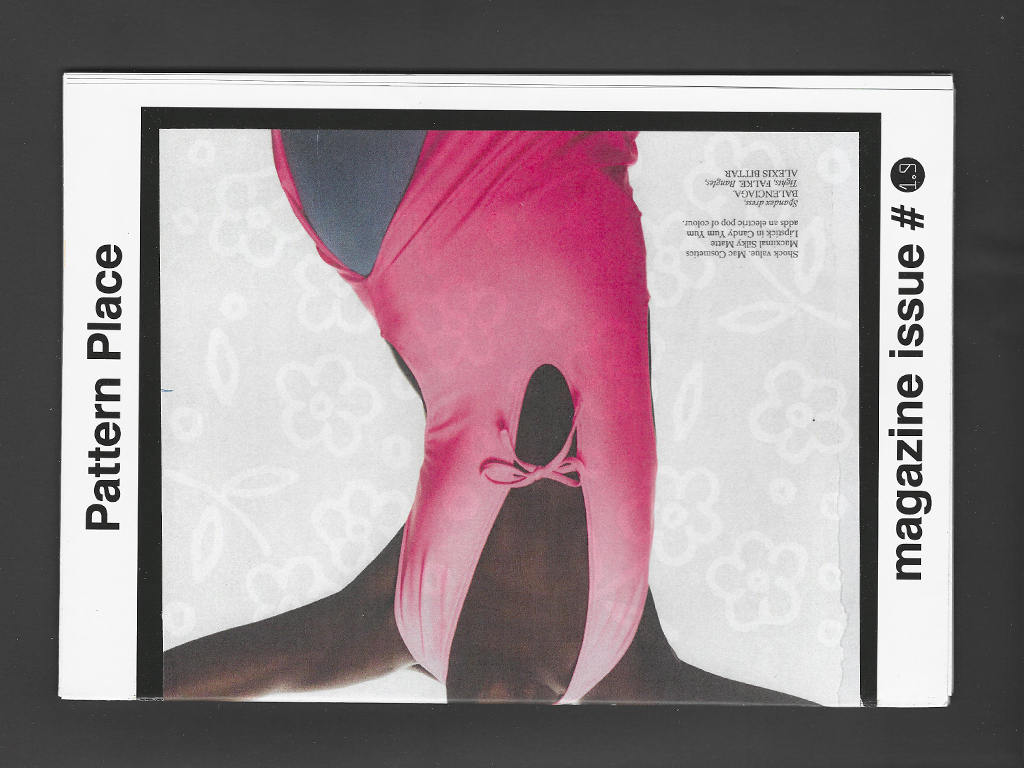
Pattern Place Magazine issue 1.9
By Anouk Beckers, Alessandra Varisco, Femke de Vries, Tanveer Ahmed & Ada de Gooyer
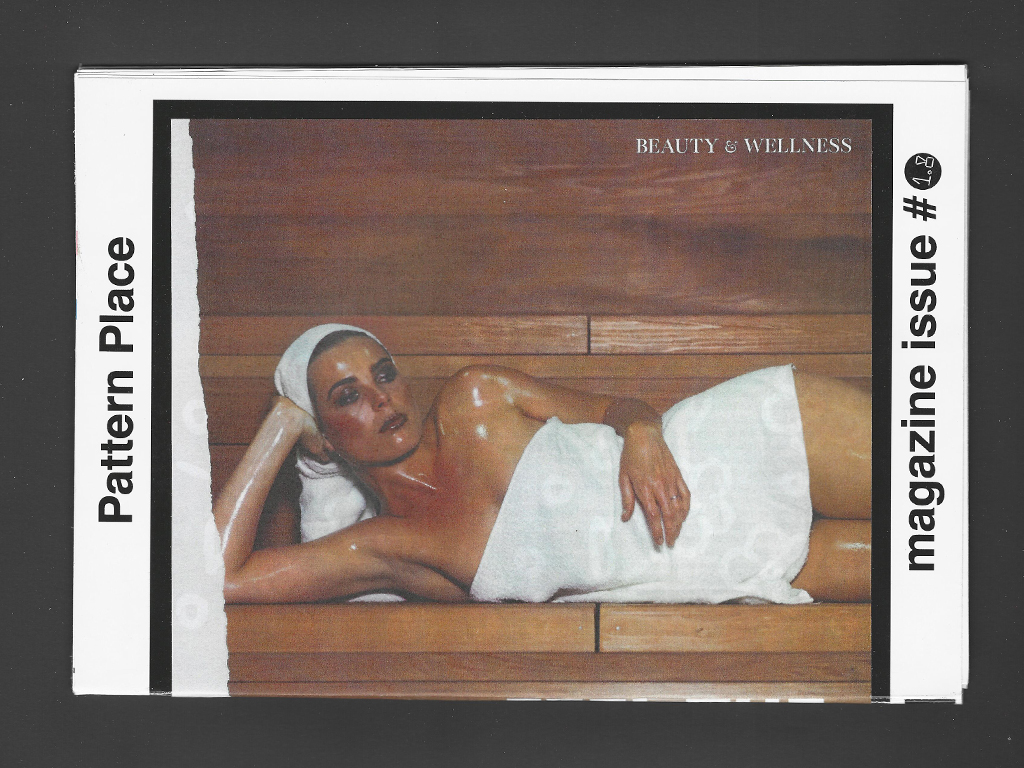
Pattern Place Magazine issue 1.8
By Anouk Beckers, Alessandra Varisco, Femke de Vries, Tanveer Ahmed & Floortje Wijnands
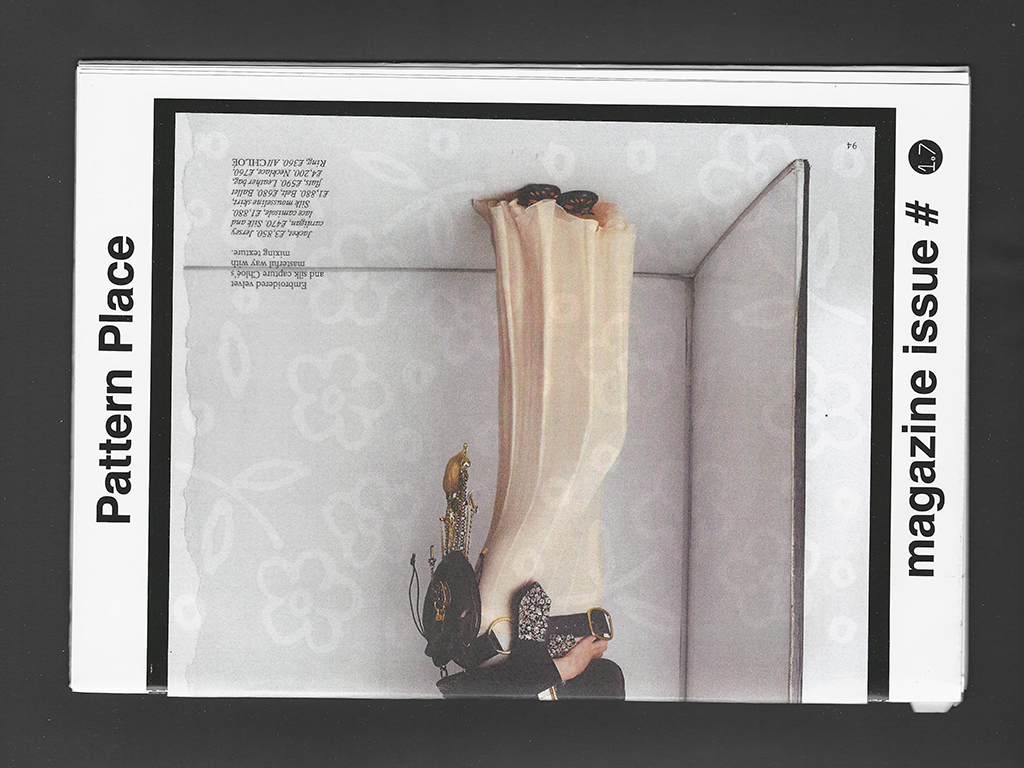
Pattern Place Magazine issue 1.7
By Anouk Beckers, Alessandra Varisco, Femke de Vries, Tanveer Ahmed & Nienke de Scheemaker
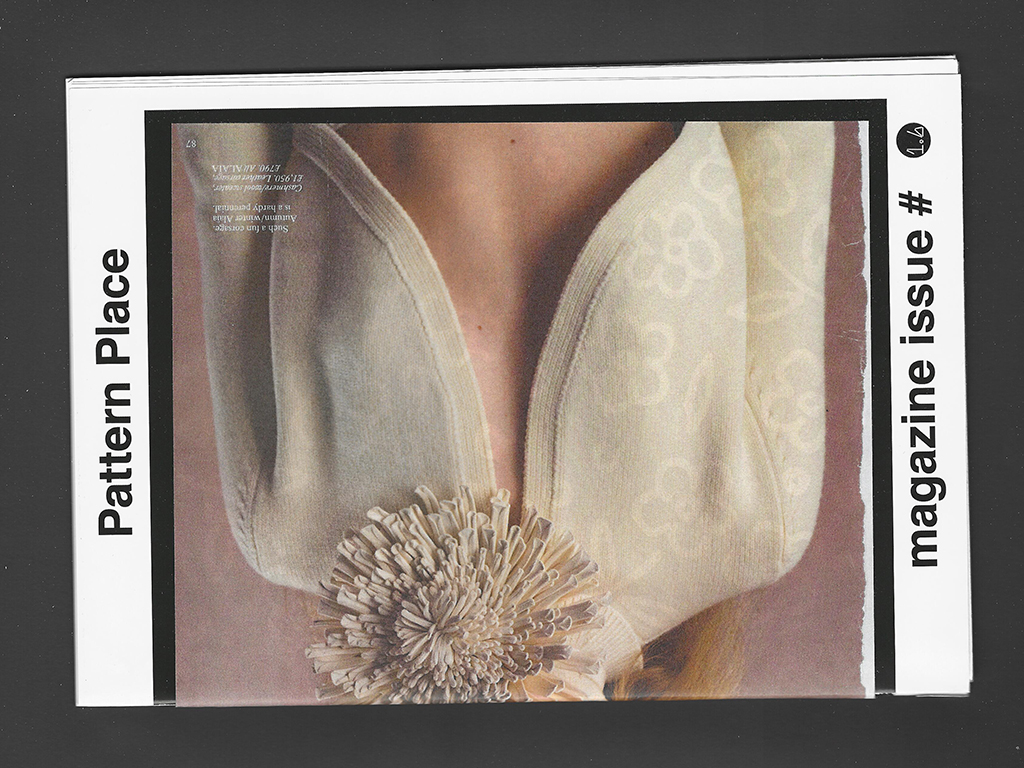
Pattern Place Magazine issue 1.6
By Anouk Beckers, Alessandra Varisco, Femke de Vries, Tanveer Ahmed & Brittany Thorpe
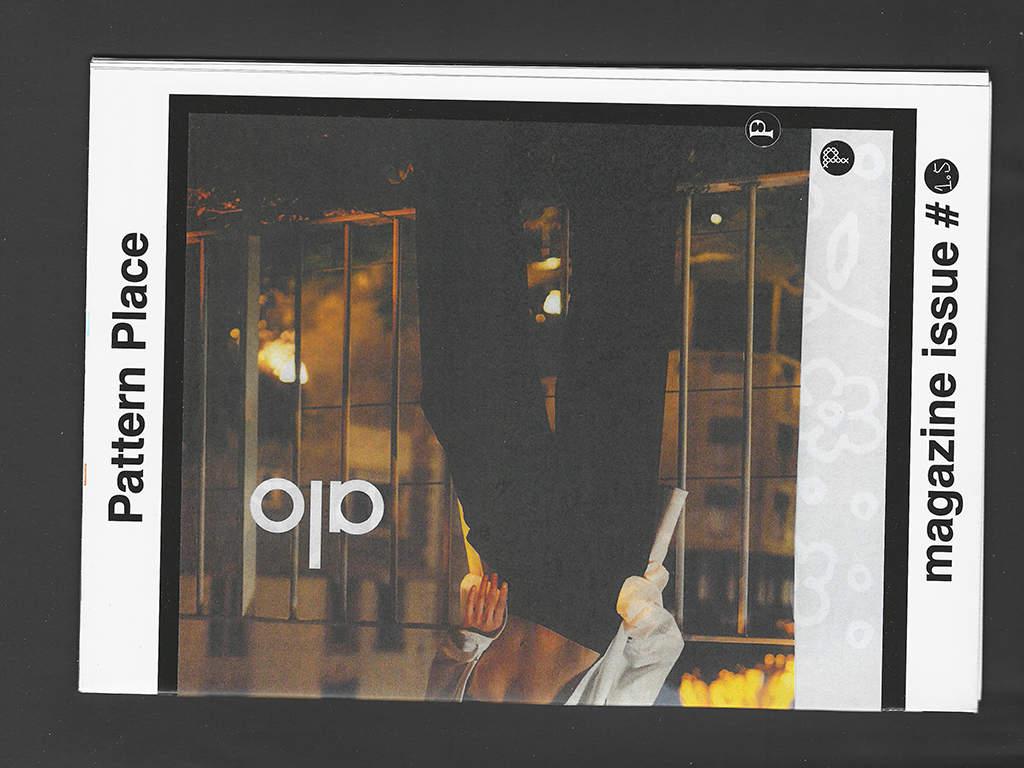
Pattern Place Magazine issue 1.5
By Anouk Beckers, Alessandra Varisco, Femke de Vries, Tanveer Ahmed & Zeina Alvarado
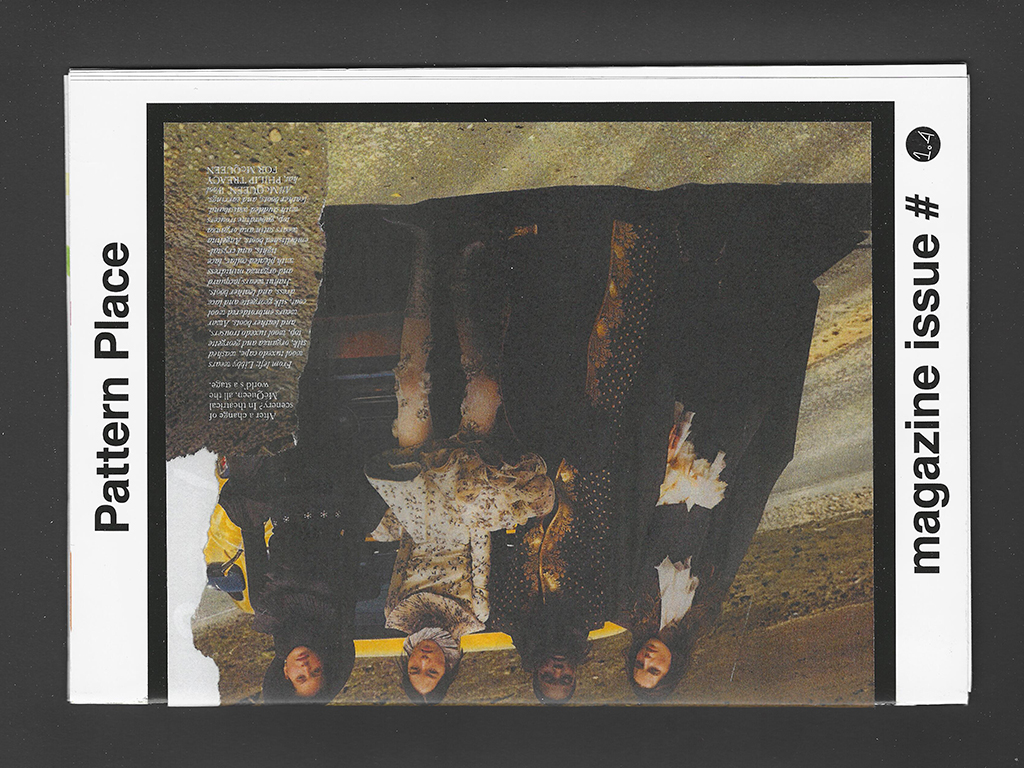
Pattern Place Magazine issue 1.4
By Anouk Beckers, Alessandra Varisco, Femke de Vries, Tanveer Ahmed & Robin Vollenbrock
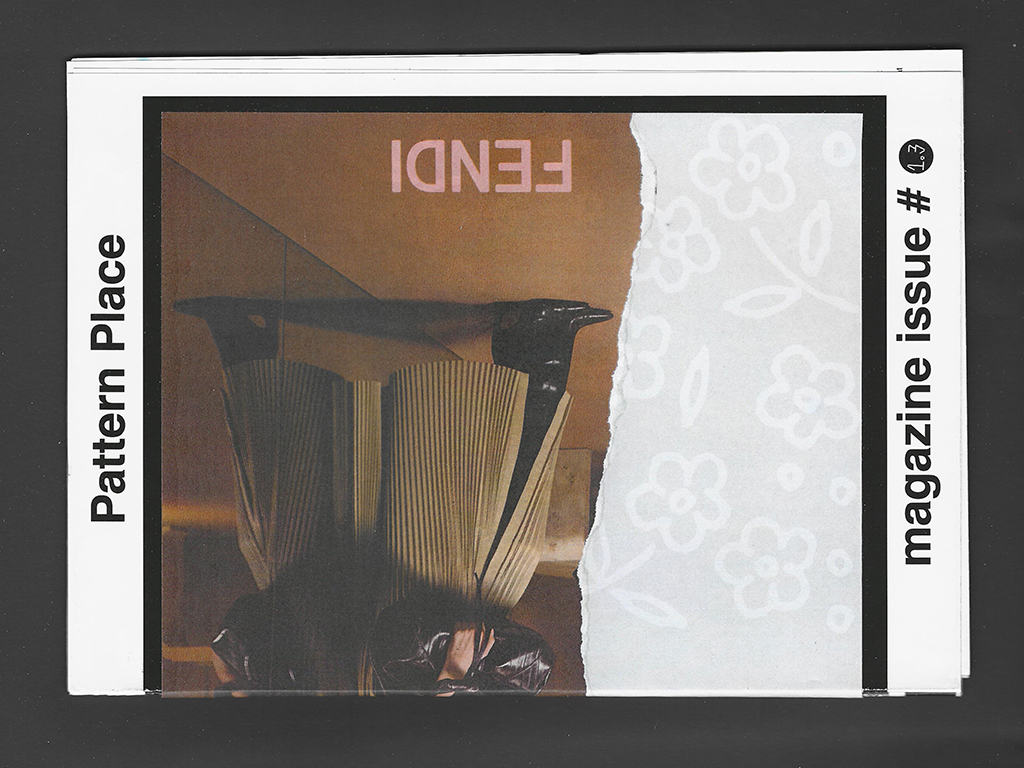
Pattern Place Magazine issue 1.3
By Anouk Beckers, Alessandra Varisco, Femke de Vries, Tanveer Ahmed & Youngeun Sohn
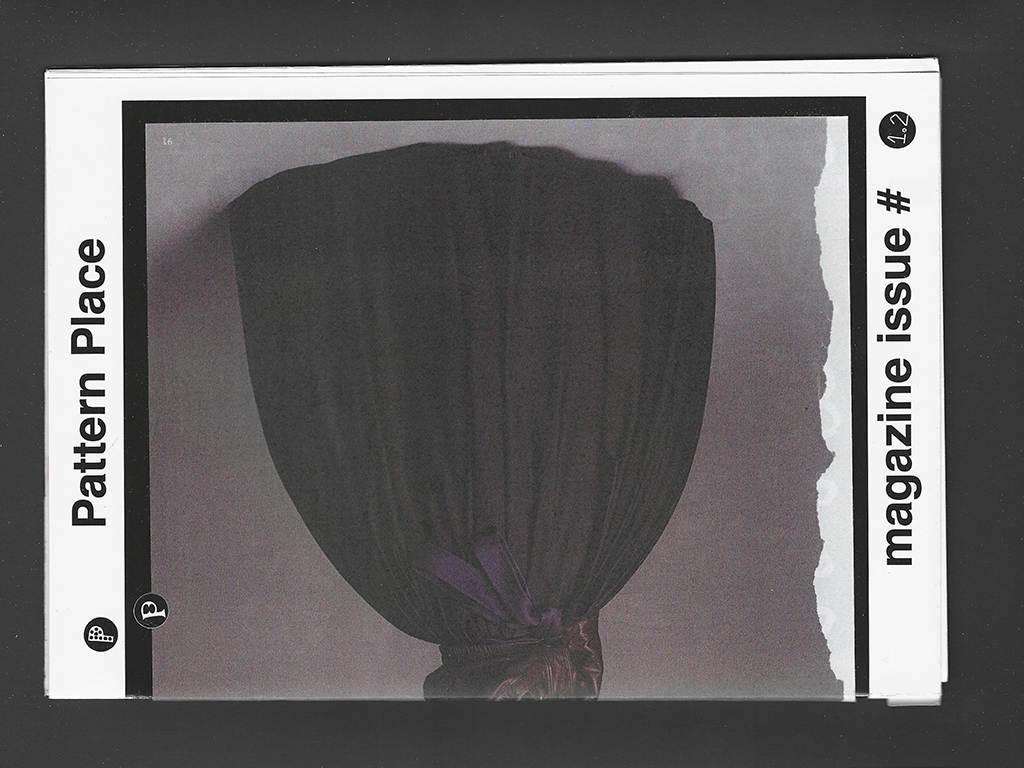
Pattern Place Magazine issue 1.2
By Anouk Beckers, Alessandra Varisco, Femke de Vries, Tanveer Ahmed & Robin Kersten
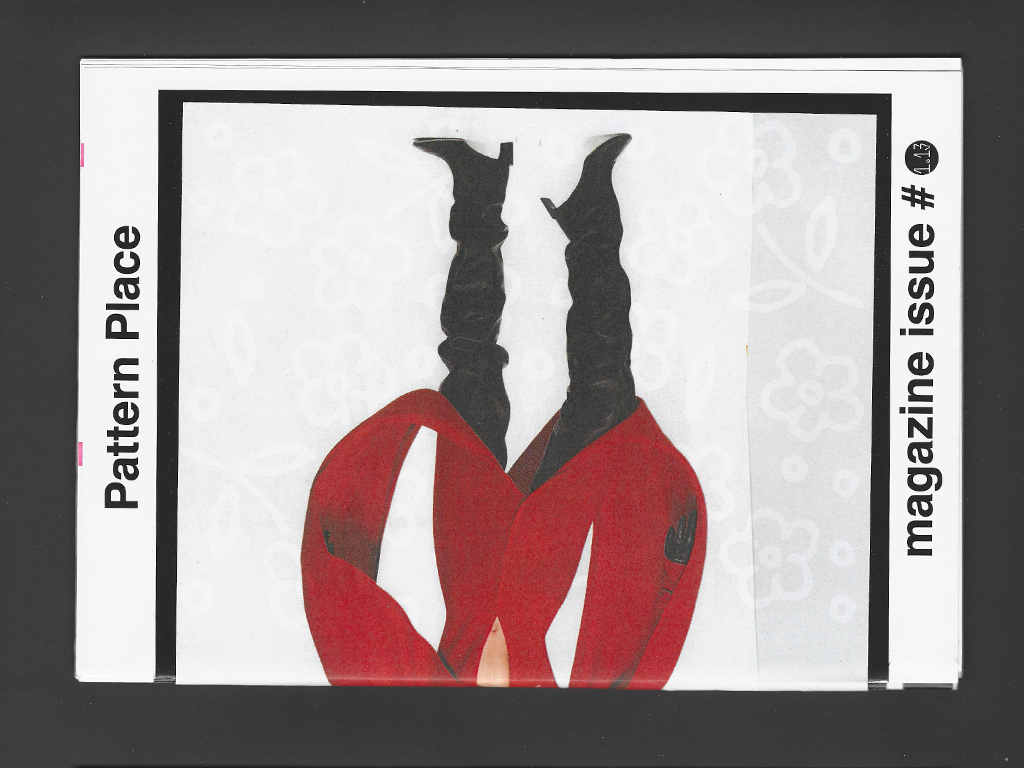
Pattern Place Magazine issue 1.13
By Anouk Beckers, Alessandra Varisco, Femke de Vries, Tanveer Ahmed & Ana Tomimori
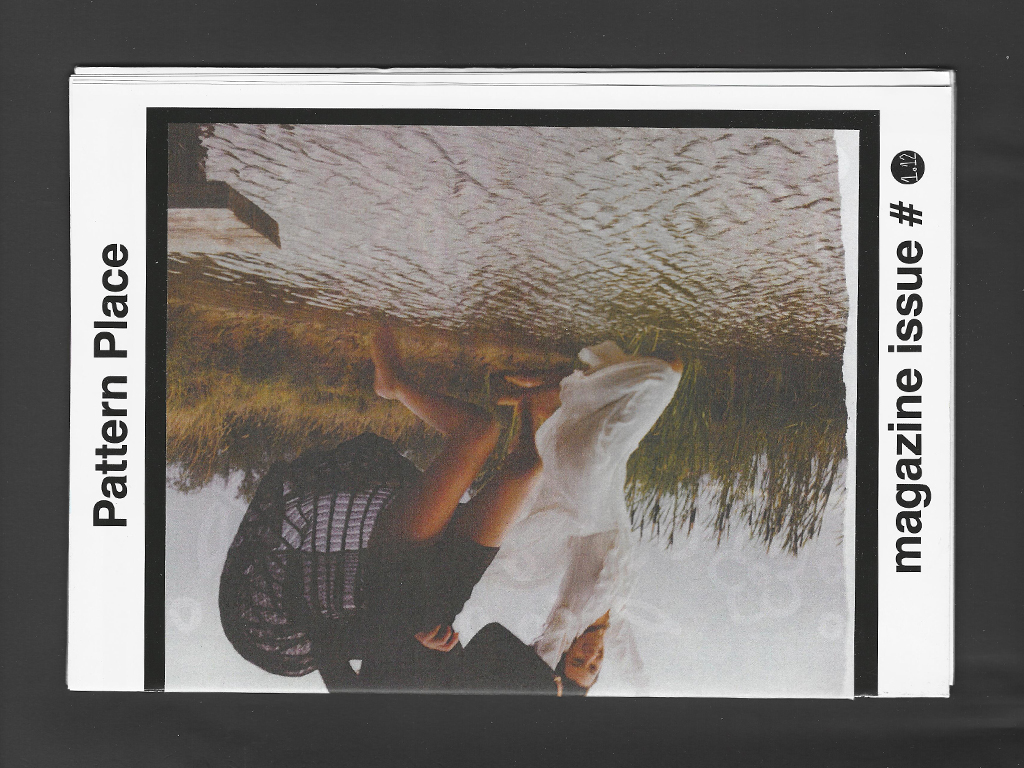
Pattern Place Magazine issue 1.12
By Anouk Beckers, Alessandra Varisco, Femke de Vries, Tanveer Ahmed & Mania Napiórkowska
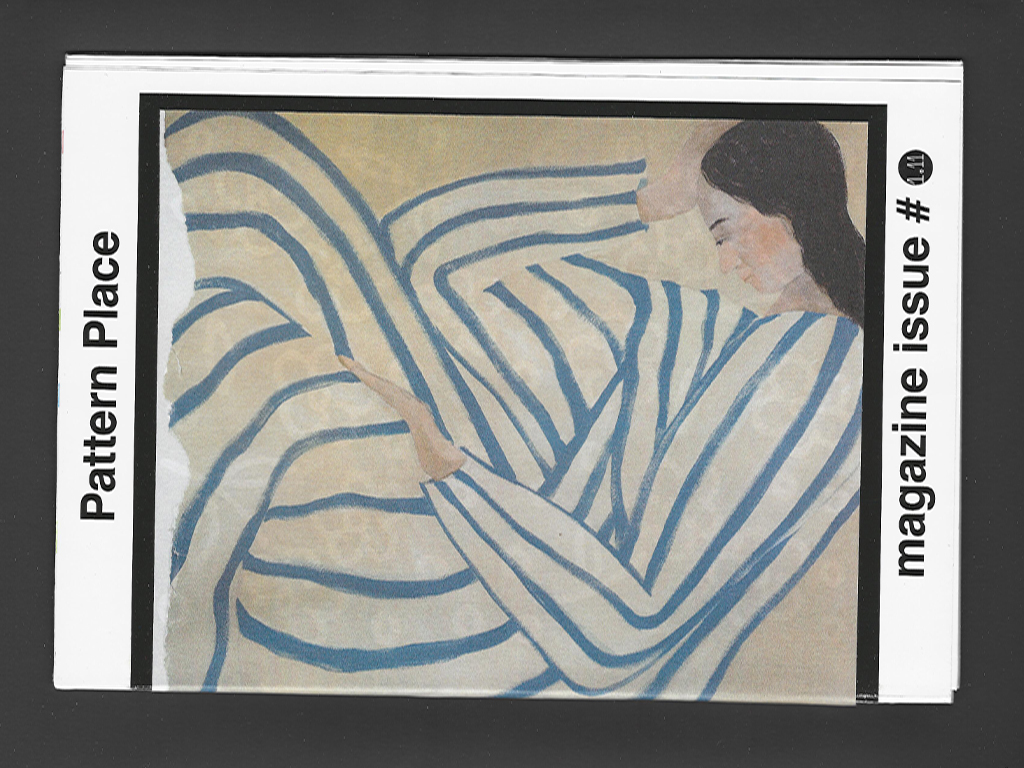
Pattern Place Magazine issue 1.11
By Anouk Beckers, Alessandra Varisco, Femke de Vries, Tanveer Ahmed & Bo Shan Go
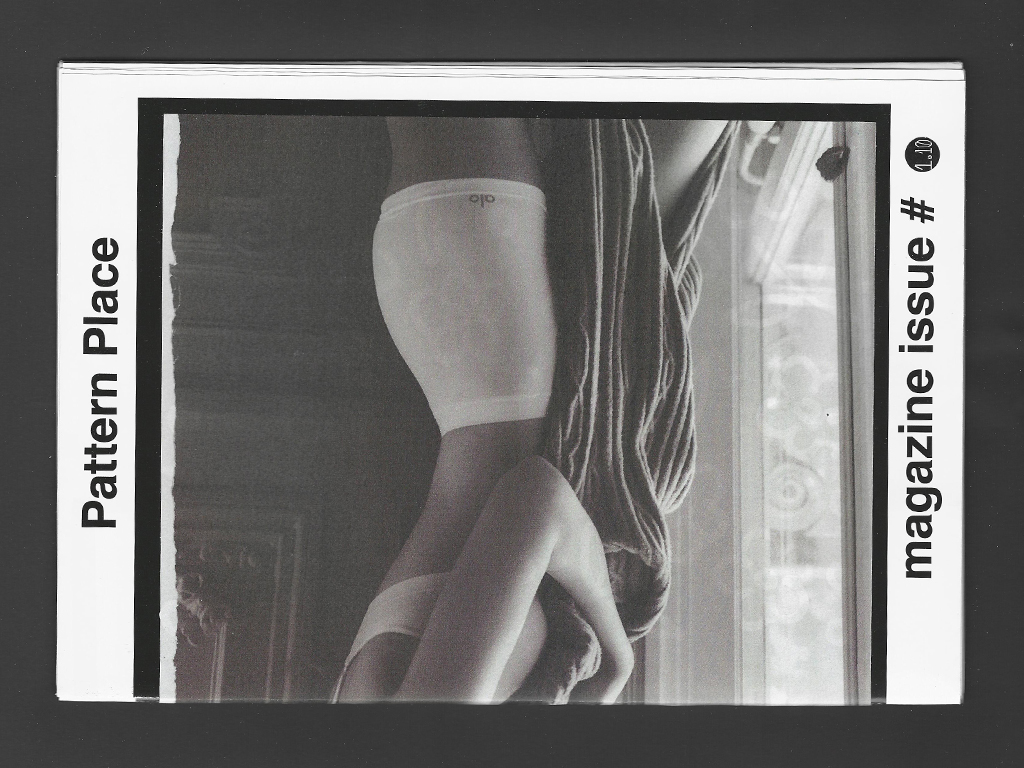
Pattern Place Magazine issue 1.10
By Anouk Beckers, Alessandra Varisco, Femke de Vries, Tanveer Ahmed & Femke de Vries
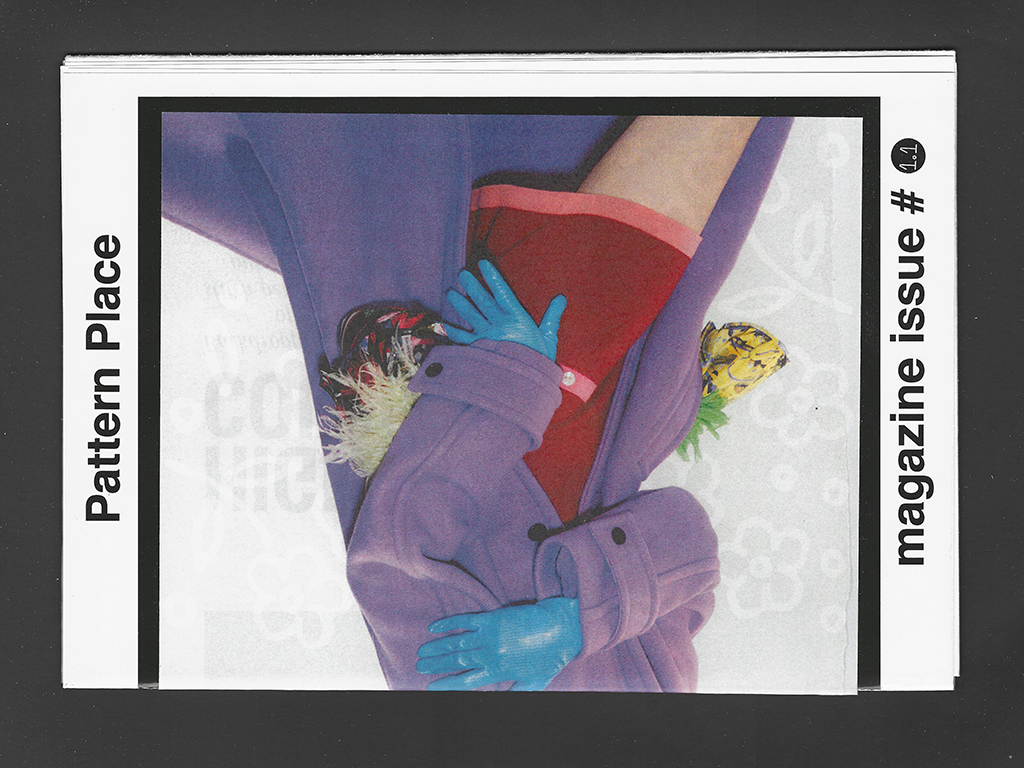
Pattern Place Magazine issue 1.1
By Anouk Beckers, Alessandra Varisco, Femke de Vries, Tanveer Ahmed & Lois de Scheemaker
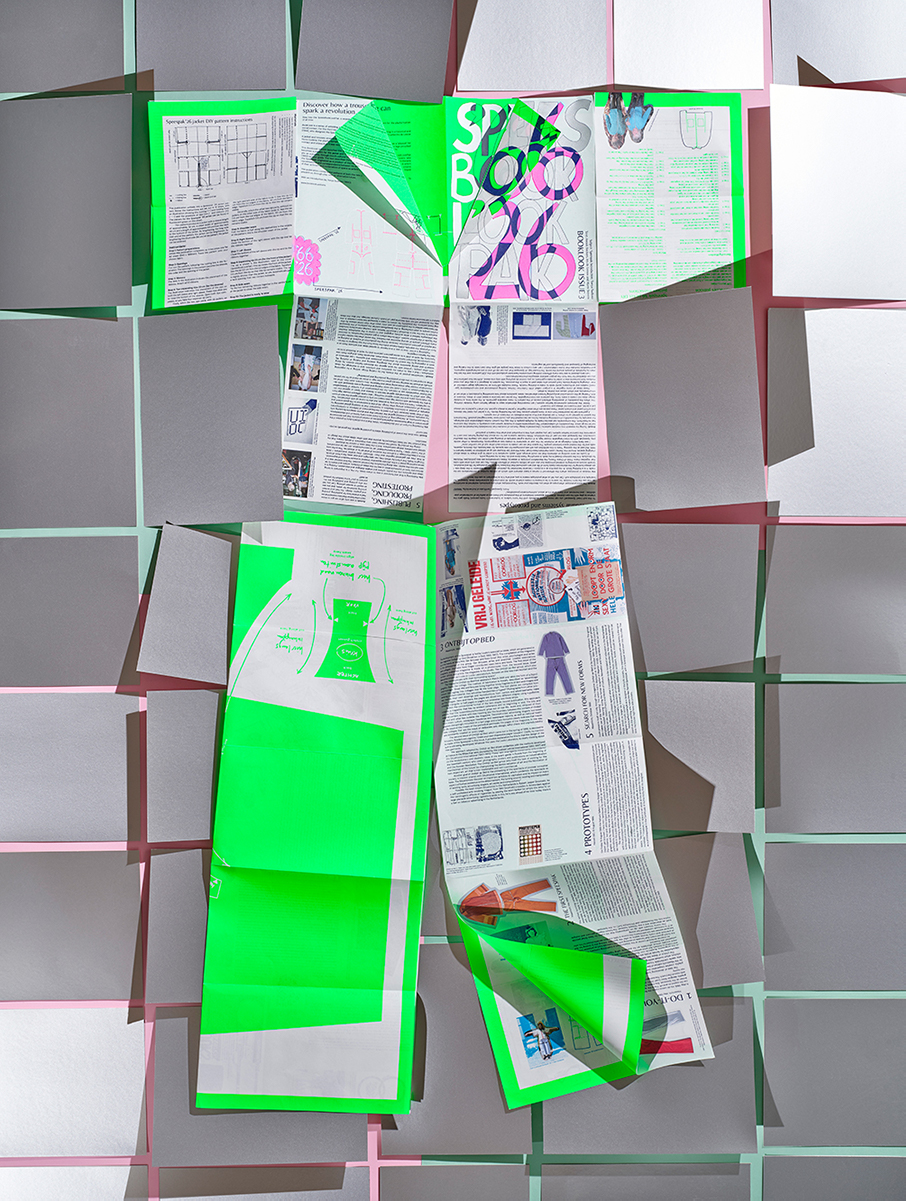
Issue 3: Booklook Speespak - Nederlands
By Anouk Beckers, Iris de Leeuw, Harm Stevens, Tonya Sudiono & Chen Jhen
Issue 3: Booklook Speespak - English
By Anouk Beckers, Iris de Leeuw, Harm Stevens, Tonya Sudiono & Chen Jhen
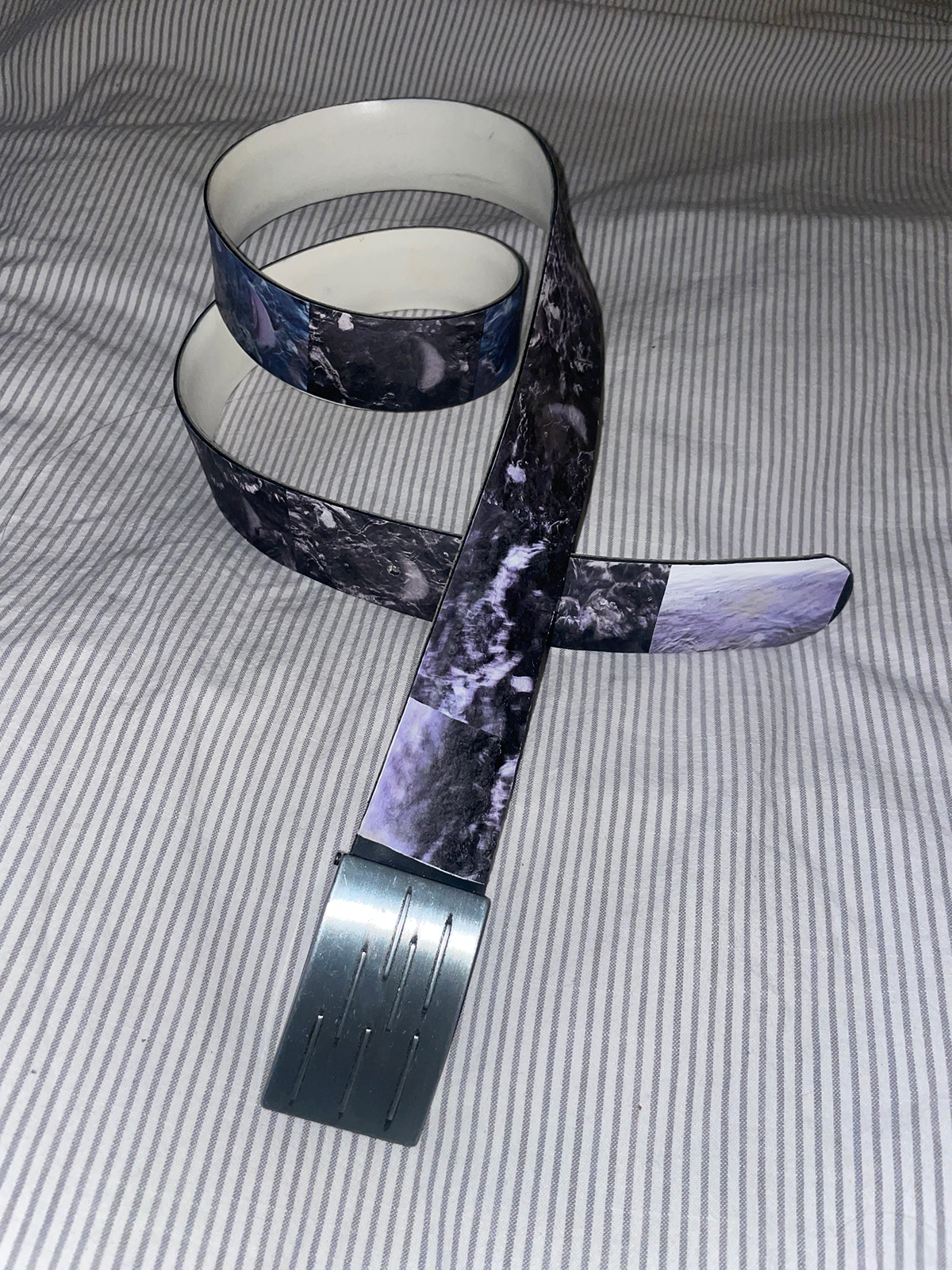
01_Belt Unisex
By Sojourna Jon-Paul
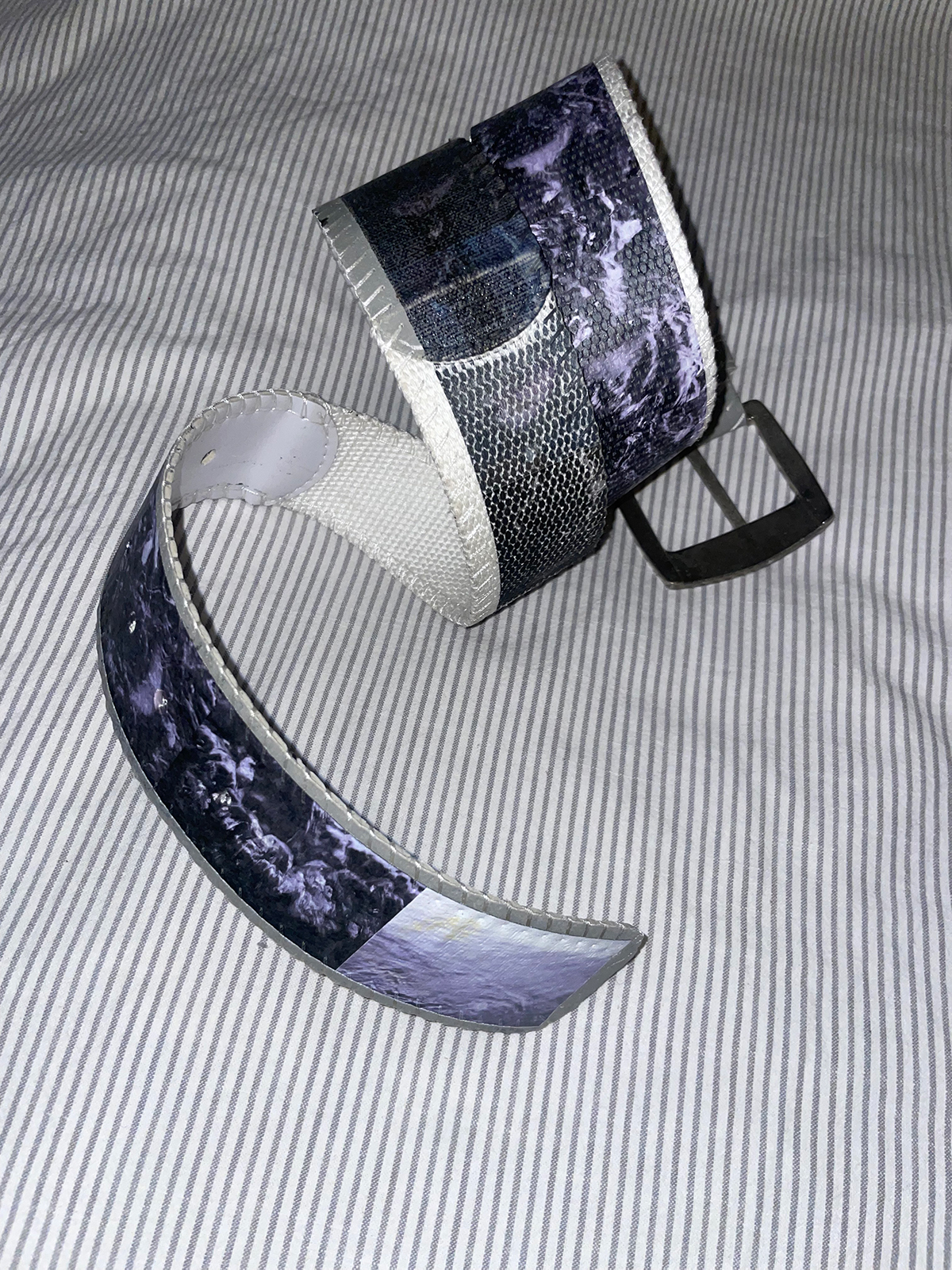
06_Belt Unisex
By Sojourna Jon-Paul
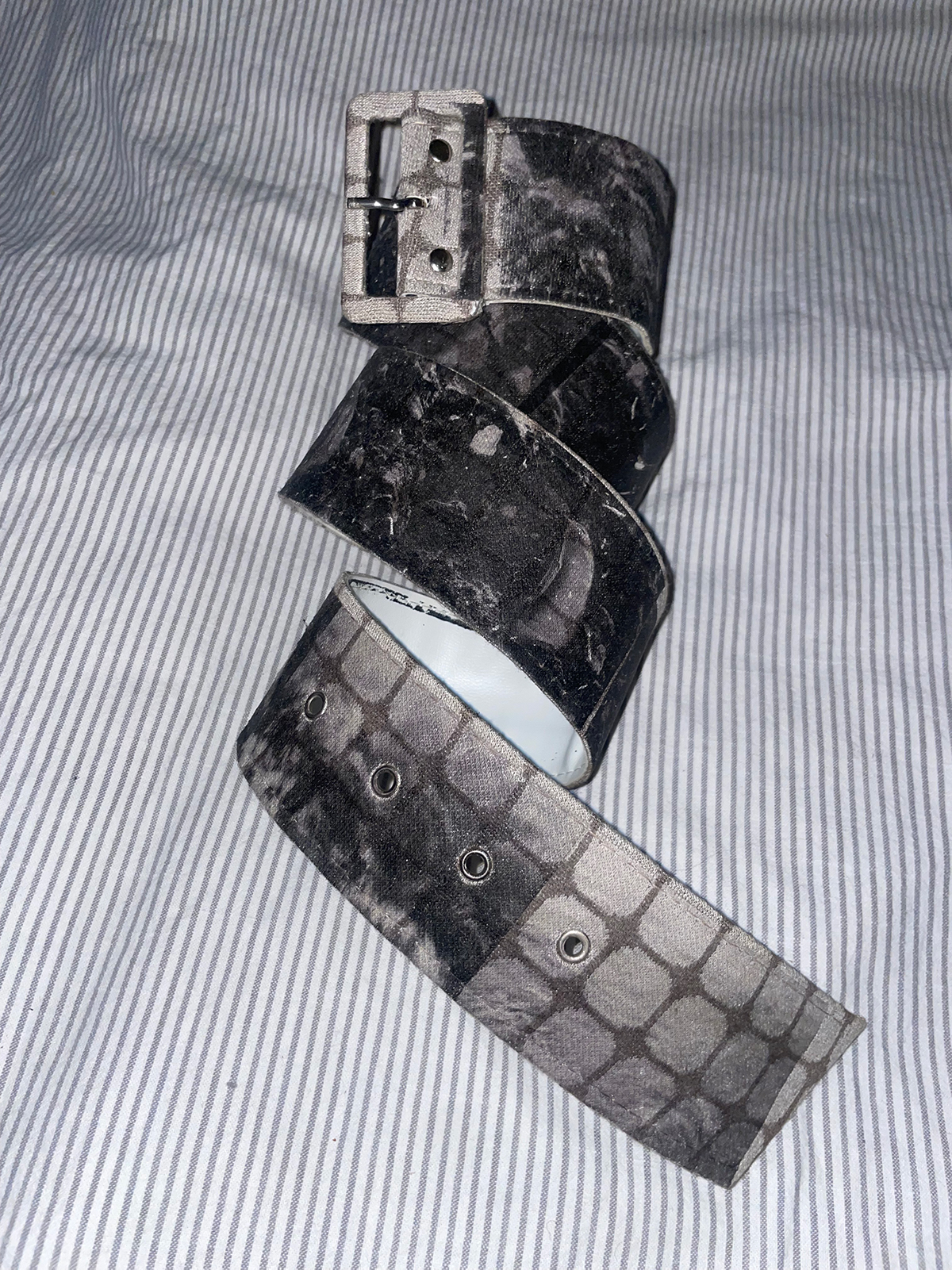
05_Belt Unisex
By Sojourna Jon-Paul
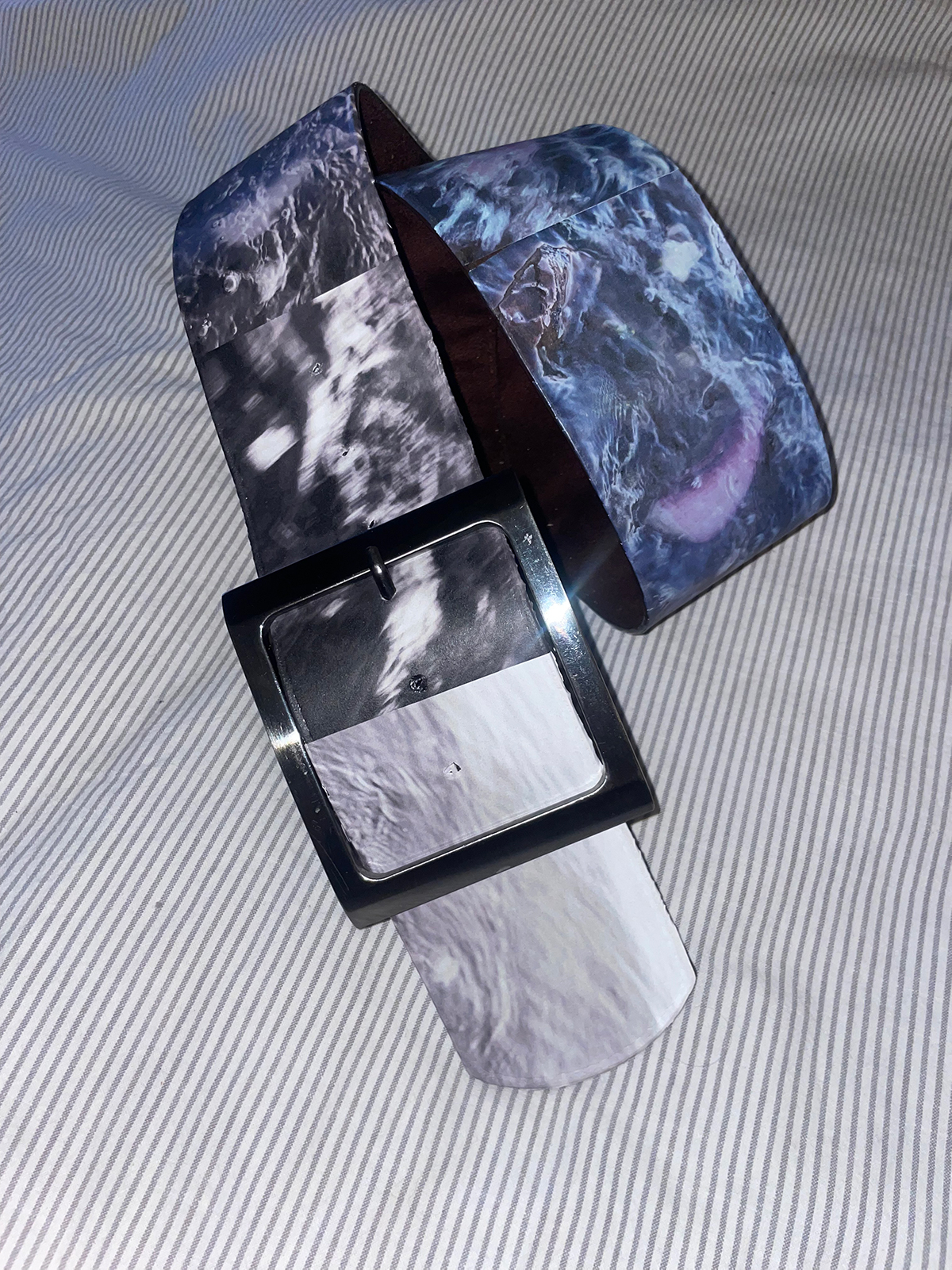
04_Belt Unisex
By Sojourna Jon-Paul
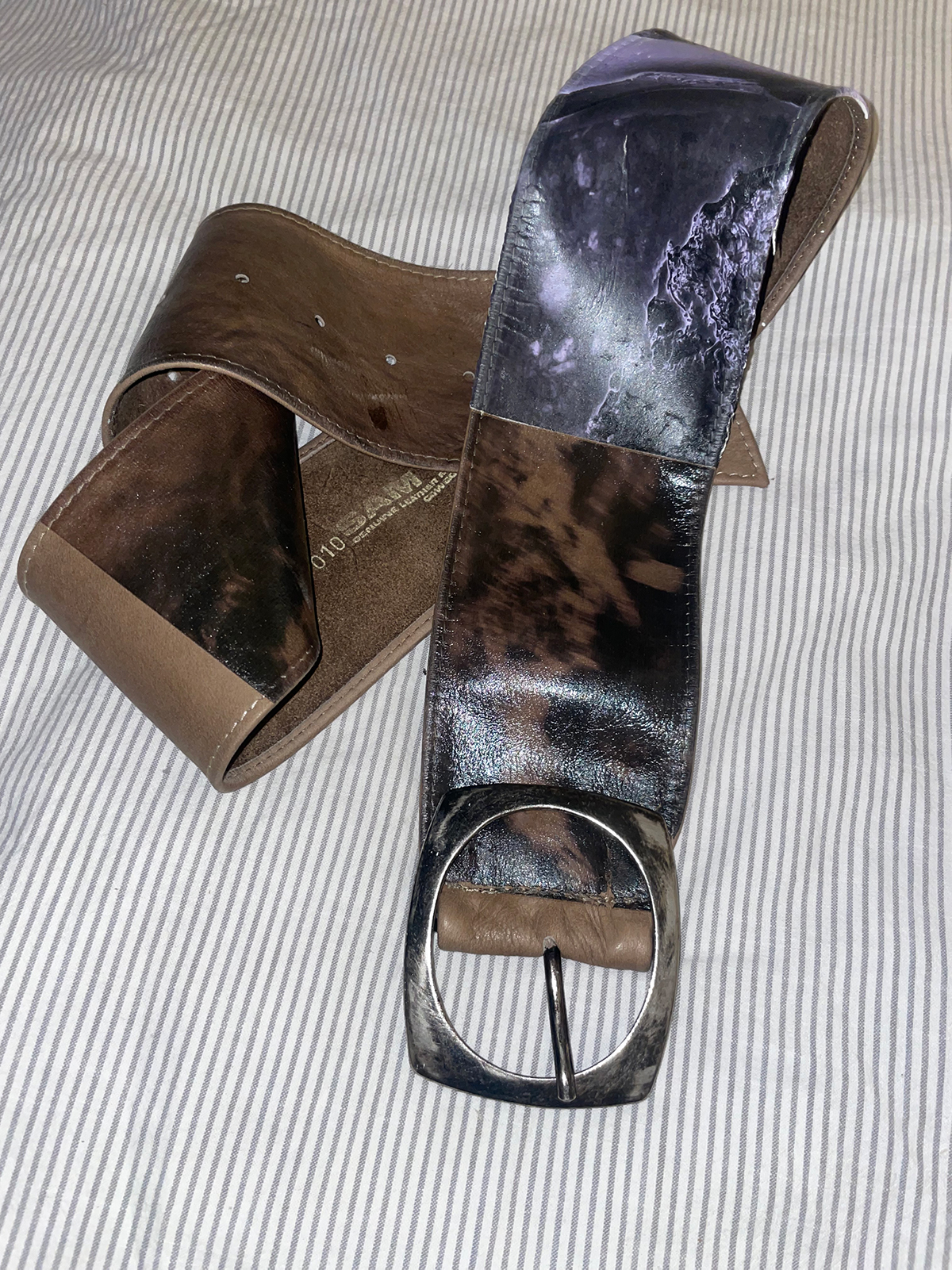
03_Belt Unisex
By Sojourna Jon-Paul
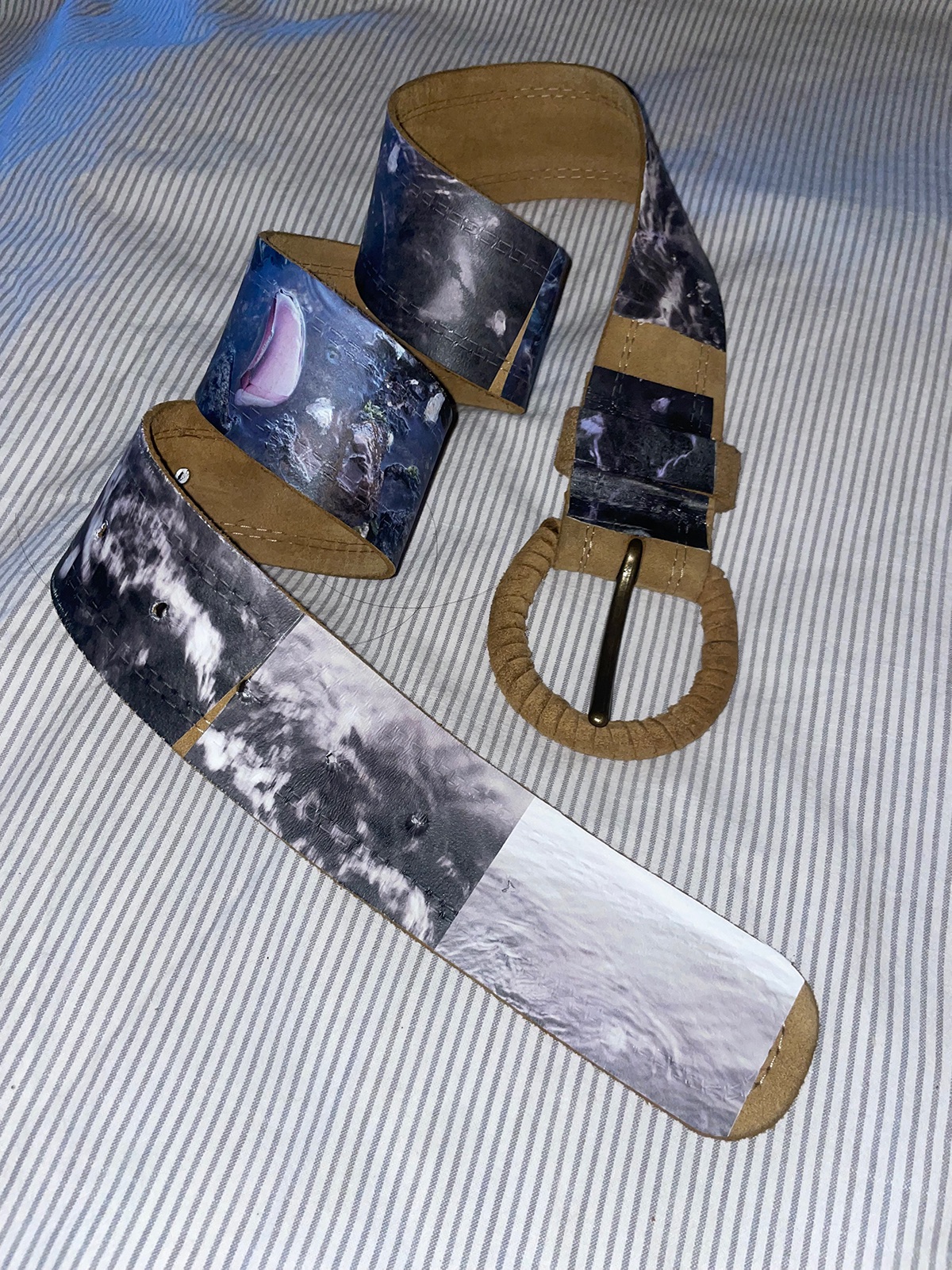
02_Belt Unisex
By Sojourna Jon-Paul
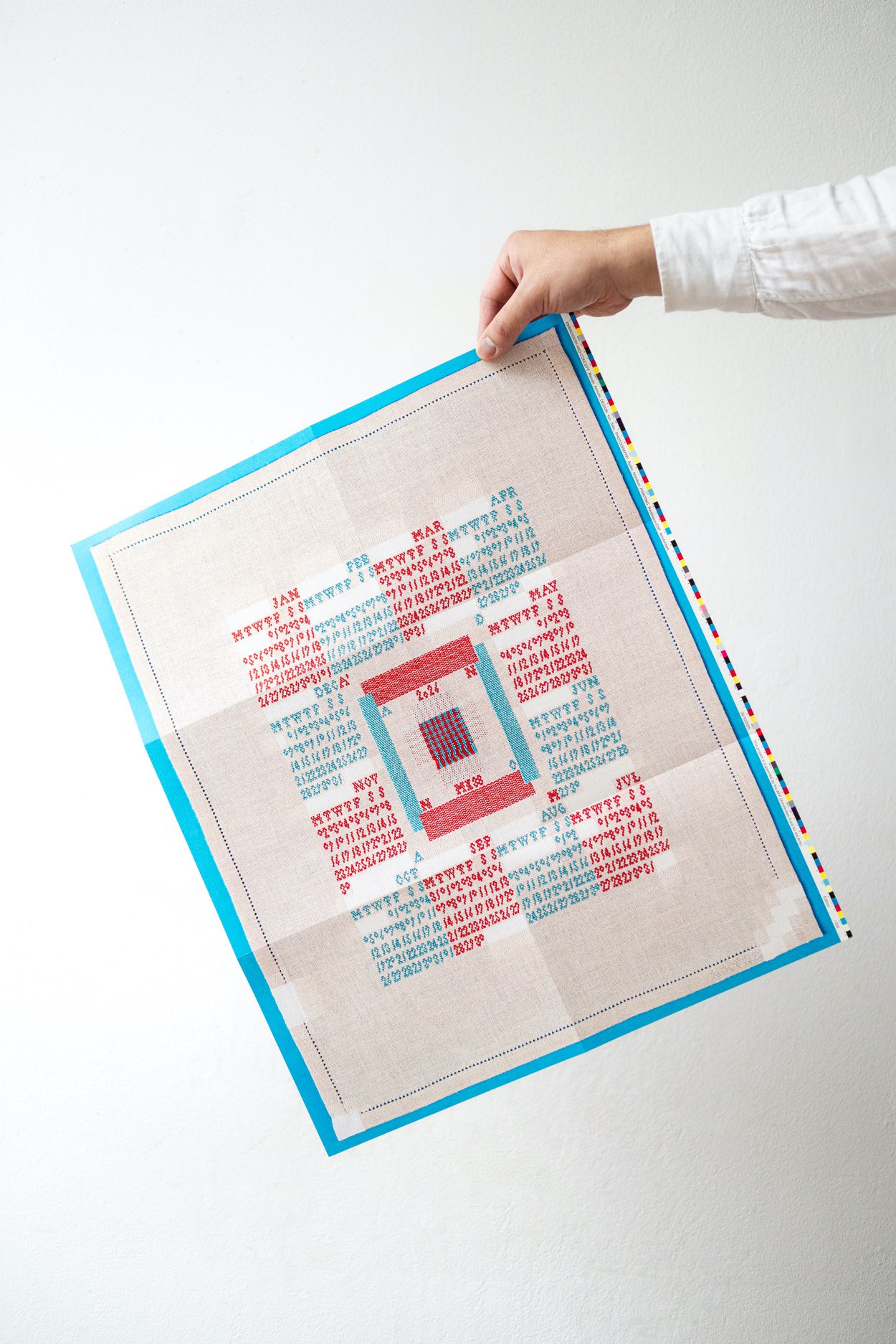
Calendar 2026: Quad
By Masaki Komoto
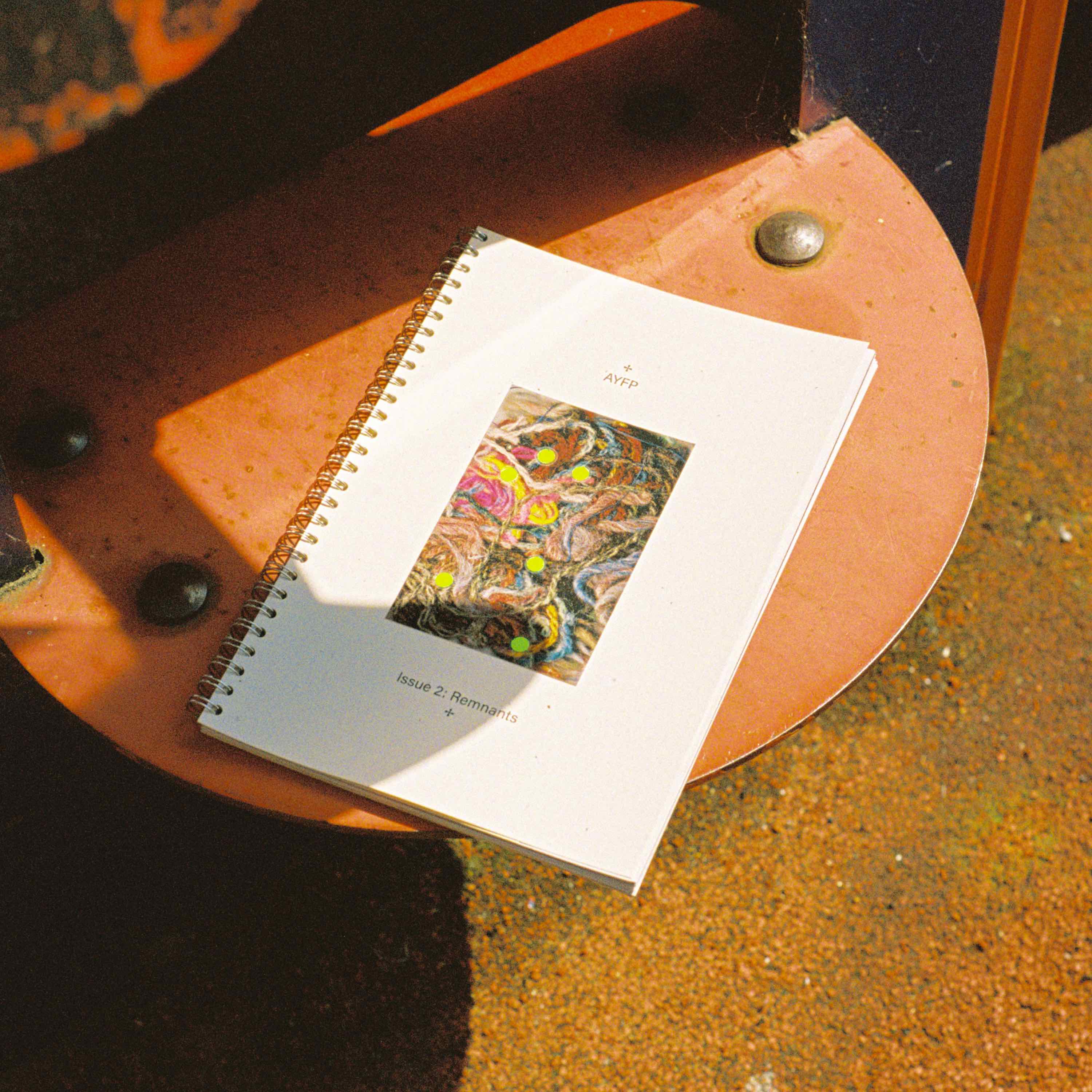
AYFP Issue 2: Remnants
By Emma Crabtree
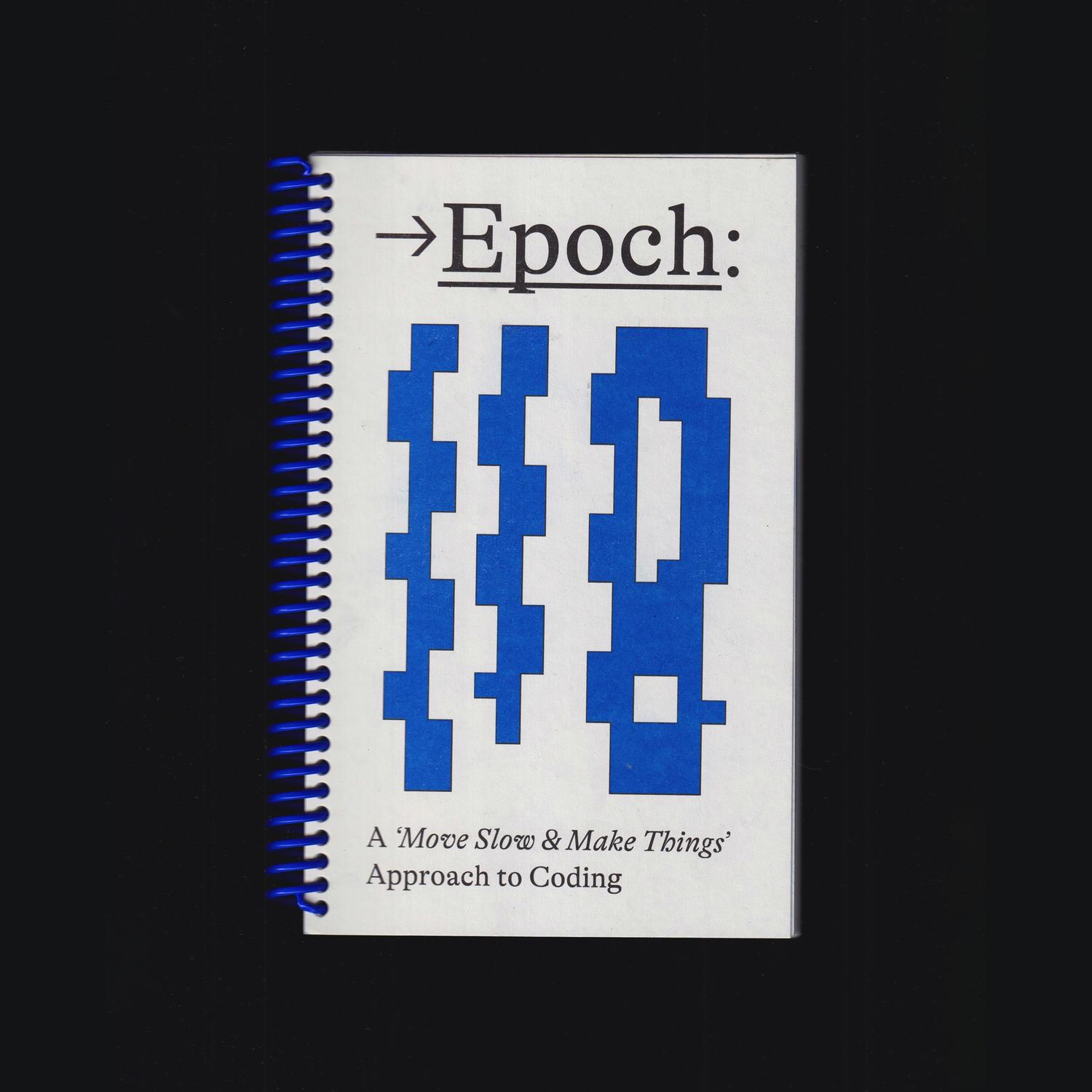
Epoch: A 'Move Slow & Make Things' Approach to Coding
By Sophie Nadel
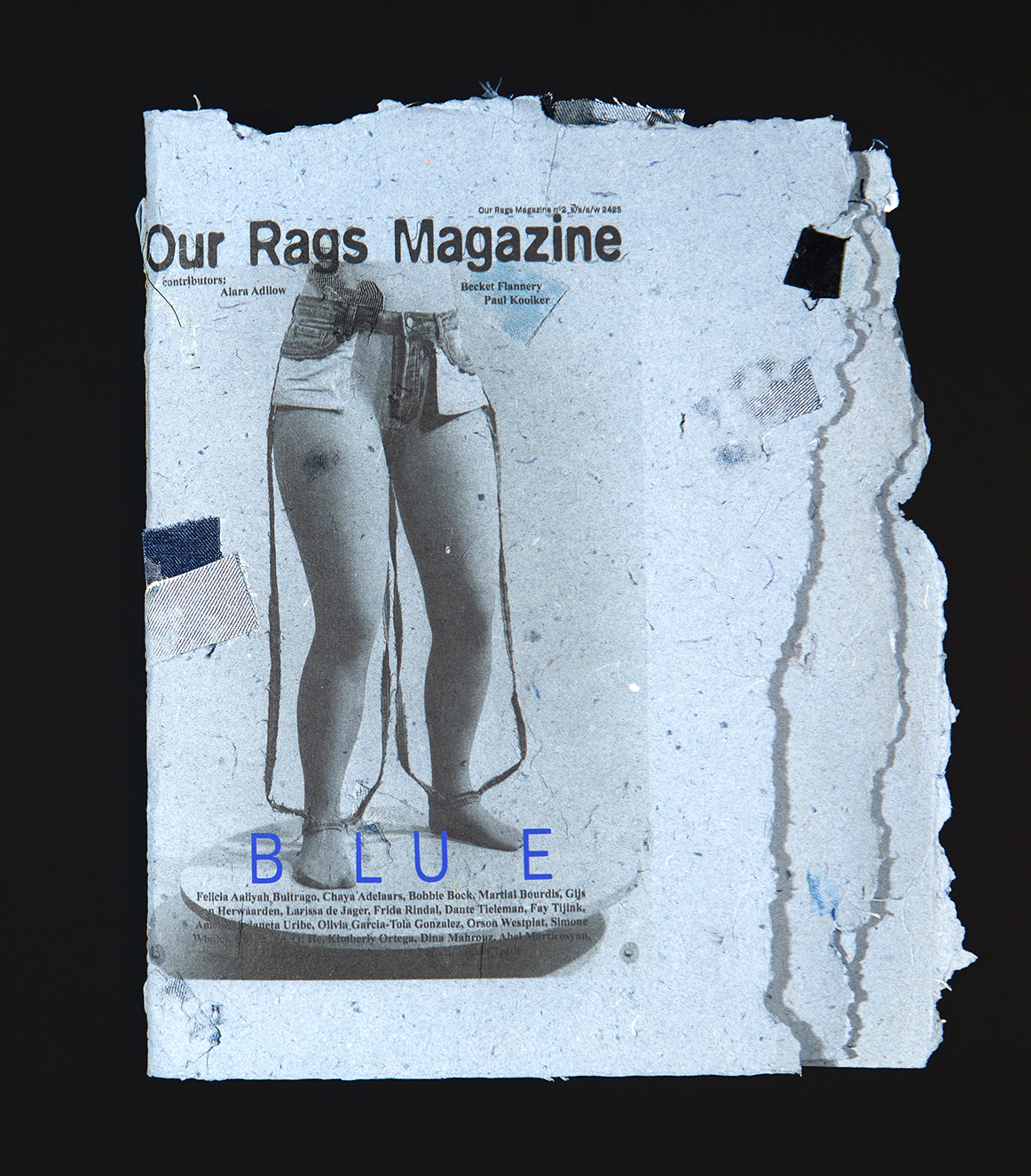
Our Rags Magazine no. 2 BLUE
By Aimée Zito Lema and Elisa van Joolen
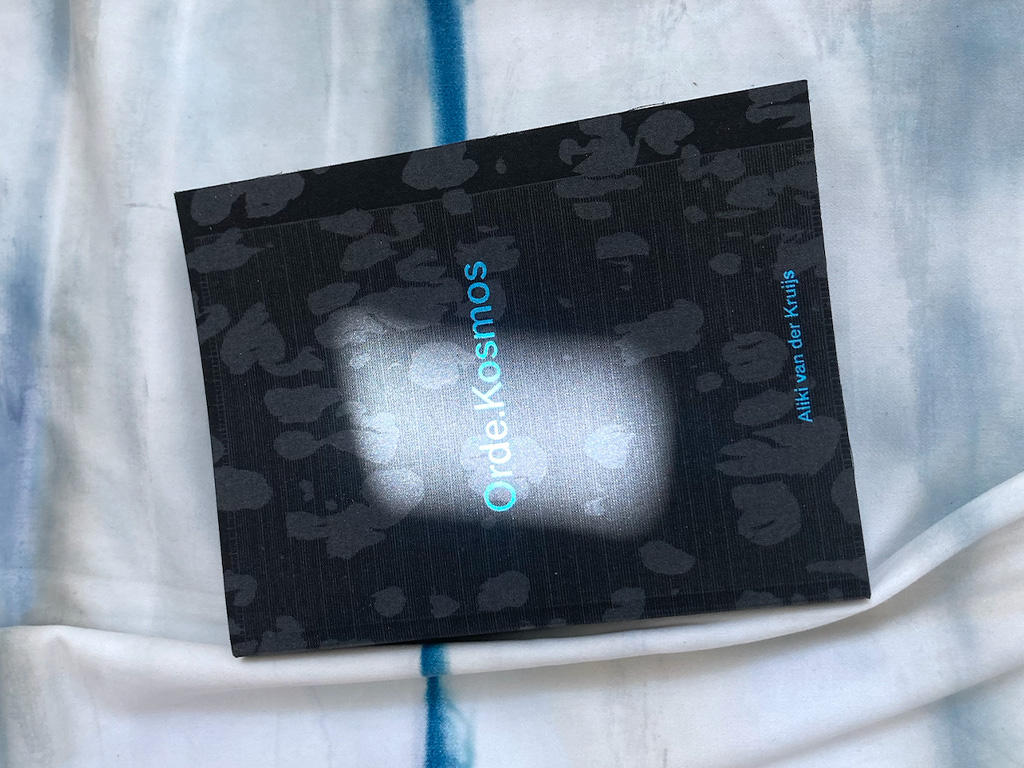
Orde.Kosmos
By Aliki van der Kruijs
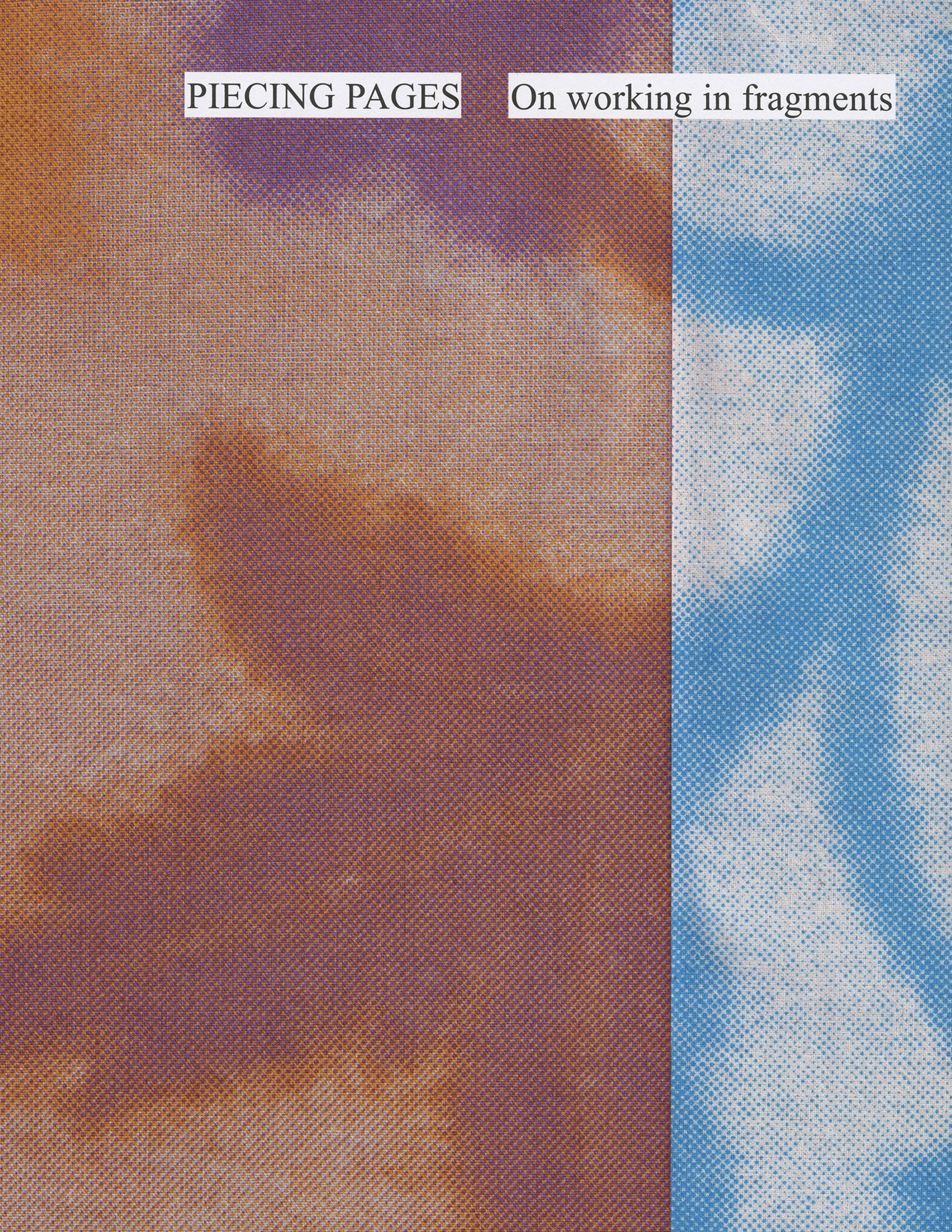
PIECING PAGES
By Line Arngaard (ed.)

memories bloom again
By Élise Ory
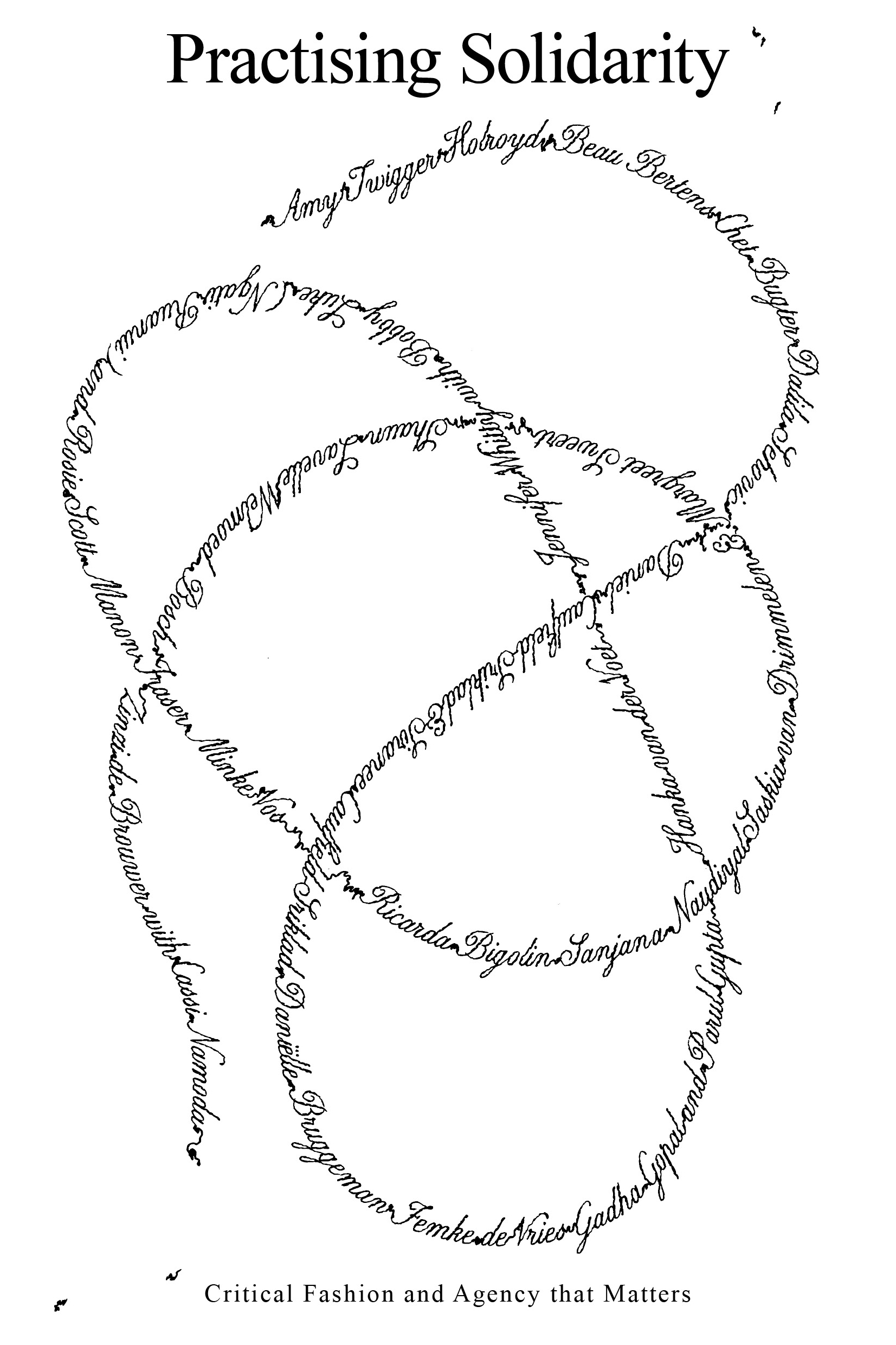
Practicing Solidarity
By Critical Fashion and Agency that Matters
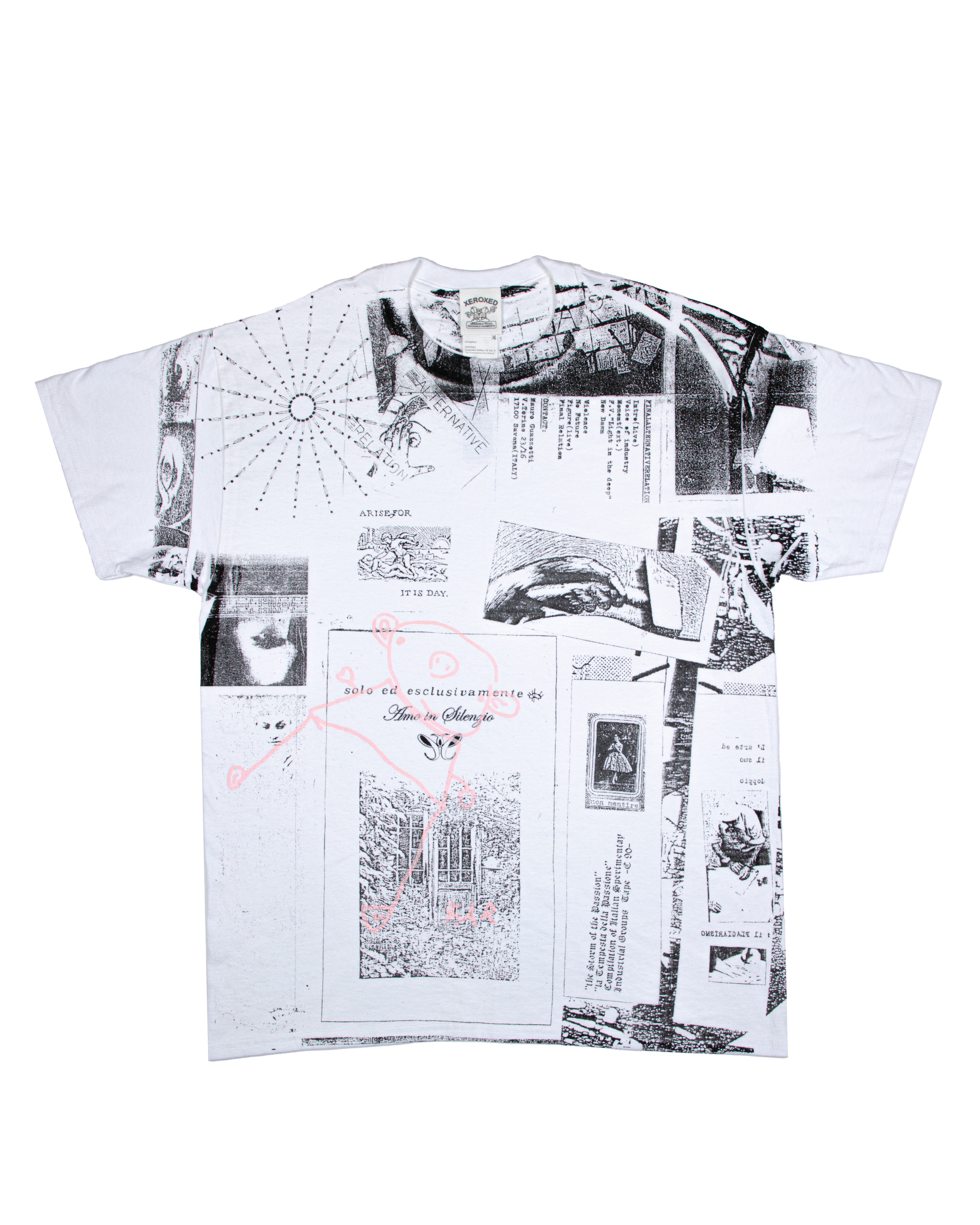
Piano forte white t-shirt (size L)
By Alia Mascia
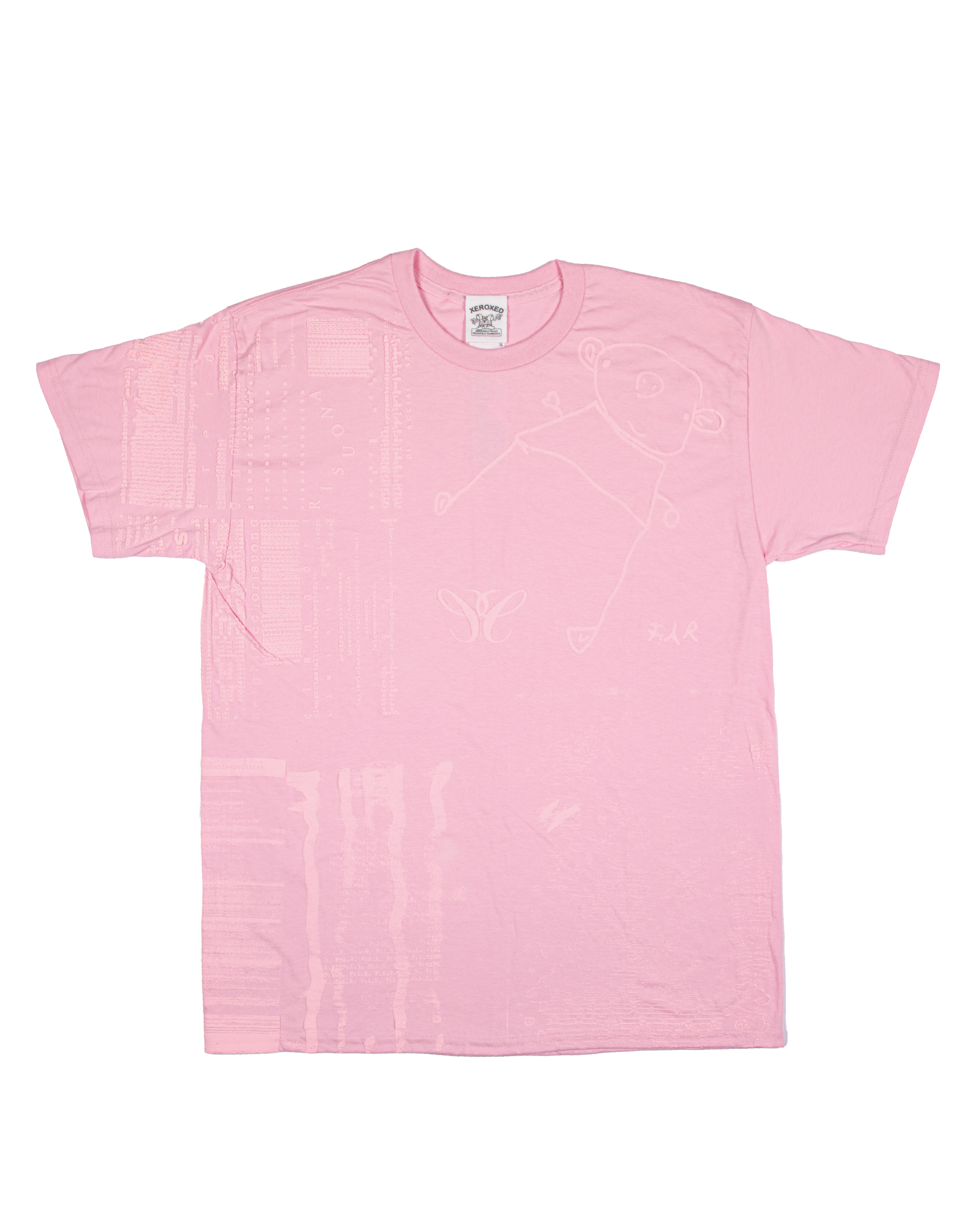
Ninna Neta pink t-shirt (size M)
By Alia Mascia
Ninna Neta pink t-shirt (size XL)
By Alia Mascia
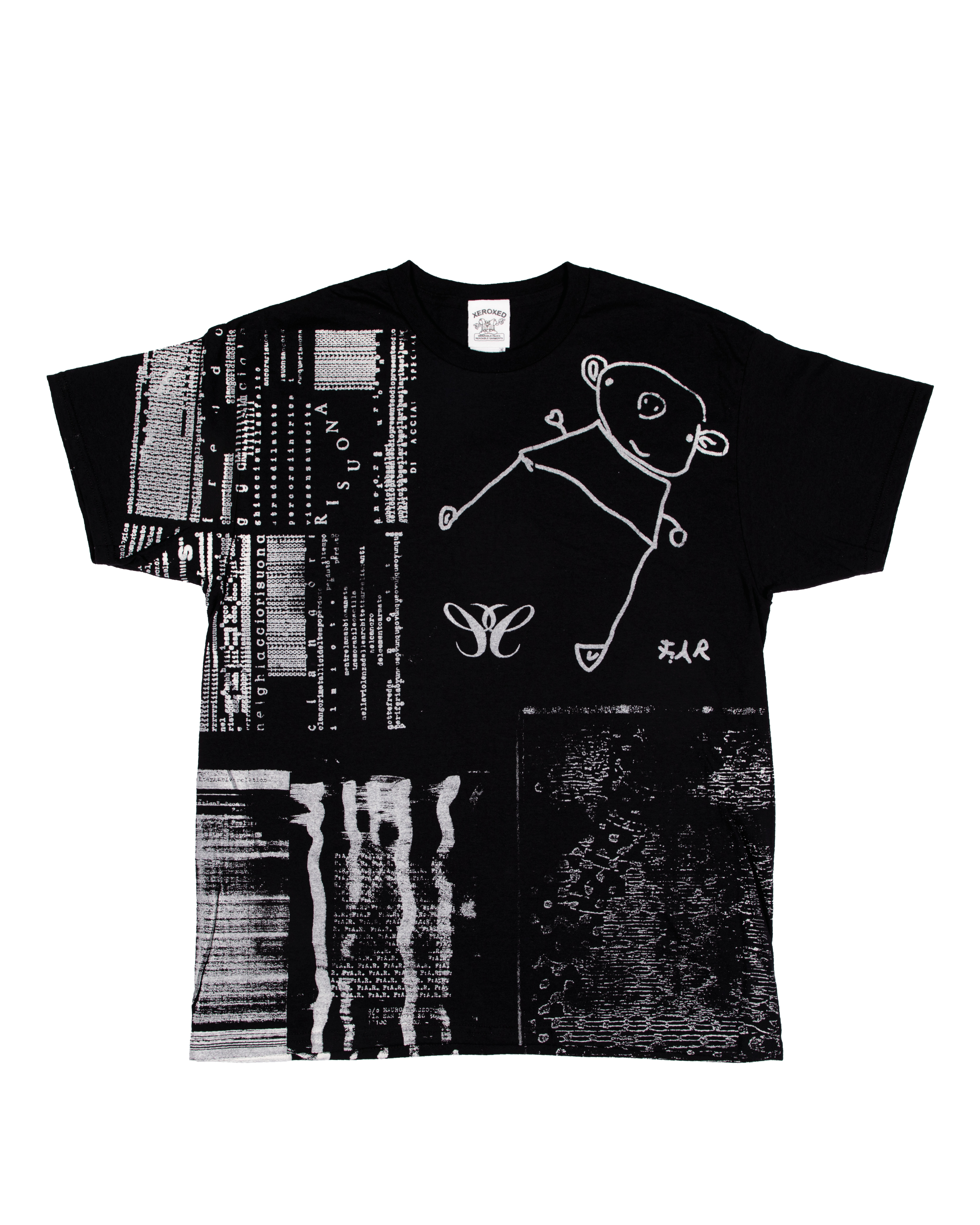
Ninna Neta black t-shirt (size XL)
By Alia Mascia
Ninna Neta black t-shirt (size M)
By Alia Mascia
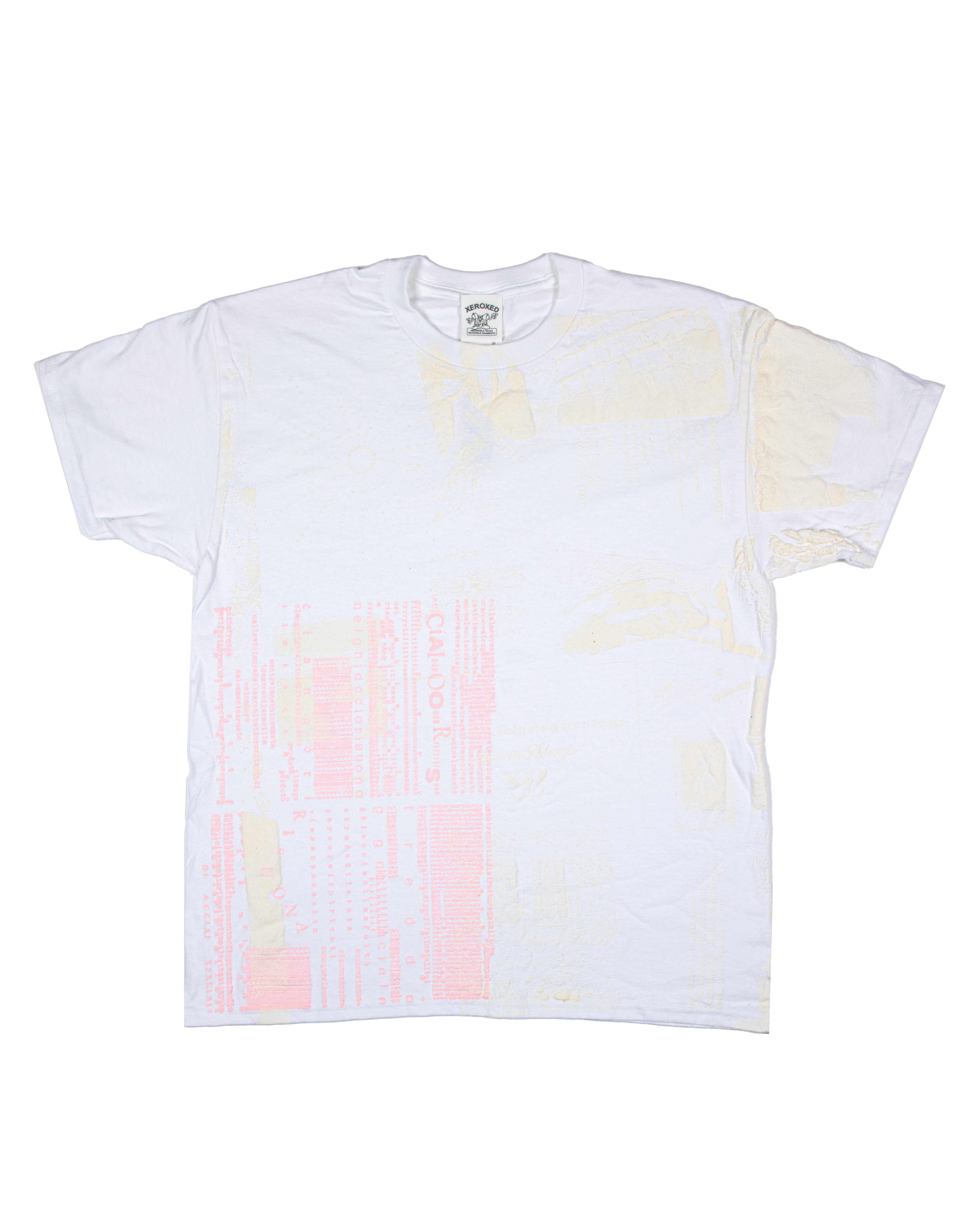
Lucciole preservate white t-shirt (size M)
By Alia Mascia
Lucciole preservate white t-shirt (size L)
By Alia Mascia
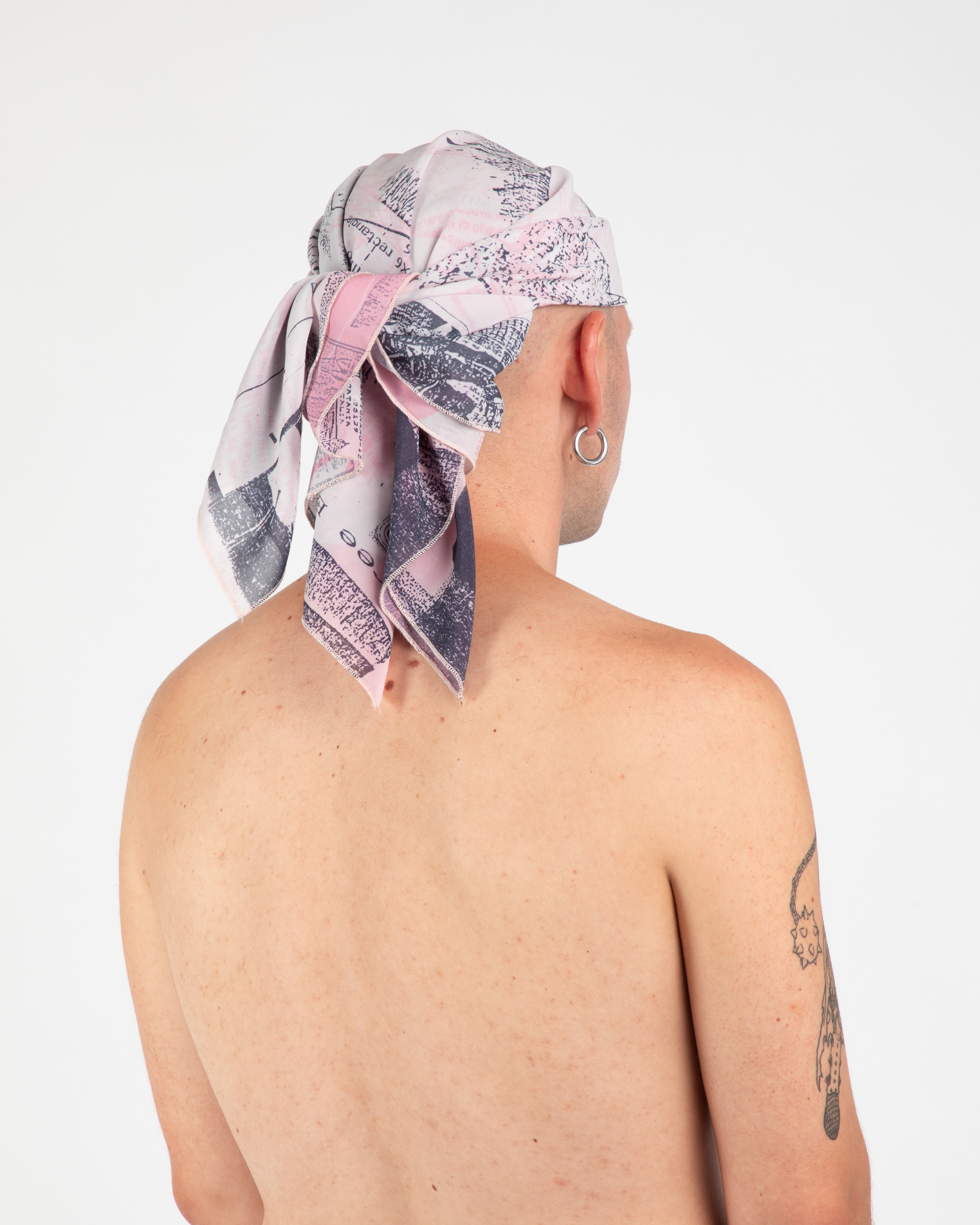
Charm foulard scarf
By Alia Mascia
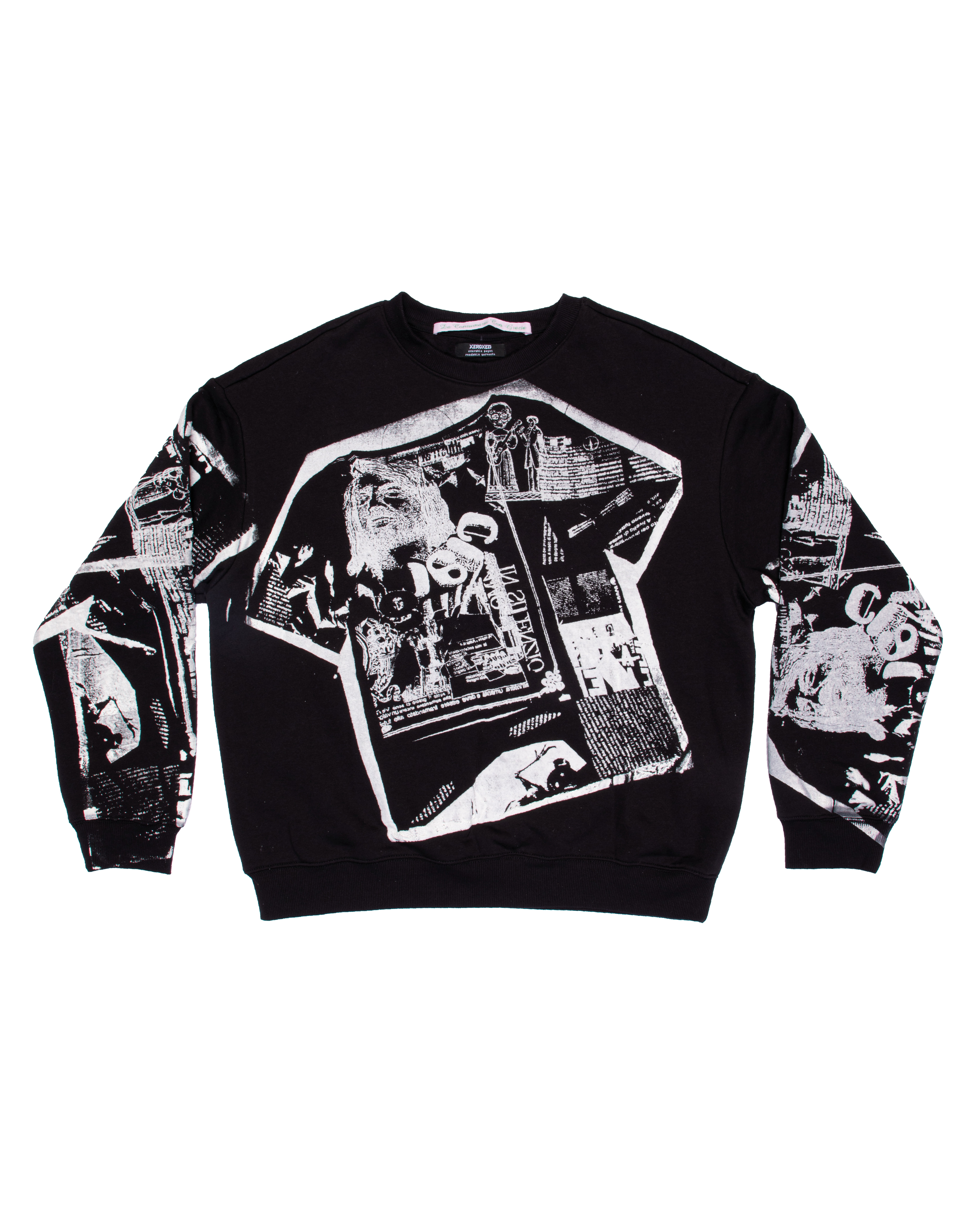
Amo in silenzio, black sweater
By Alia Mascia
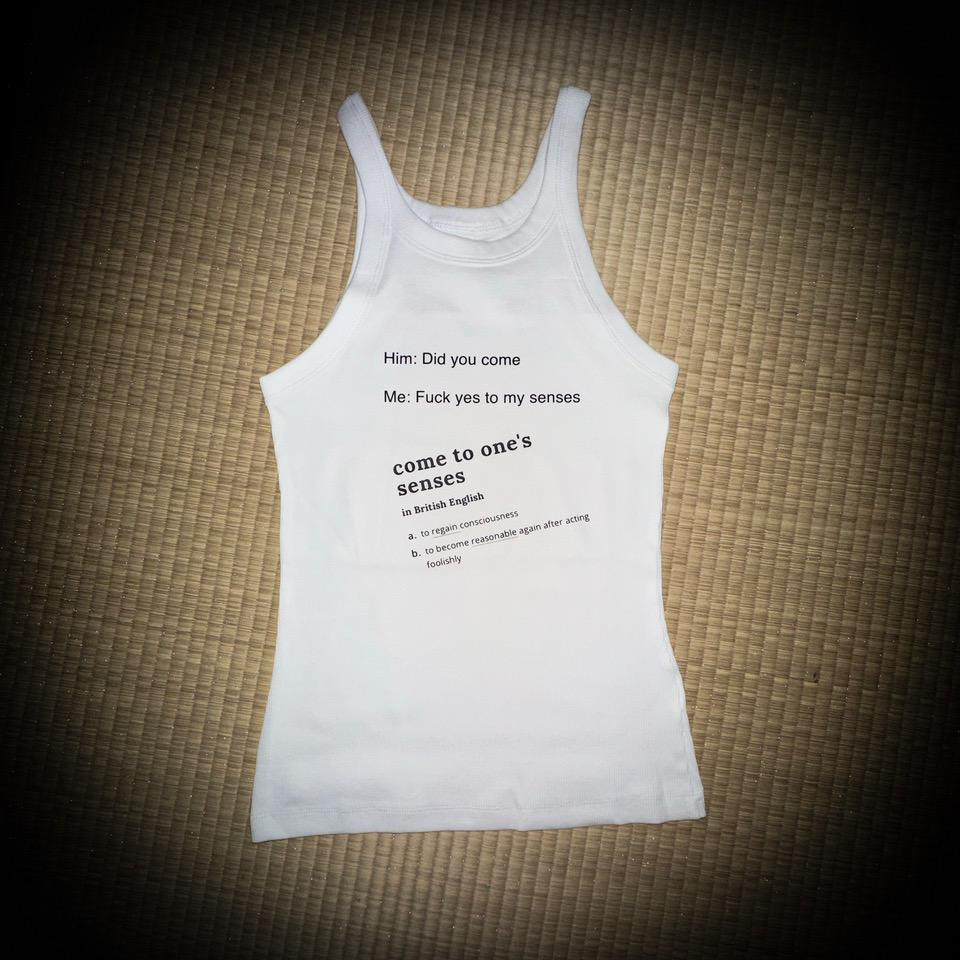
Meme top size M
By Zazie Stevens
Meme top size L
By Zazie Stevens
Meme top size S
By Zazie Stevens
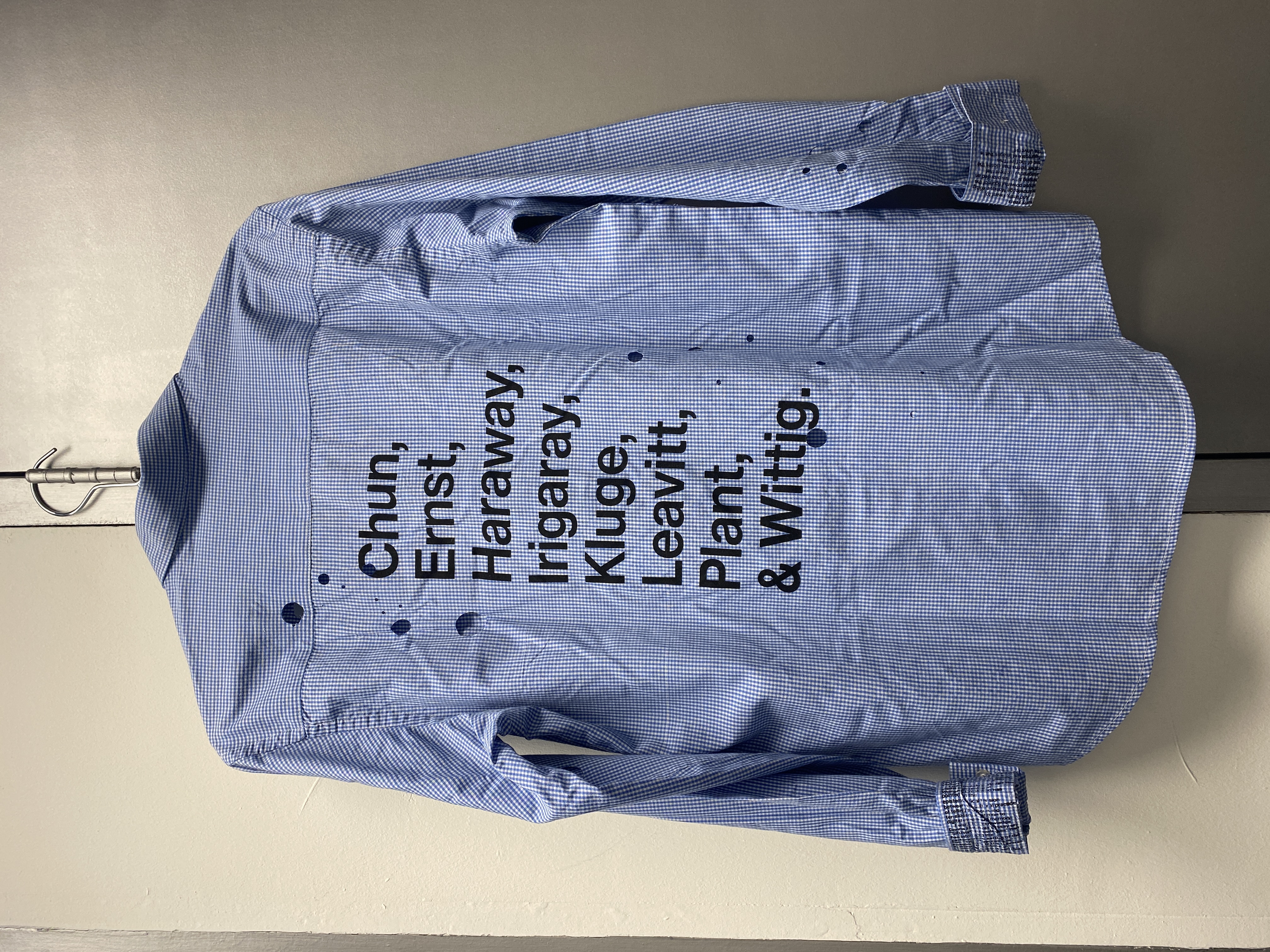
This Aggregate Of Images That Is The Universe.4
By Olena Newkryta
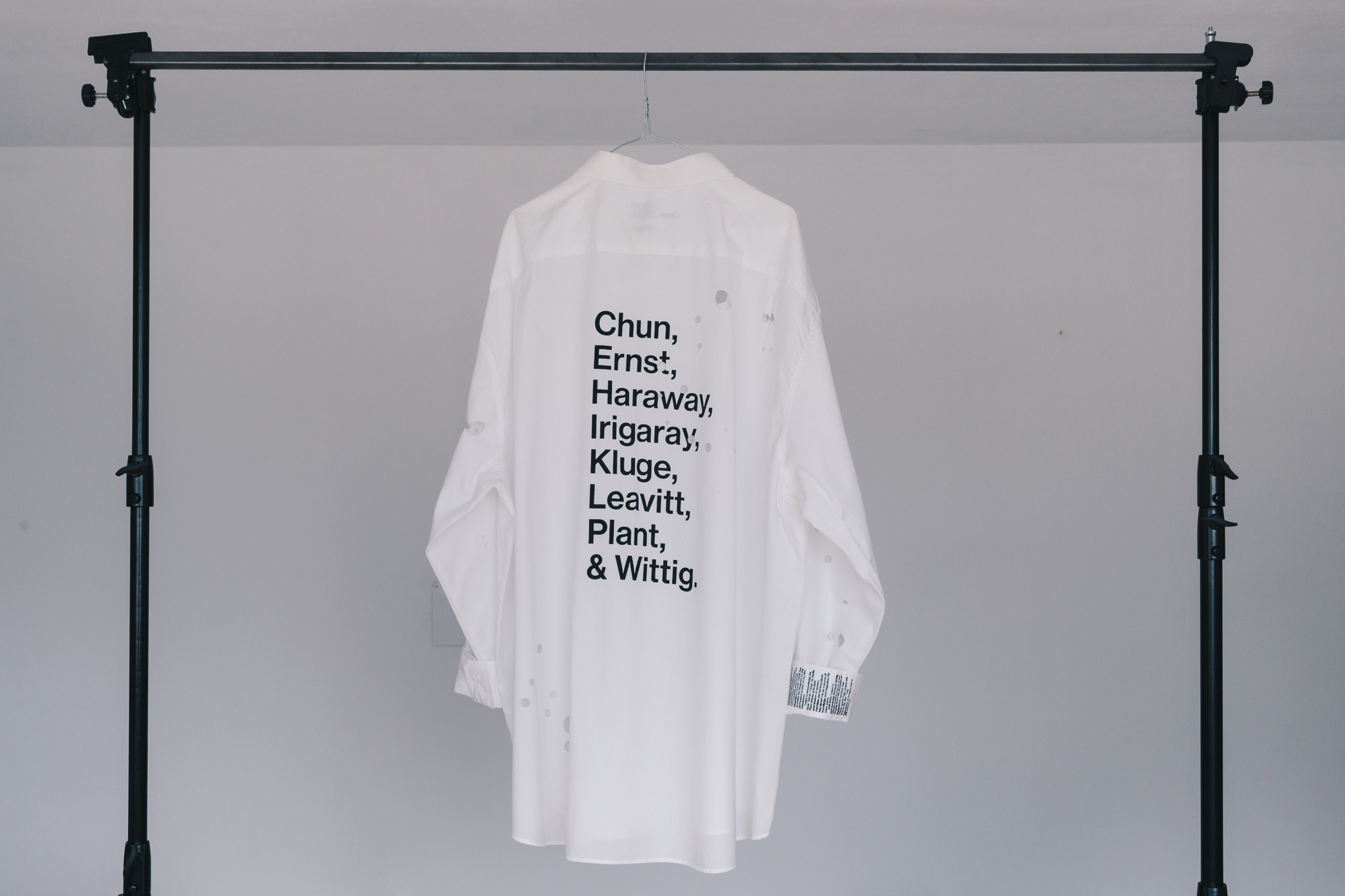
This Aggregate Of Images That Is The Universe.3
By Olena Newkryta
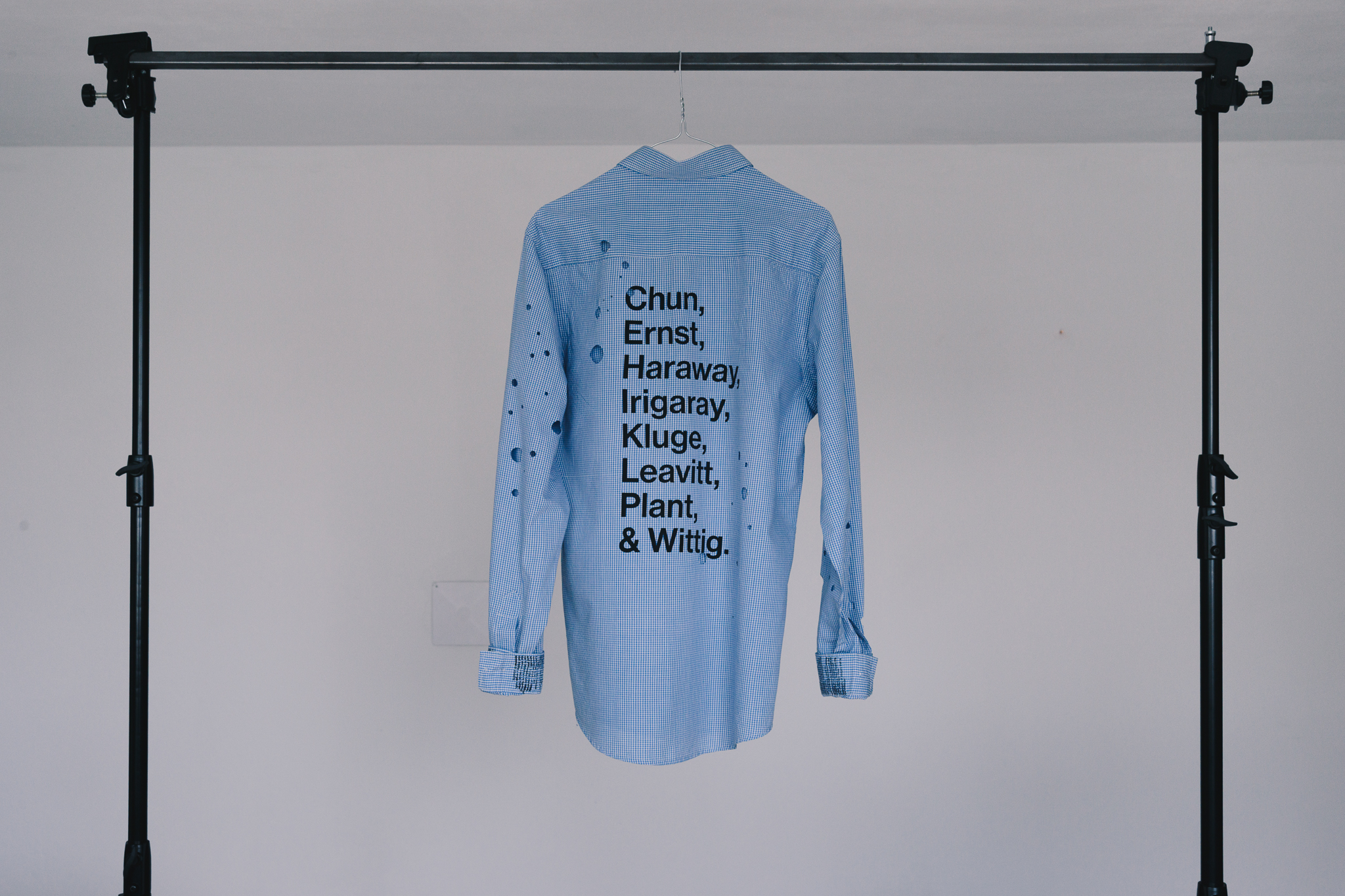
This Aggregate Of Images That Is The Universe.2
By Olena Newkryta
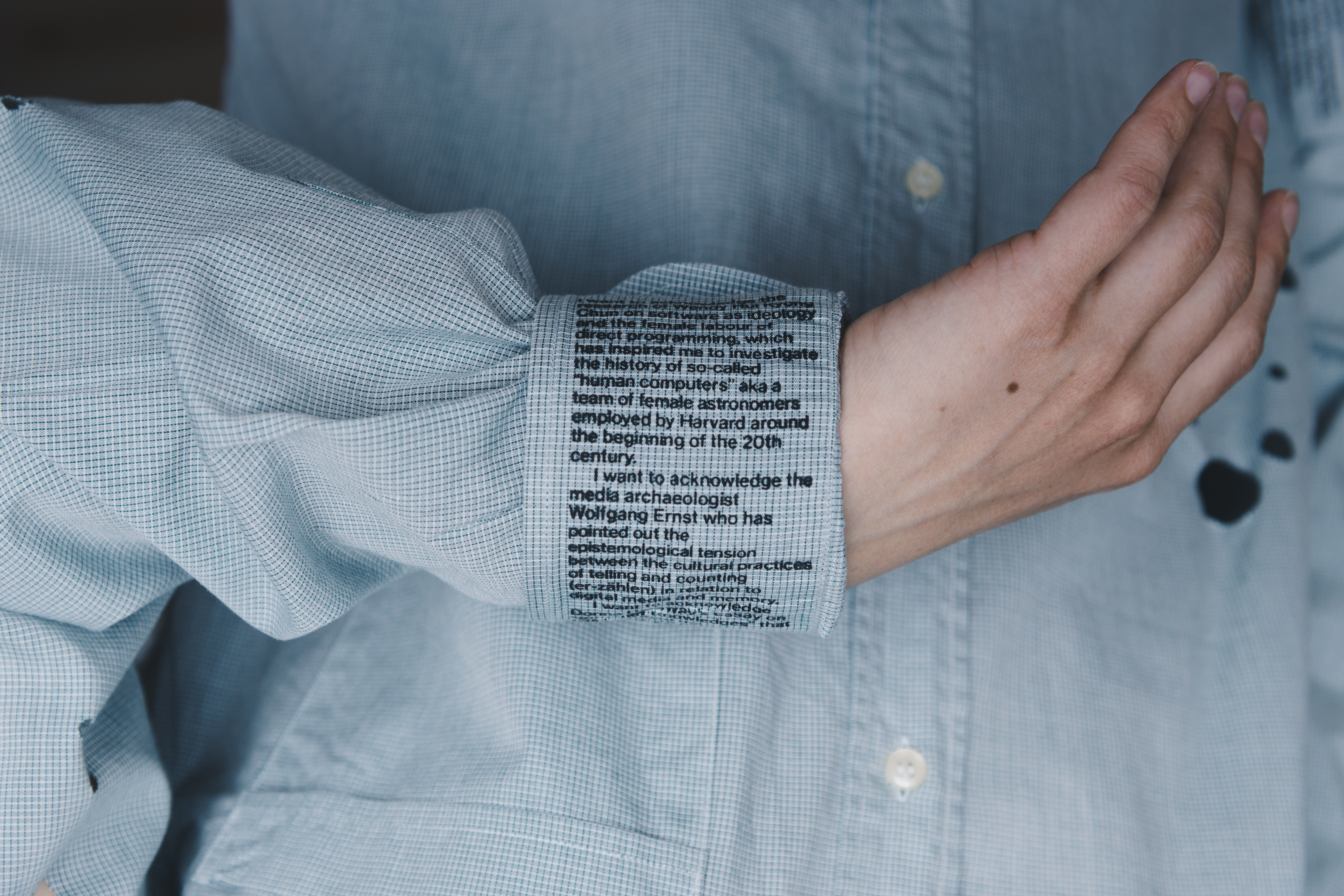
This Aggregate Of Images That Is The Universe
By Olena Newkryta
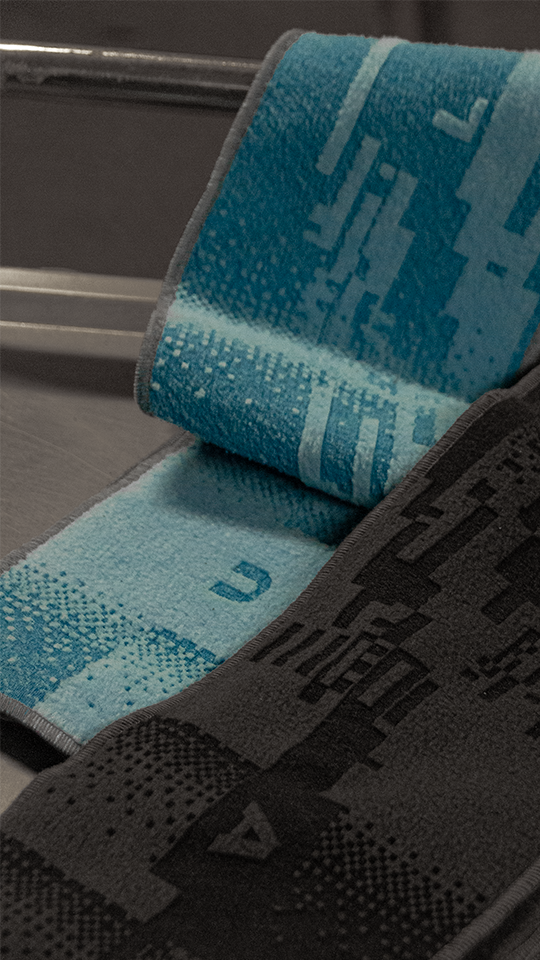
ULTRASCARF GEN.02 Light blue
By Malin Dittman
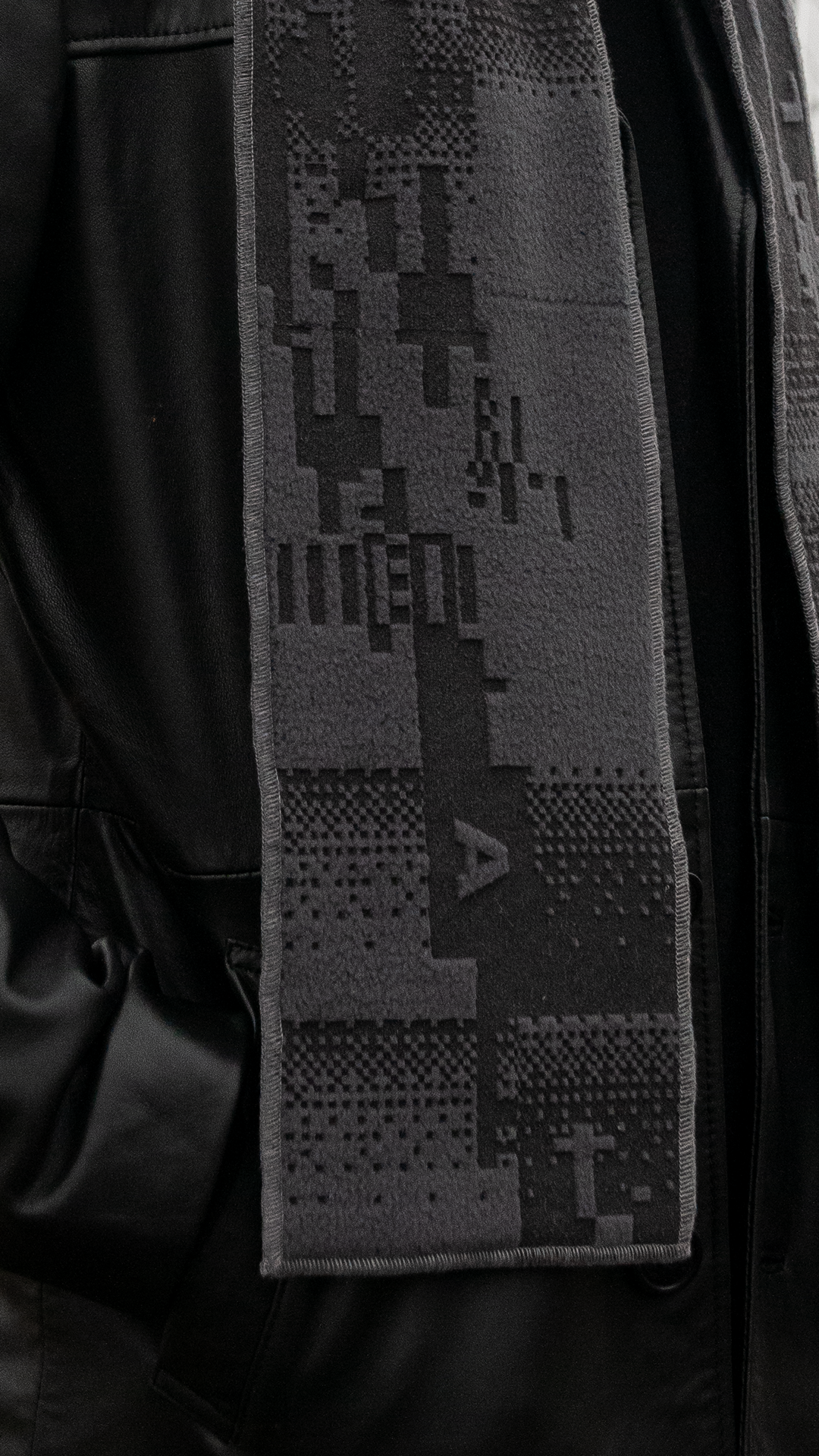
ULTRASCARF GEN.02 Grey
By Malin Dittman
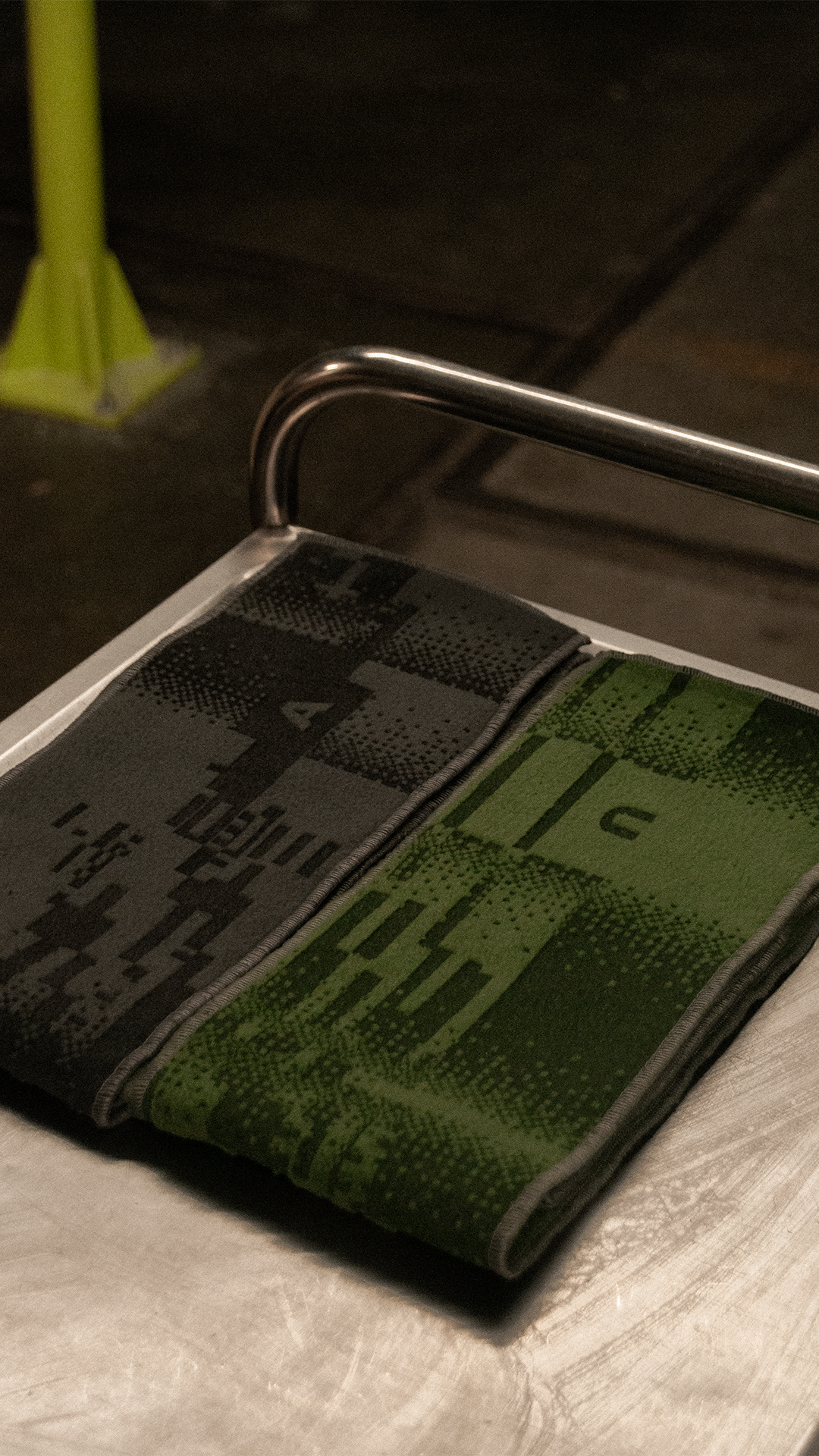
ULTRASCARF GEN.02 Dark green
By Malin Dittmann
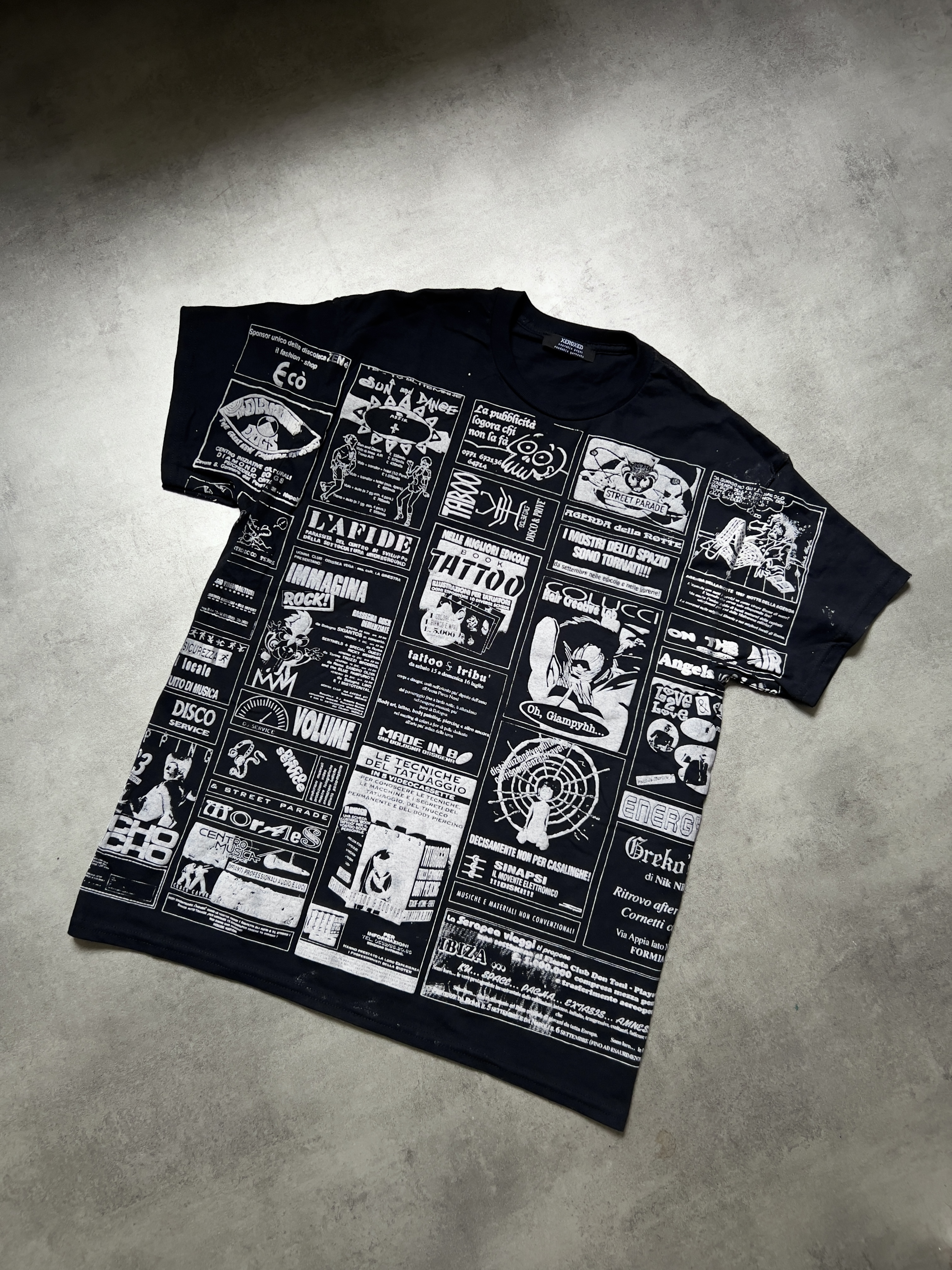
XEROXED Expanded Edition 00- Pamphlet T-shirts series Vol. 4 "MILLELIRE"
By Alia Mascia
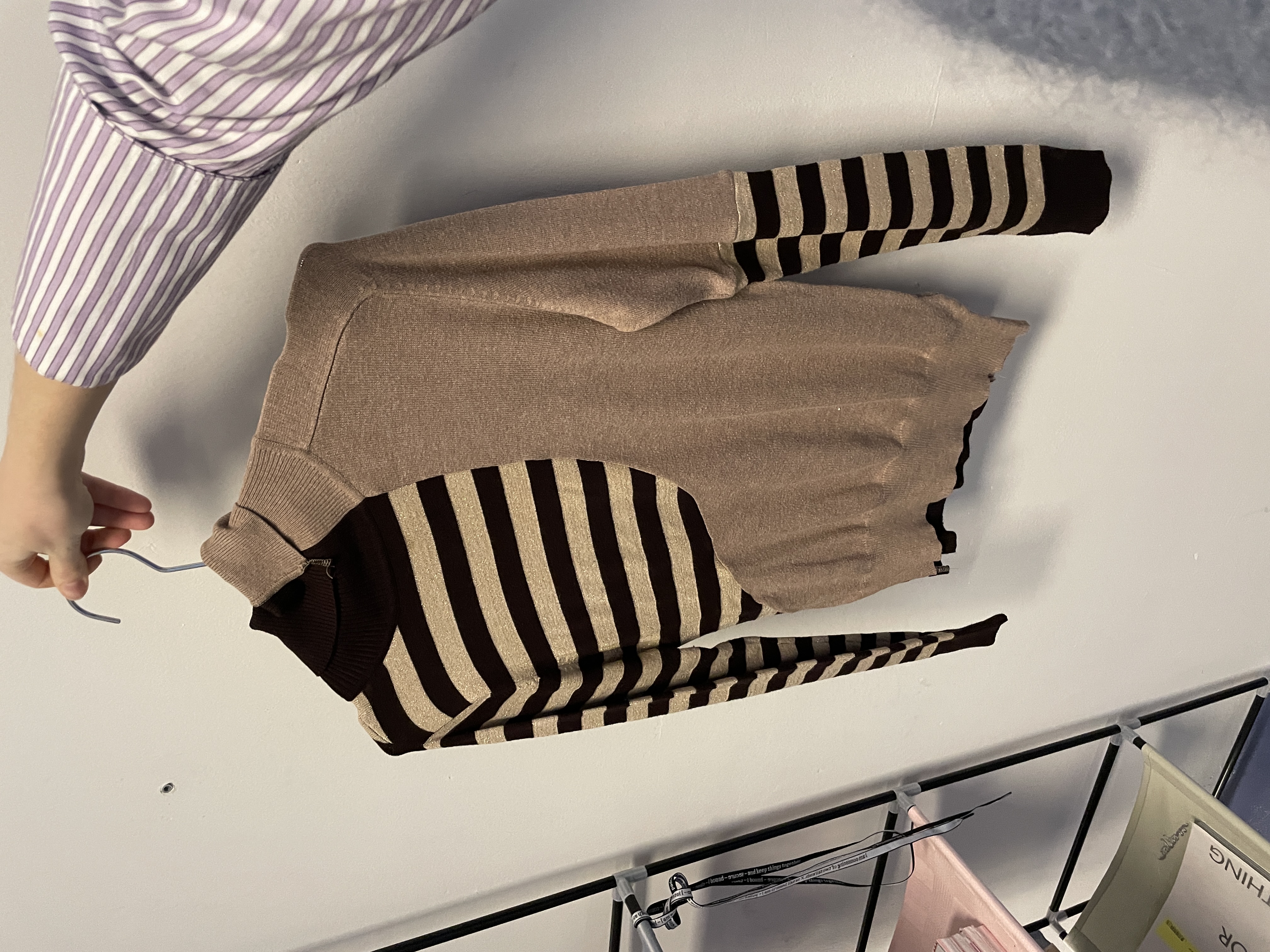
Wave Top
By Laura Dubourjal
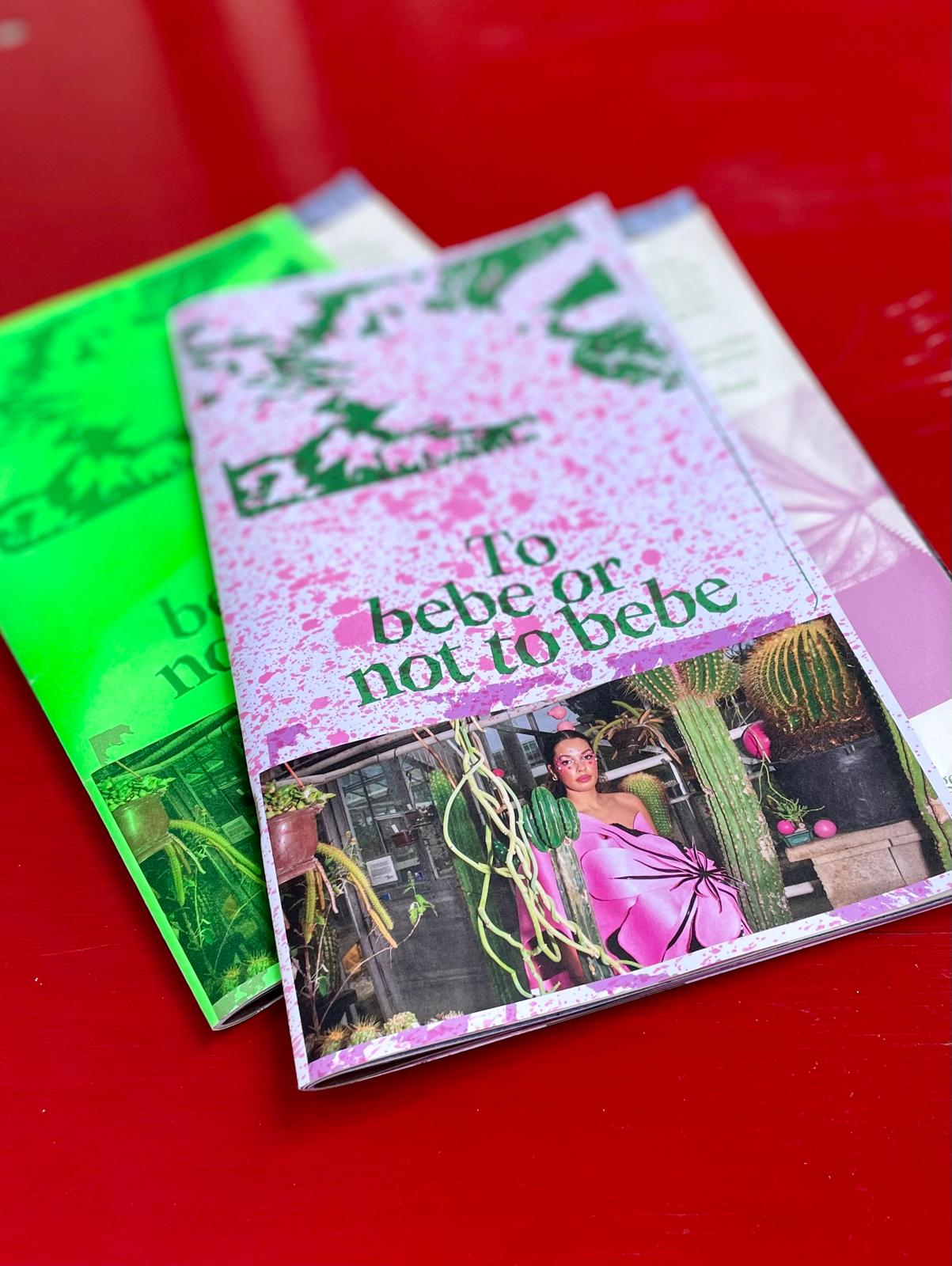
to Bebe or not to Bebe
By Romy van Eijk
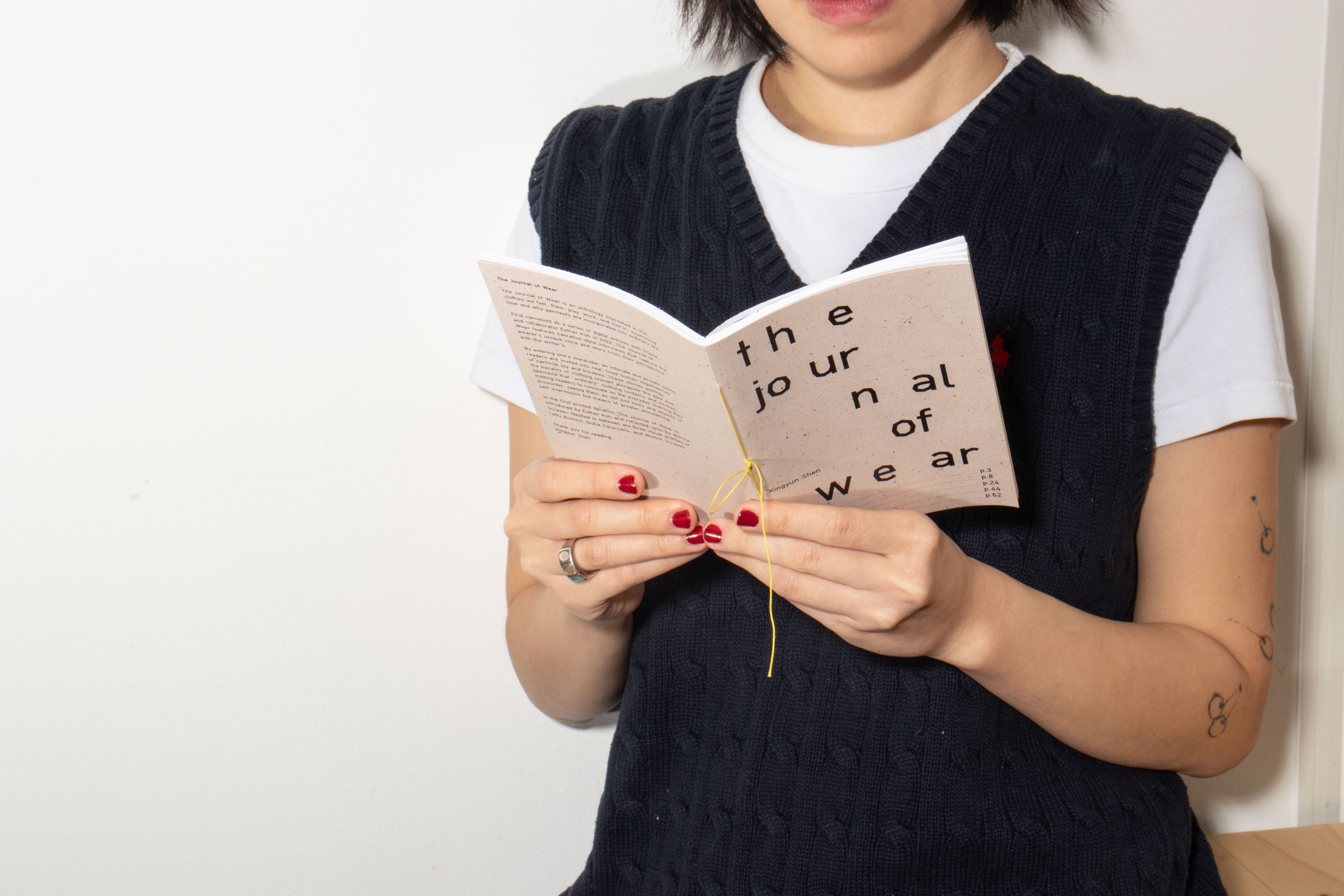
The Journal of Wear
By XingyunShen
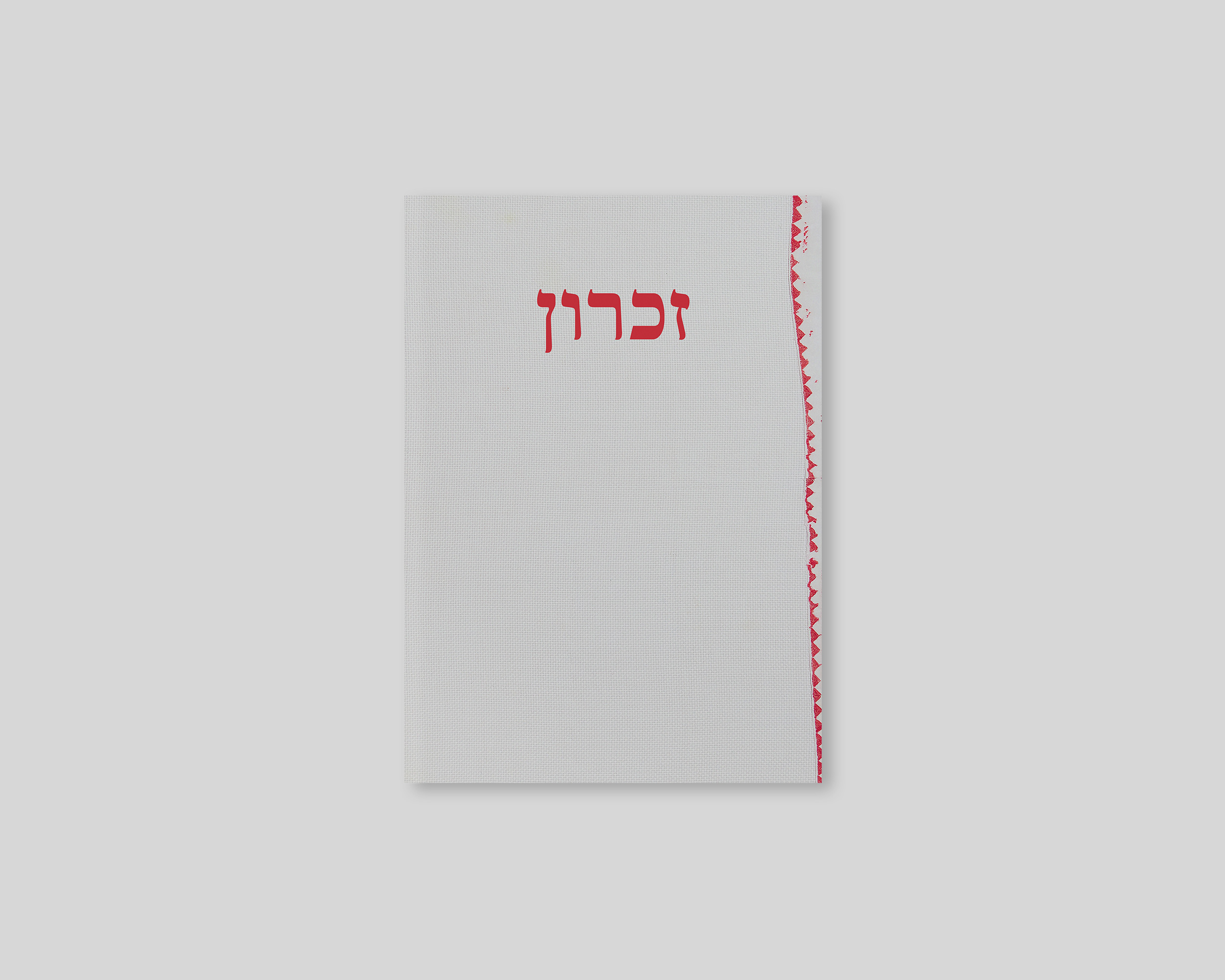
The Girl Who Crossed the River with a Tablecloth
By Lara Bongard
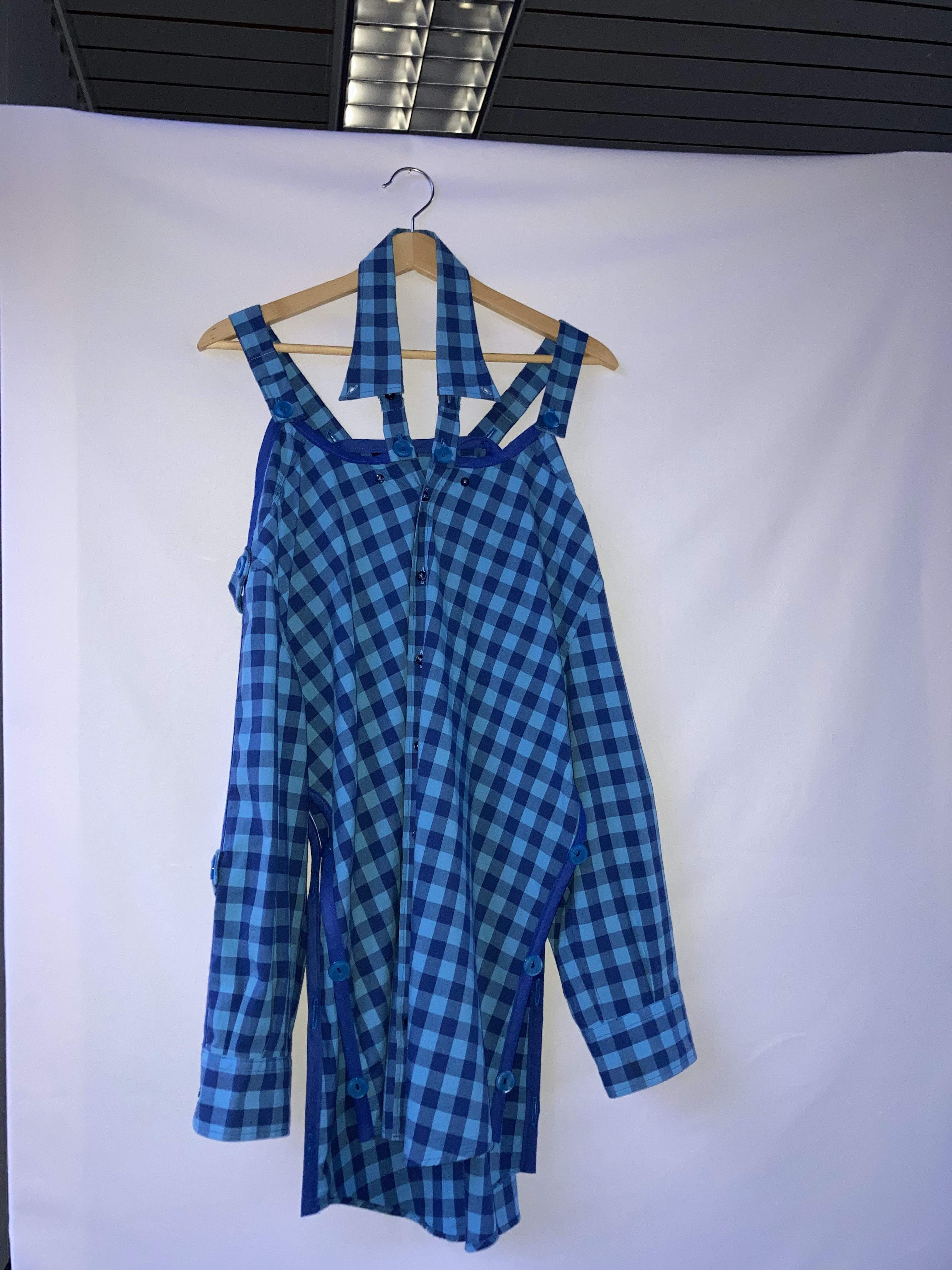
Strap Me Down Shirt
By Laura Dubourjal
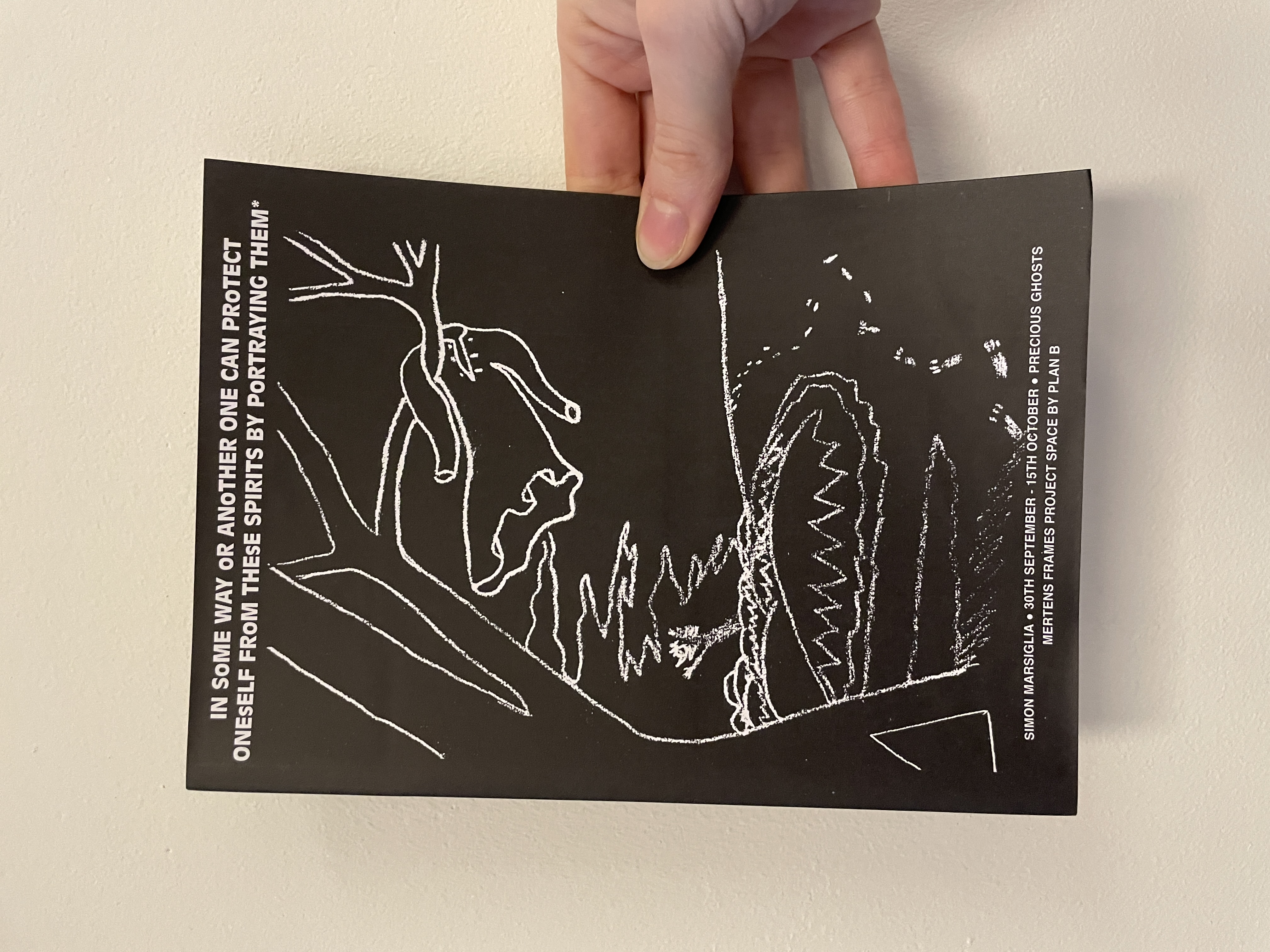
Precious Ghosts
By Simon Marsiglia
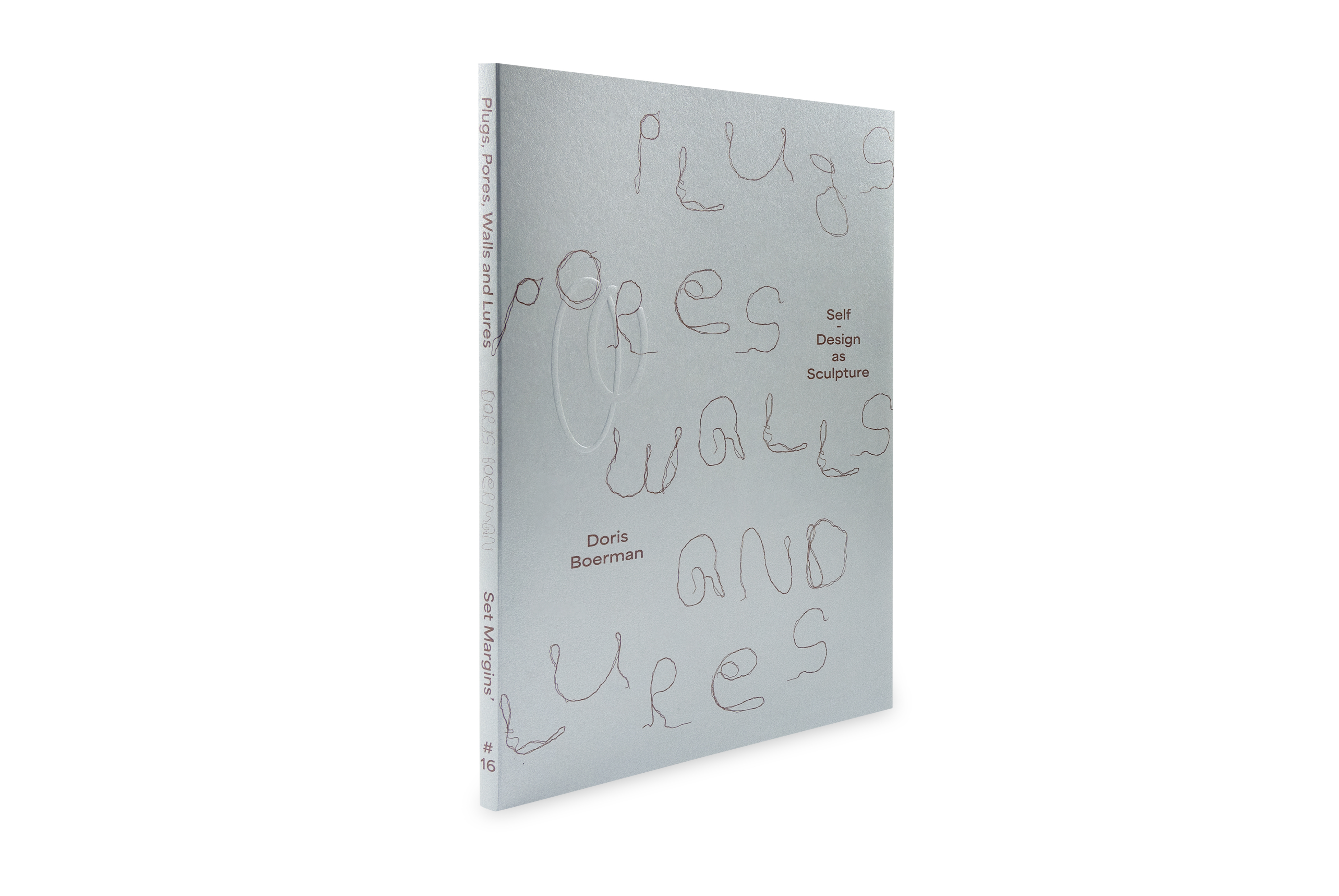
Plugs, Pores, Walls and Lures. Self-Design as Sculpture
By Doris Boerman
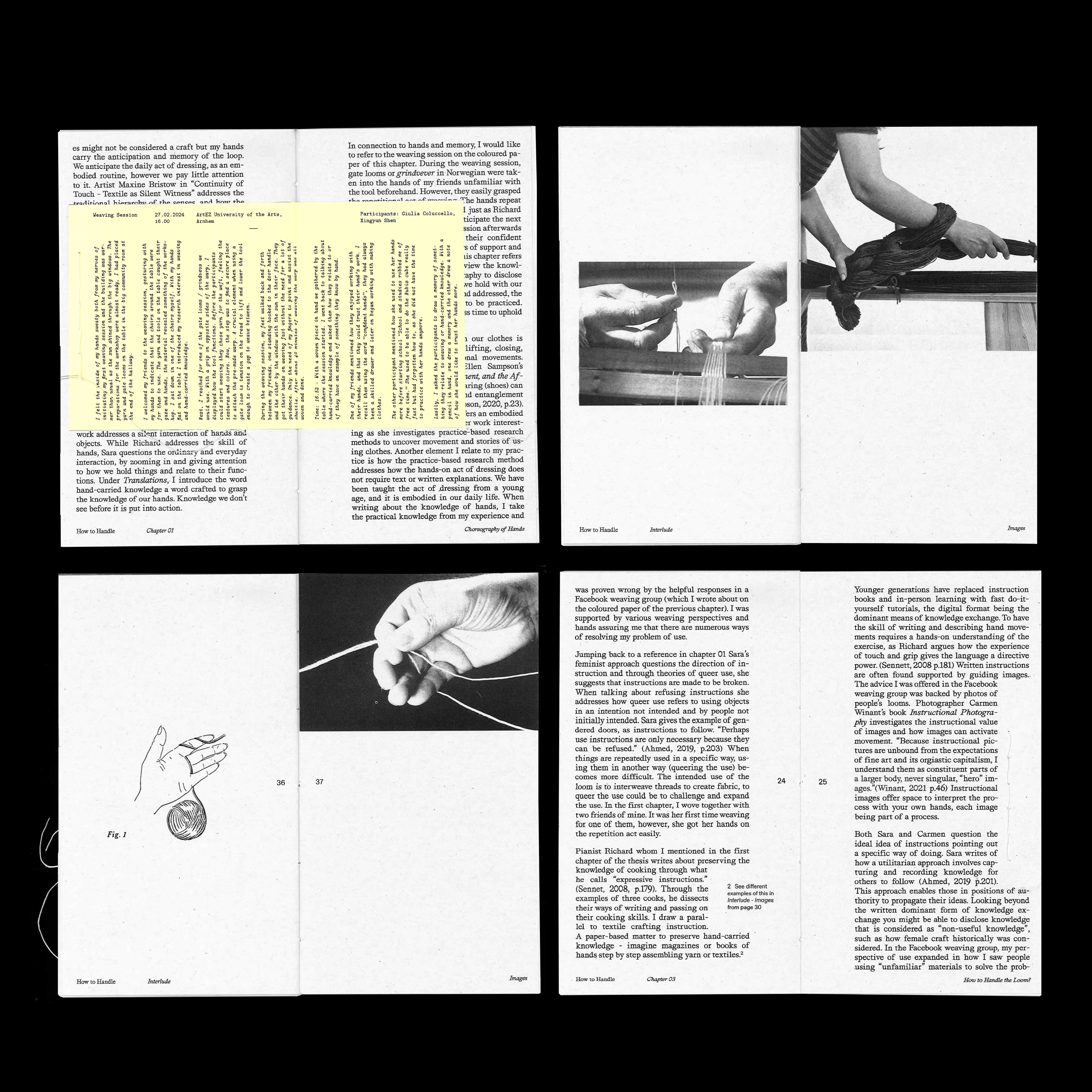
How To Handle
By Ingeborg Kvalnes
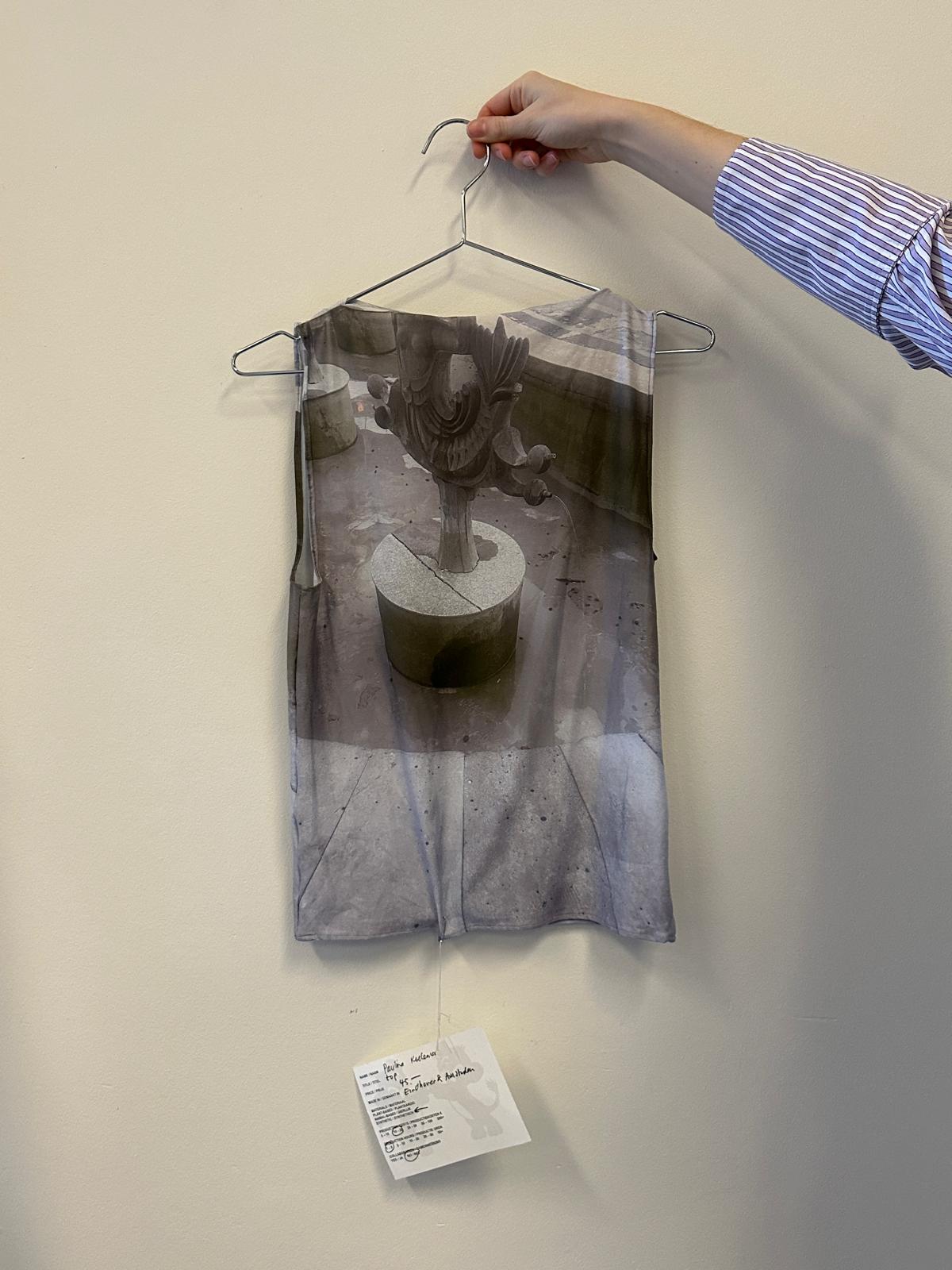
Fountain Top
By Paulina Koeleman
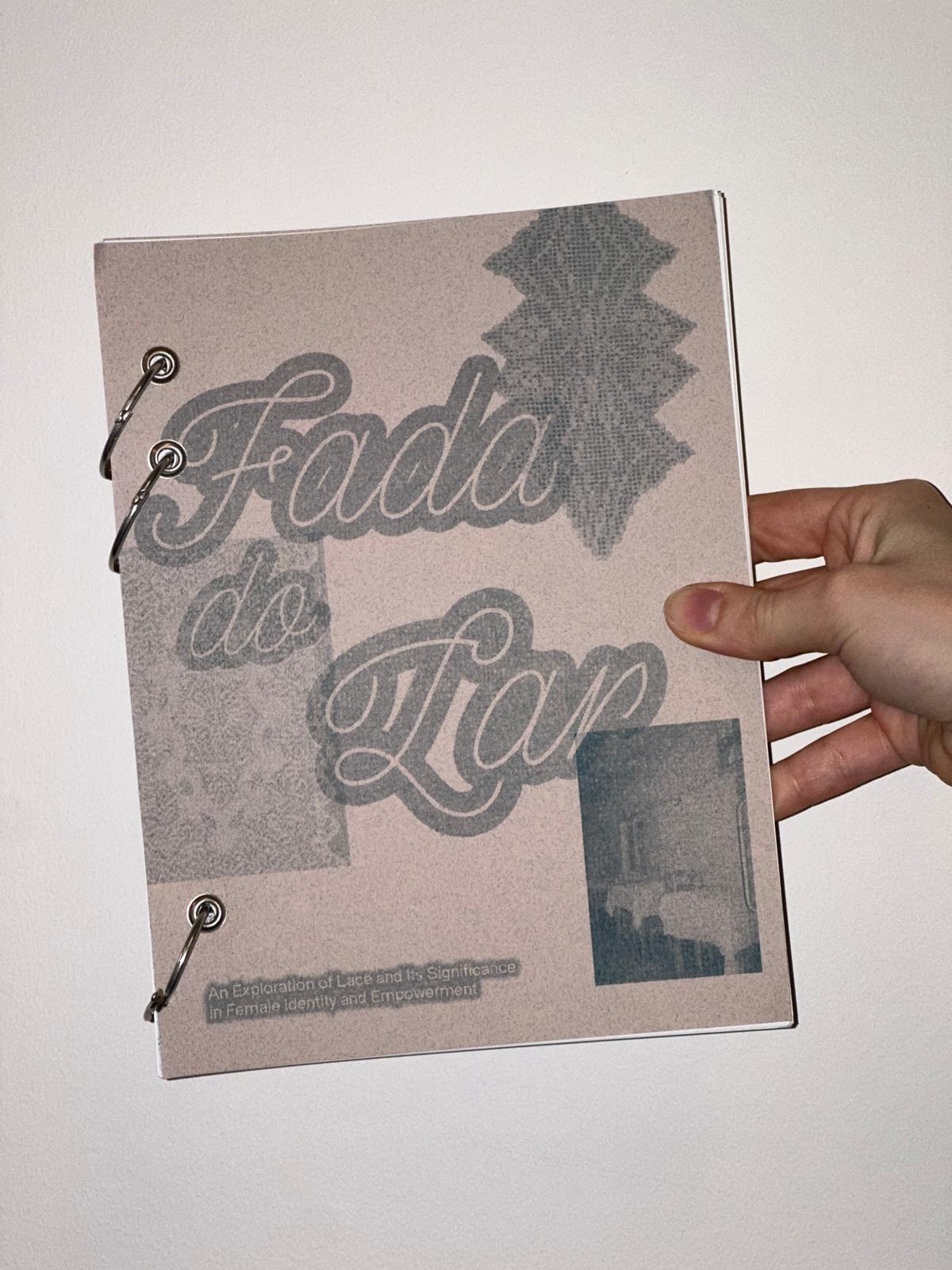
Fada do Lar
By Sophia Rausch
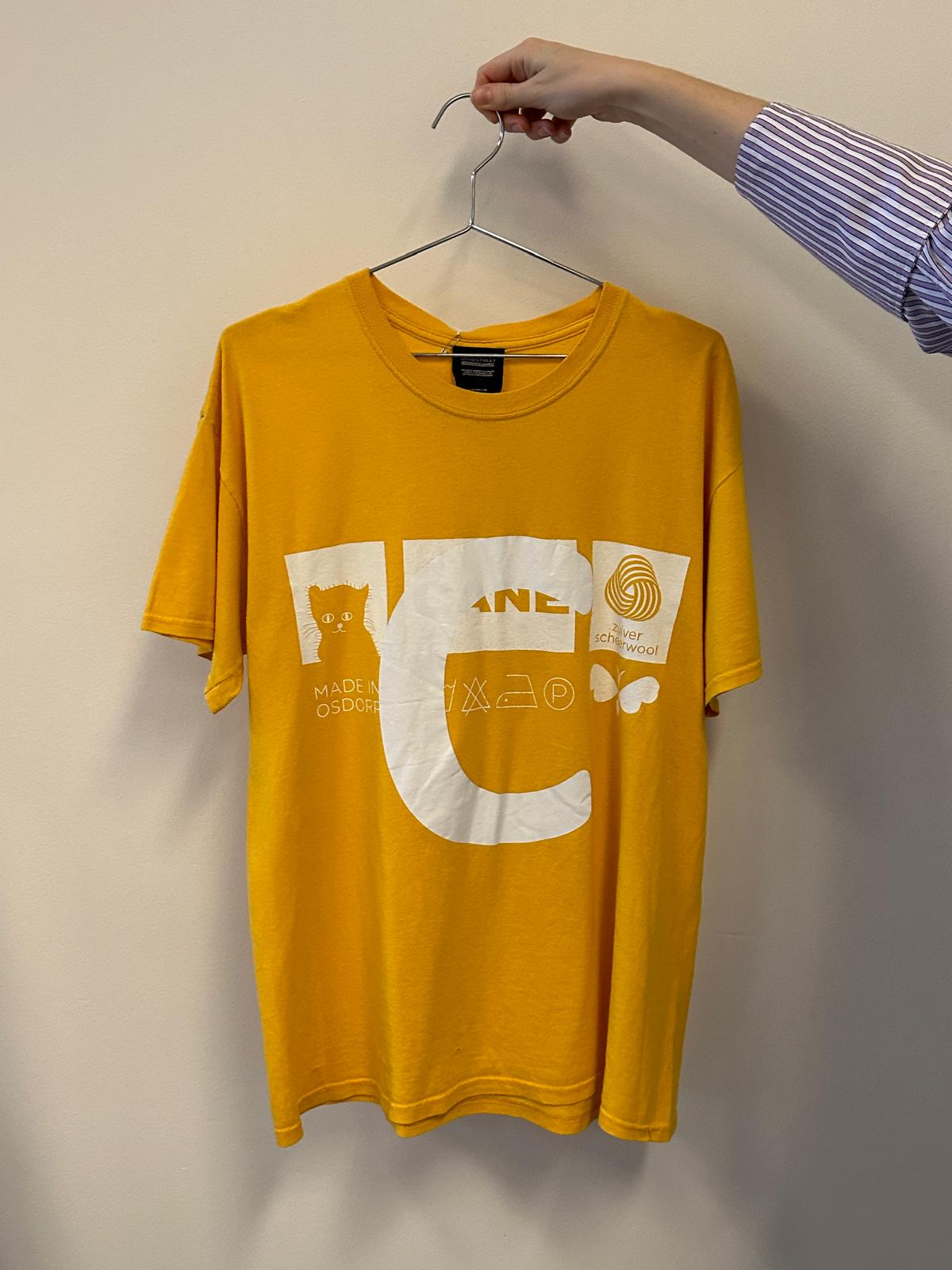
Cane made in Osdorp: T-shirts
By Eduardo Leon
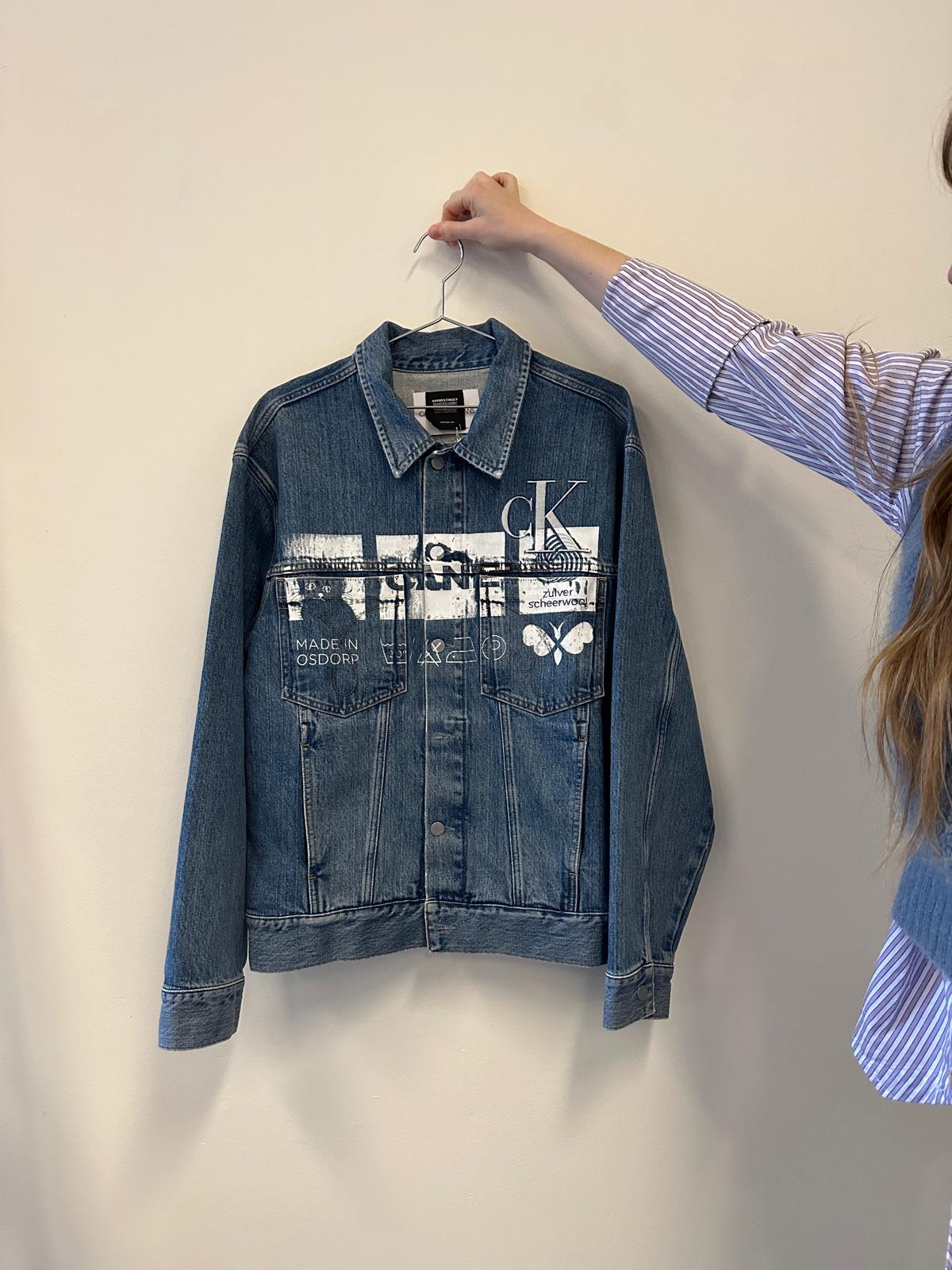
Cane made in Osdorp: Cane Klein seams jacket
By Eduardo Leon
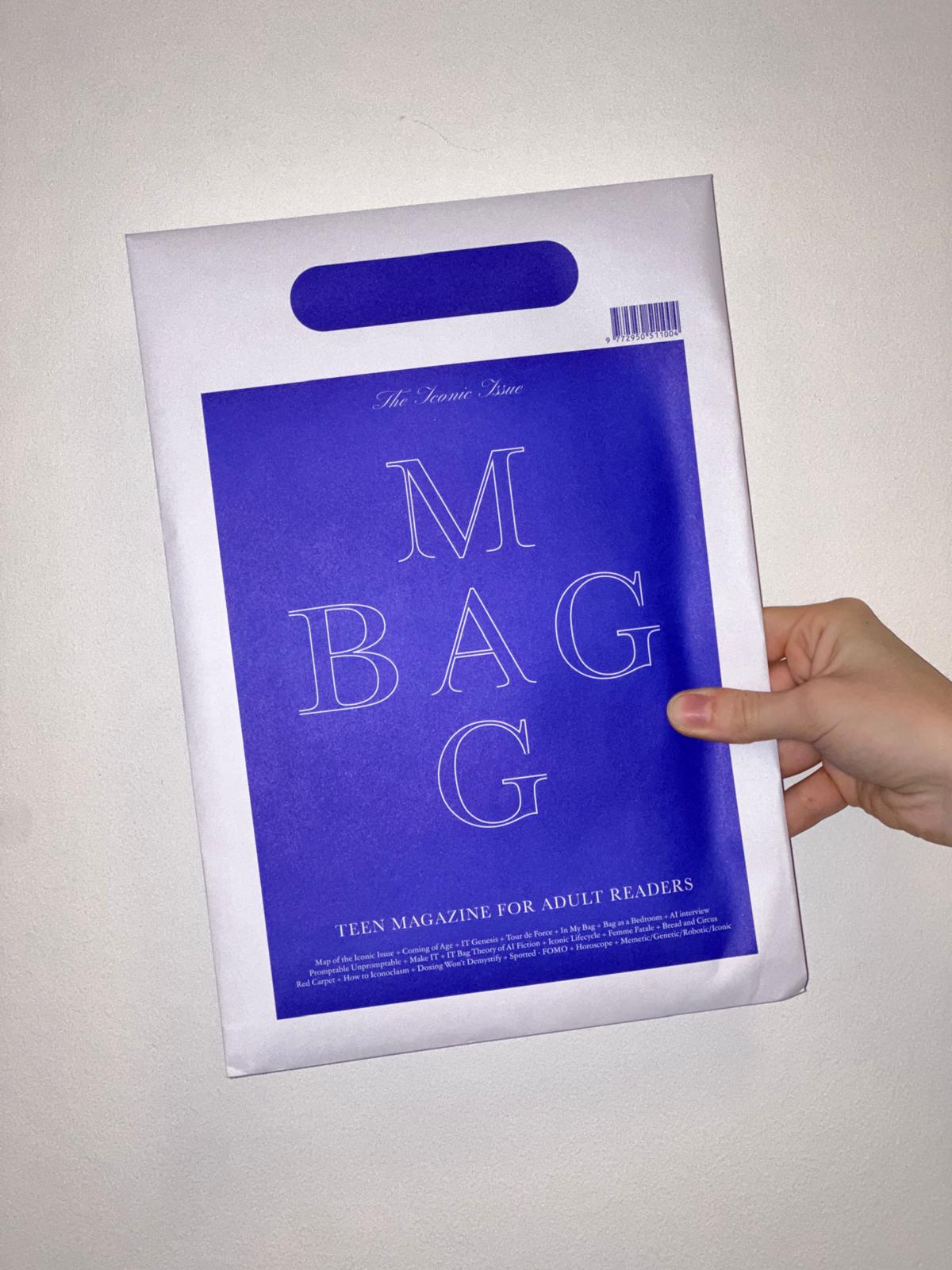
BagMag
By Elizaveta Federmesser

Trance Music Gloves
By Miglė Lukoševičiūtė
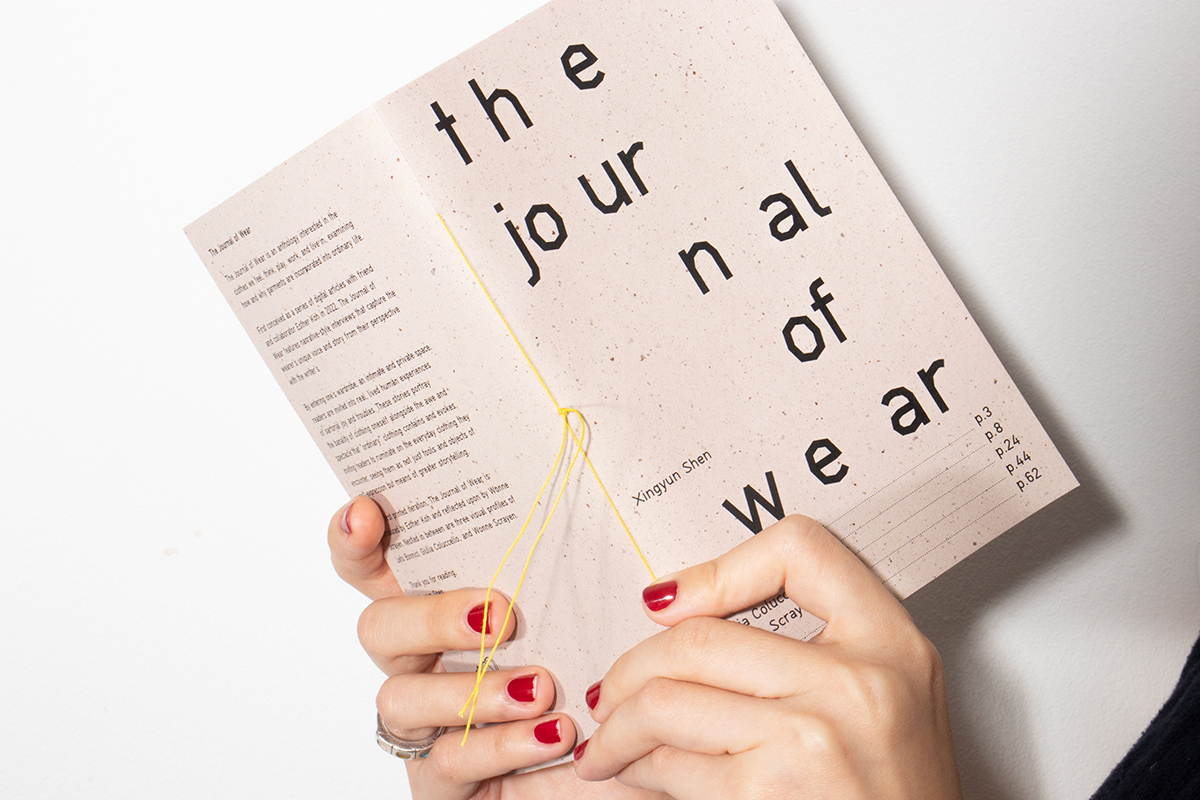
The Journal of Wear
By Xingyun Shen
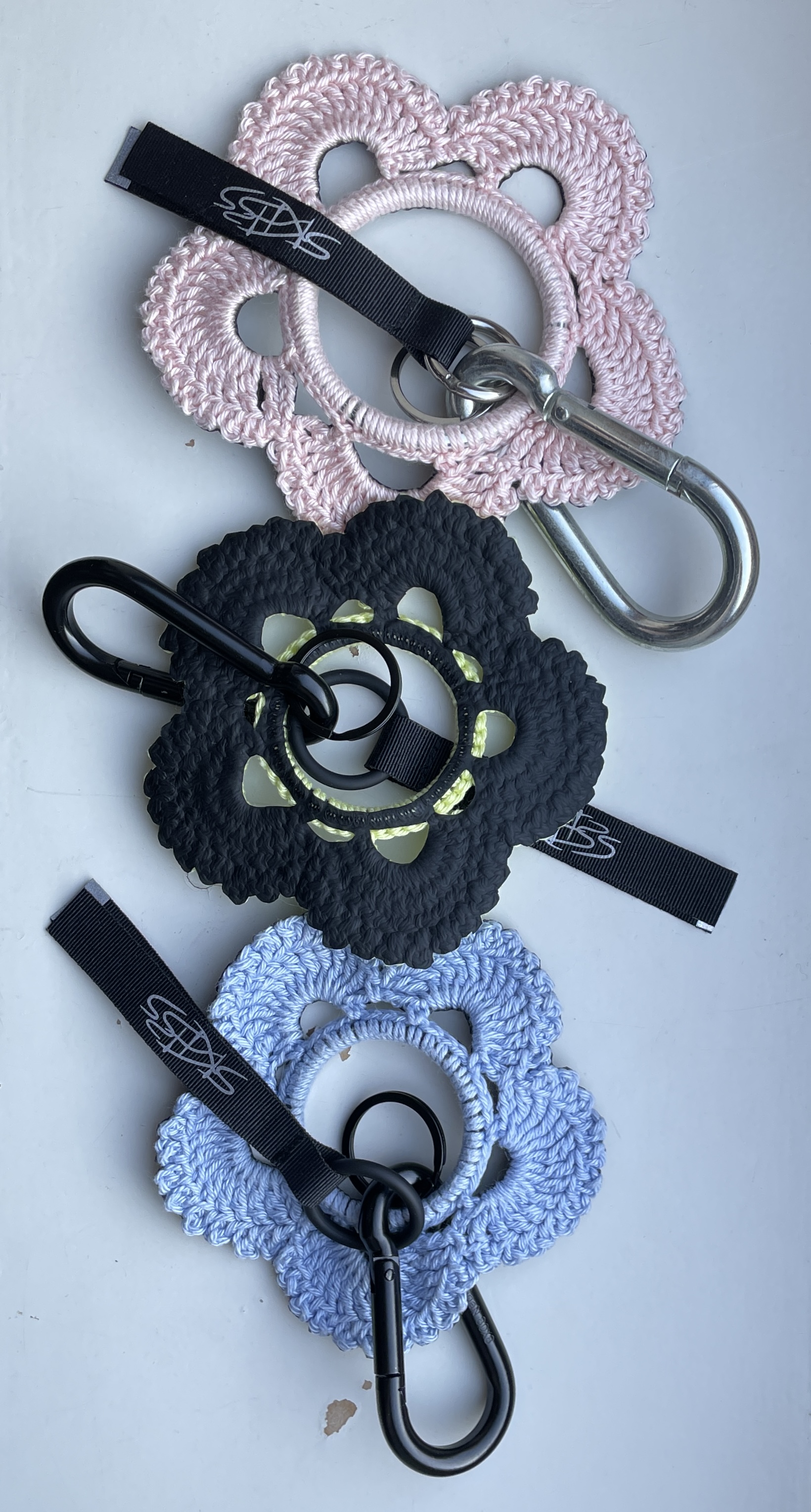
Crochet Flower Keychain - Pink
By Mika Perlmutter
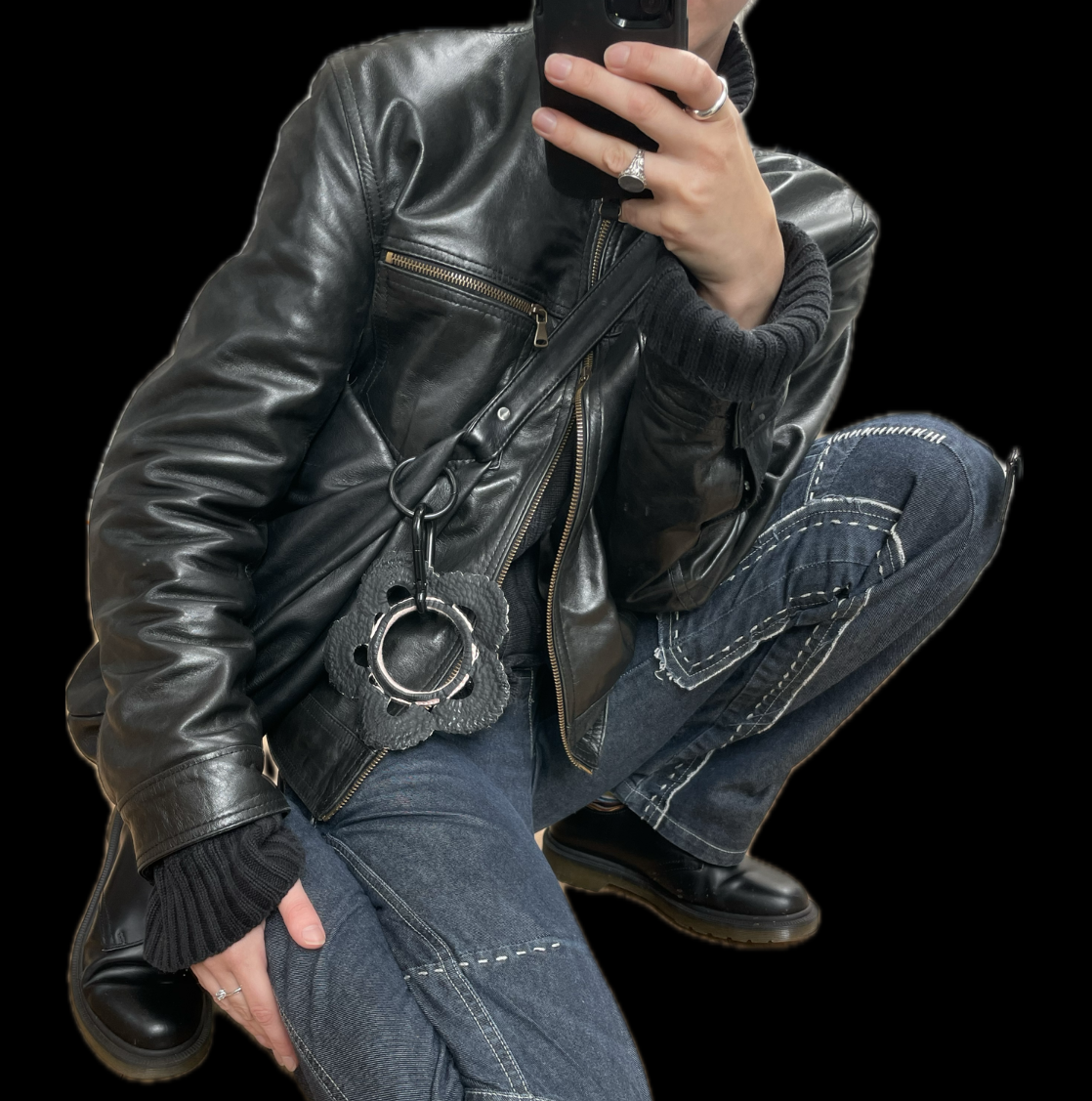
Crochet Flower Keychain - Black
By Mika Perlmutter
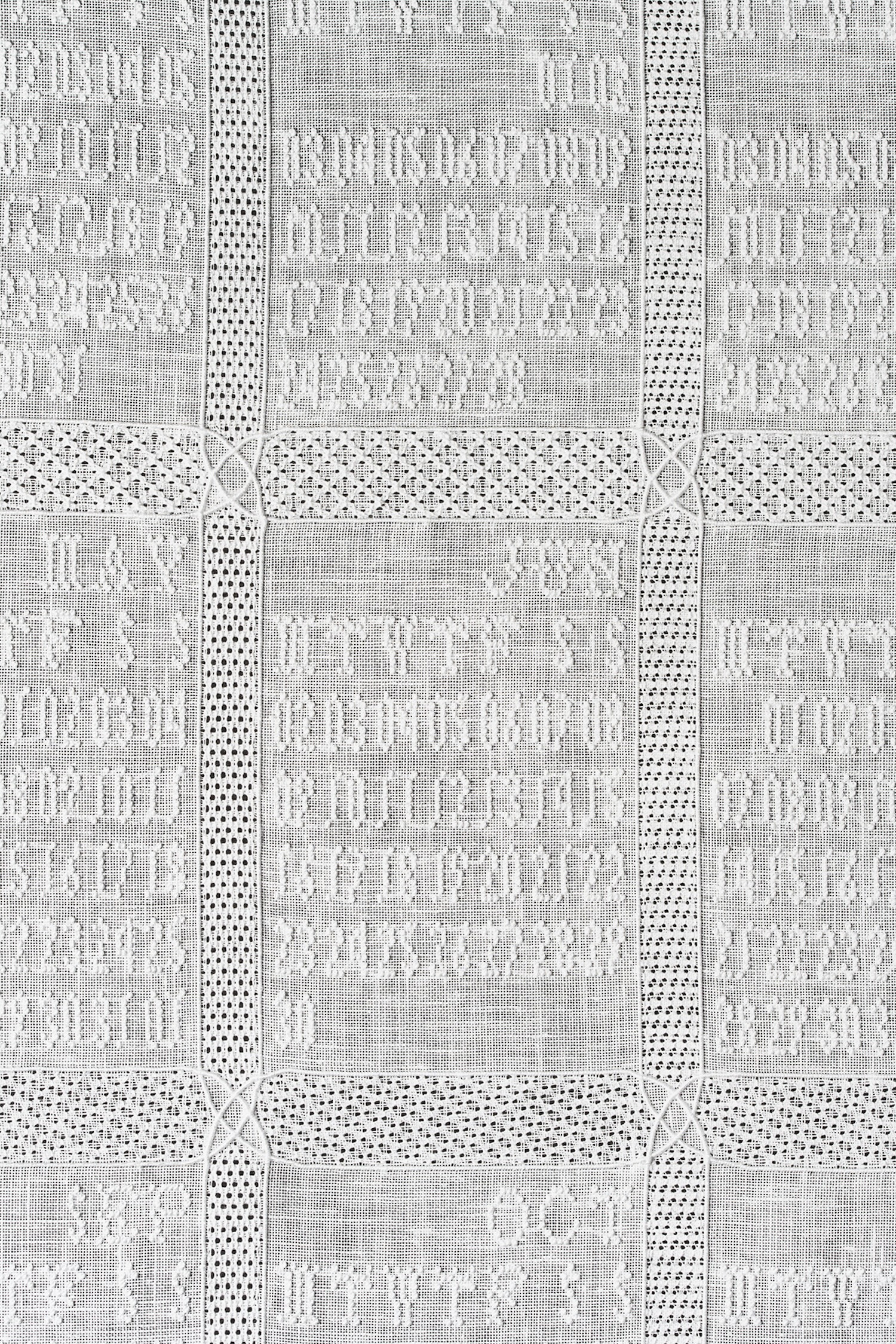
Calendar 2025: Pulled Thread
By Masaki Komoto
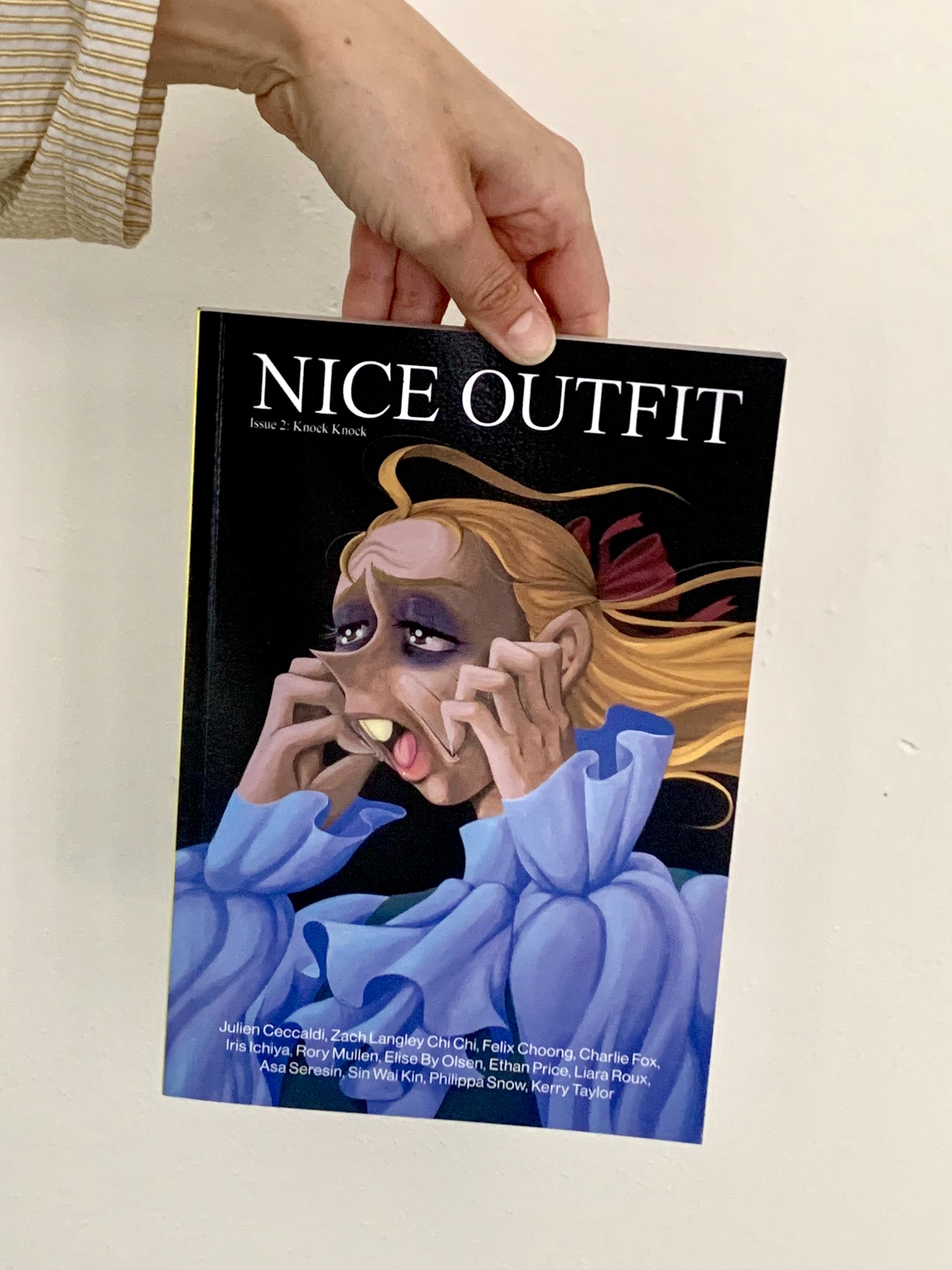
Nice Outfit
By Felix Choong
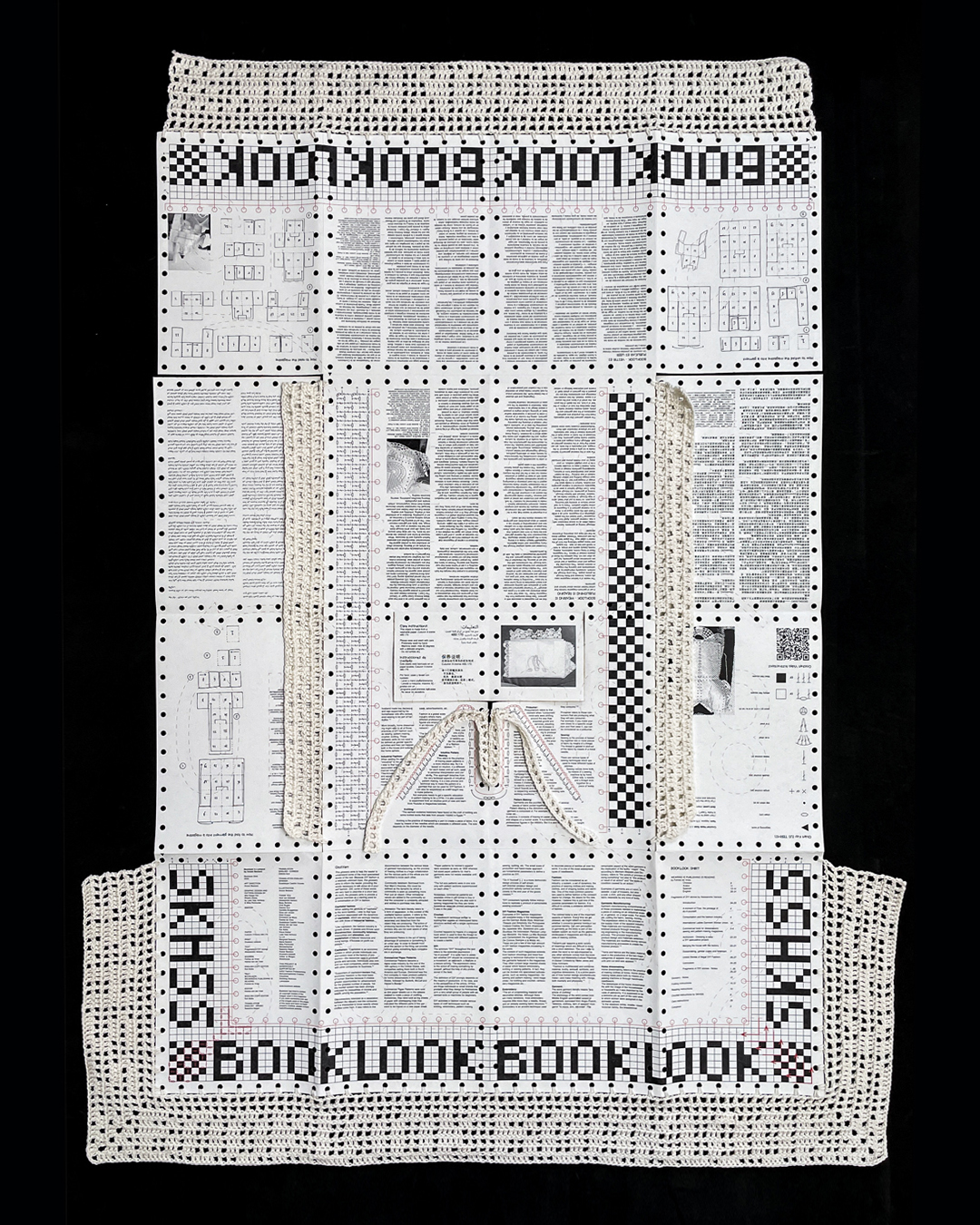
[Sold Out] Issue 2: Booklook Shirt
By Anouk Beckers, Alessandra Varisco, Lejla Vala Verheus, Mika Perlmutter & Femke de Vries
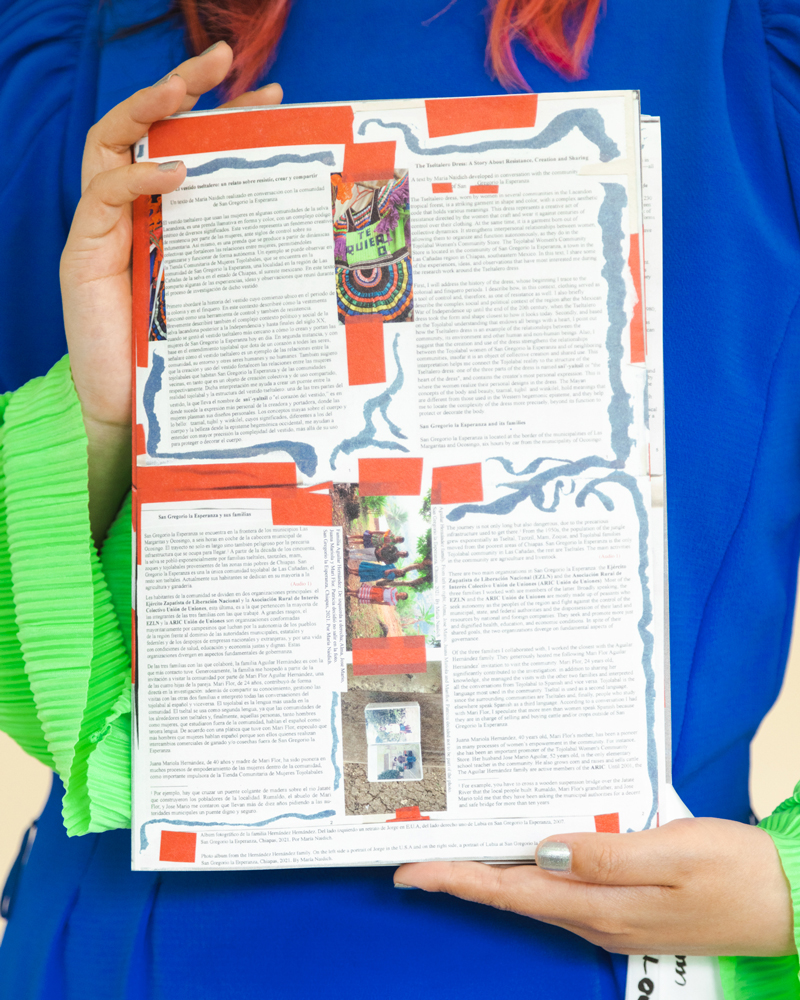
Issue 1: Booklook Apron-Delantal
By Anouk Beckers, María Naidich & Femke de Vries, Rietlanden Women's Office
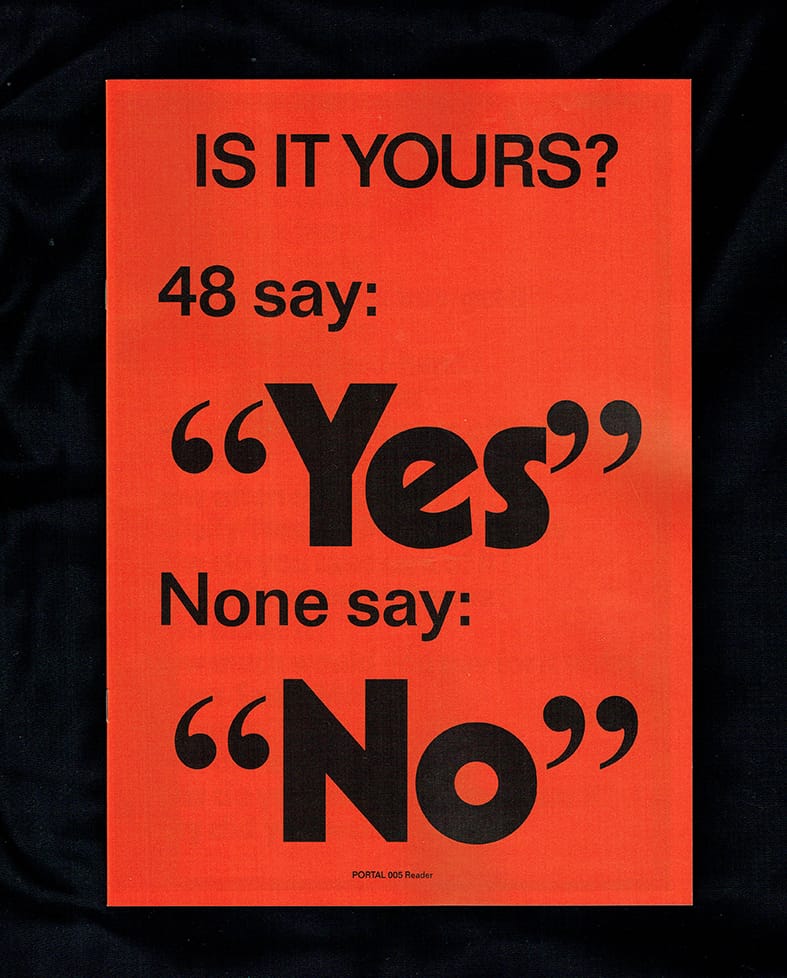
PORTAL 005 Reader
By Elisa van Joolen (ed.)
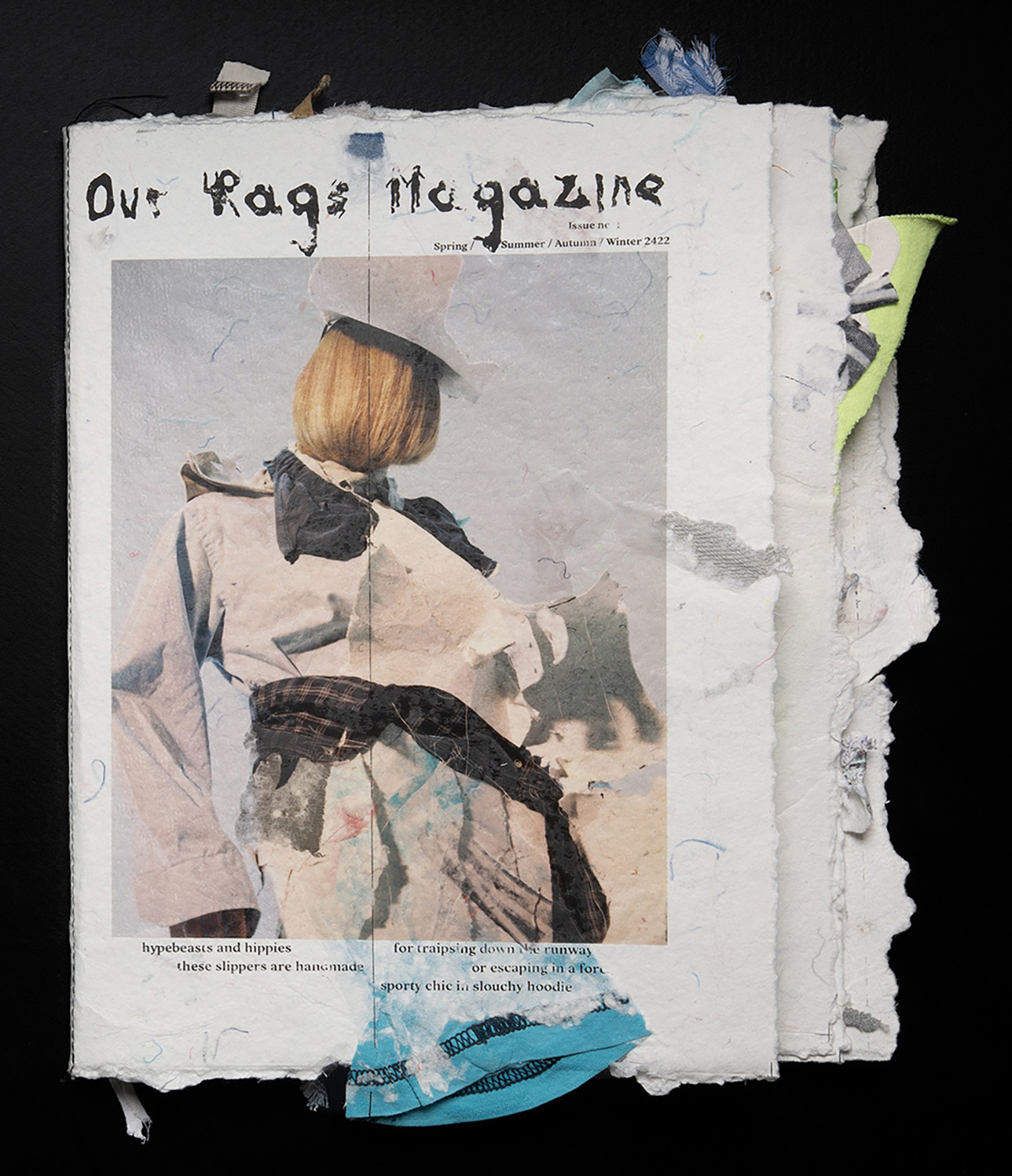
Our Rags Magazine
By Aimée Zito Lema & Elisa van Joolen (eds.)
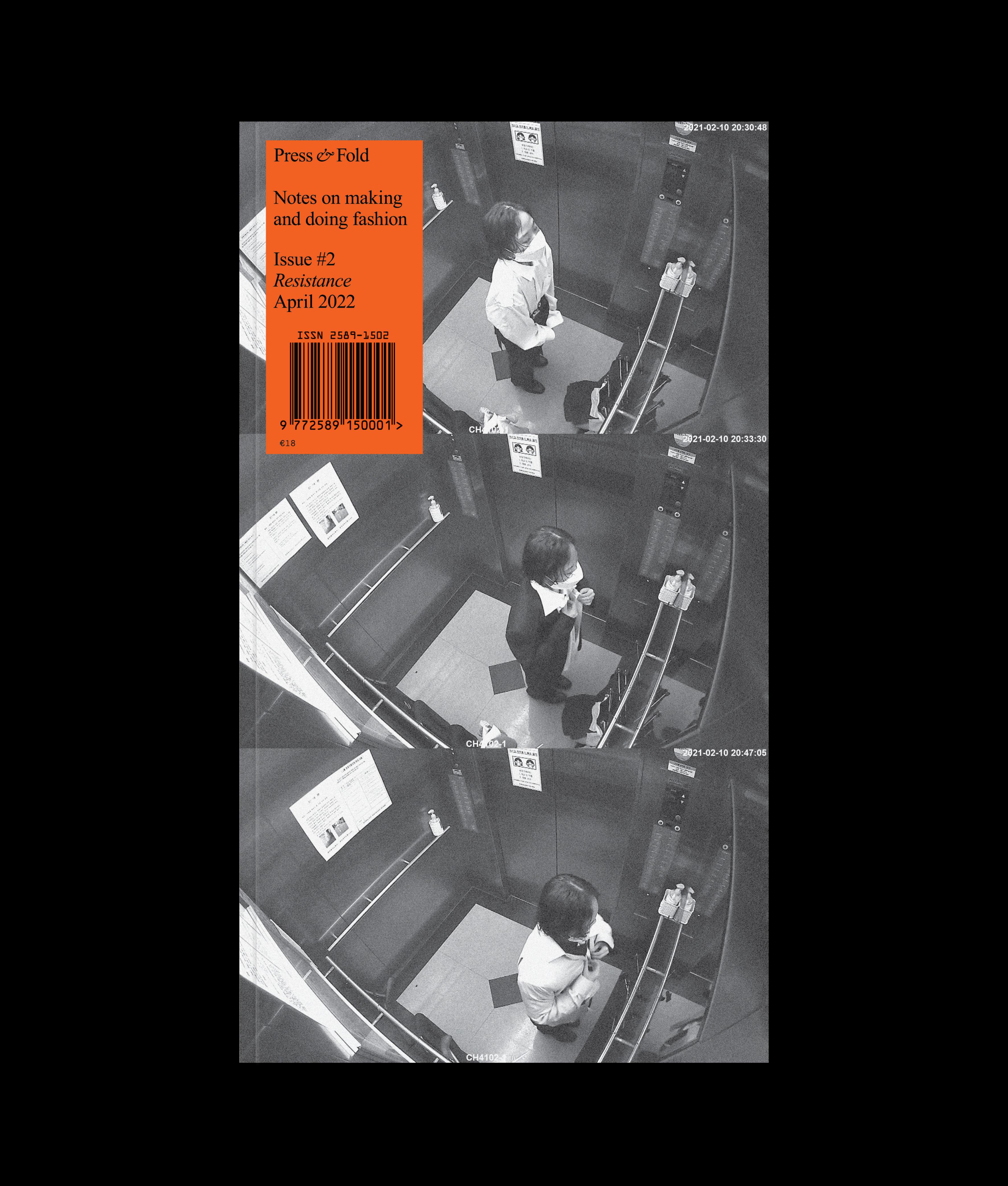
Press & Fold #2 | The Resistance Issue
By Hanka van der Voet (ed.)
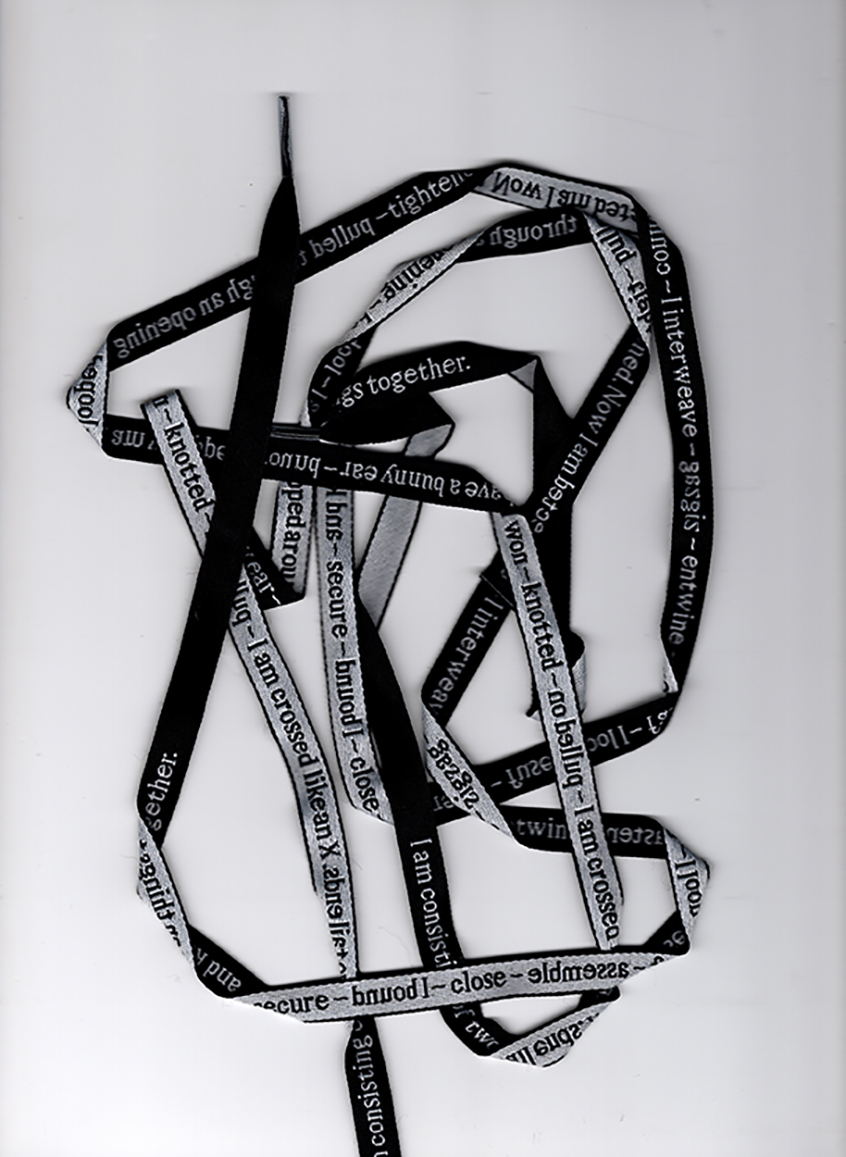
Warehouse Wear | Shoelaces
By Warehouse
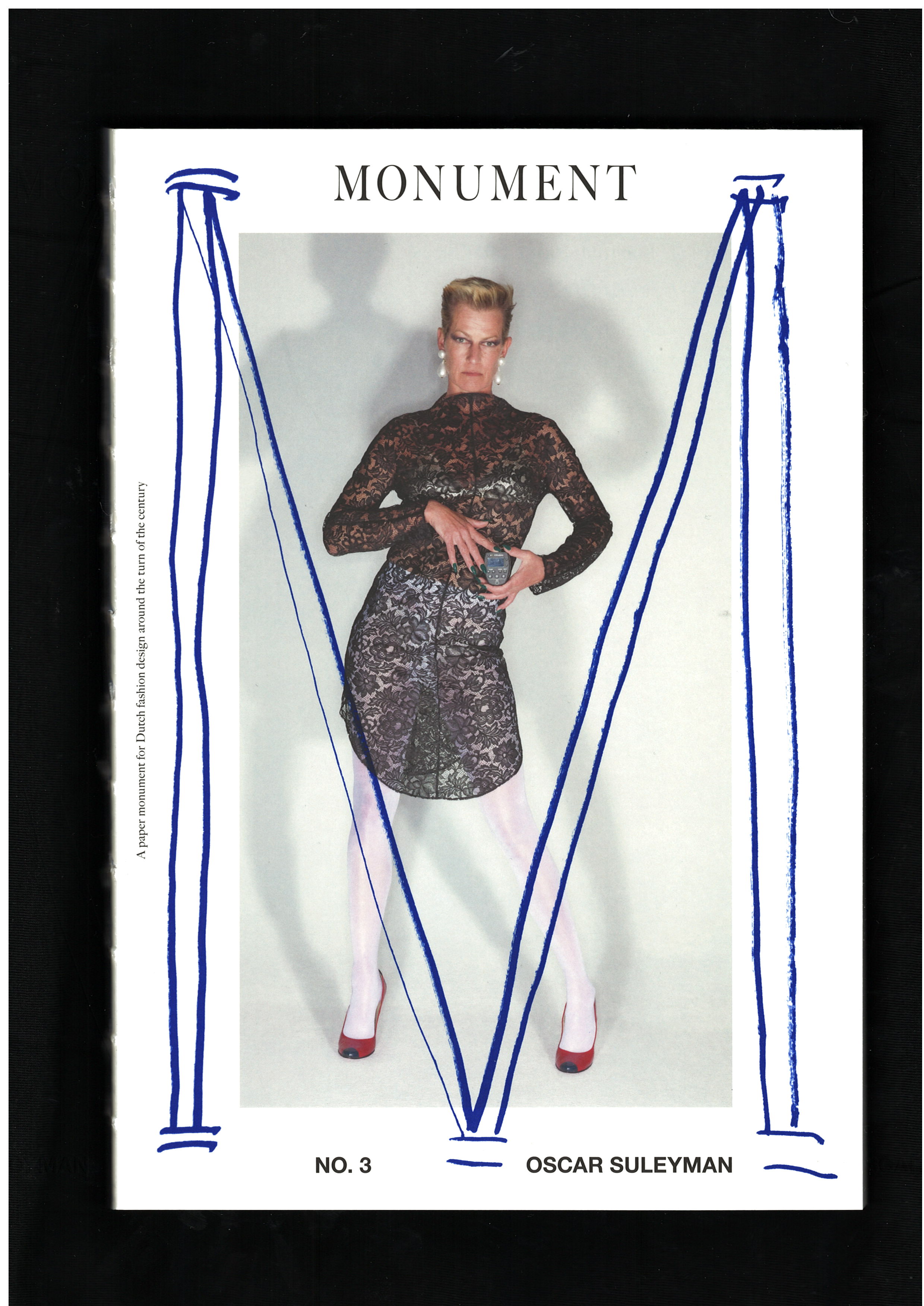
[Sold Out] Monument Issue #3 | Oscar Suleyman
By Mary-Lou Berkulin (ed.)
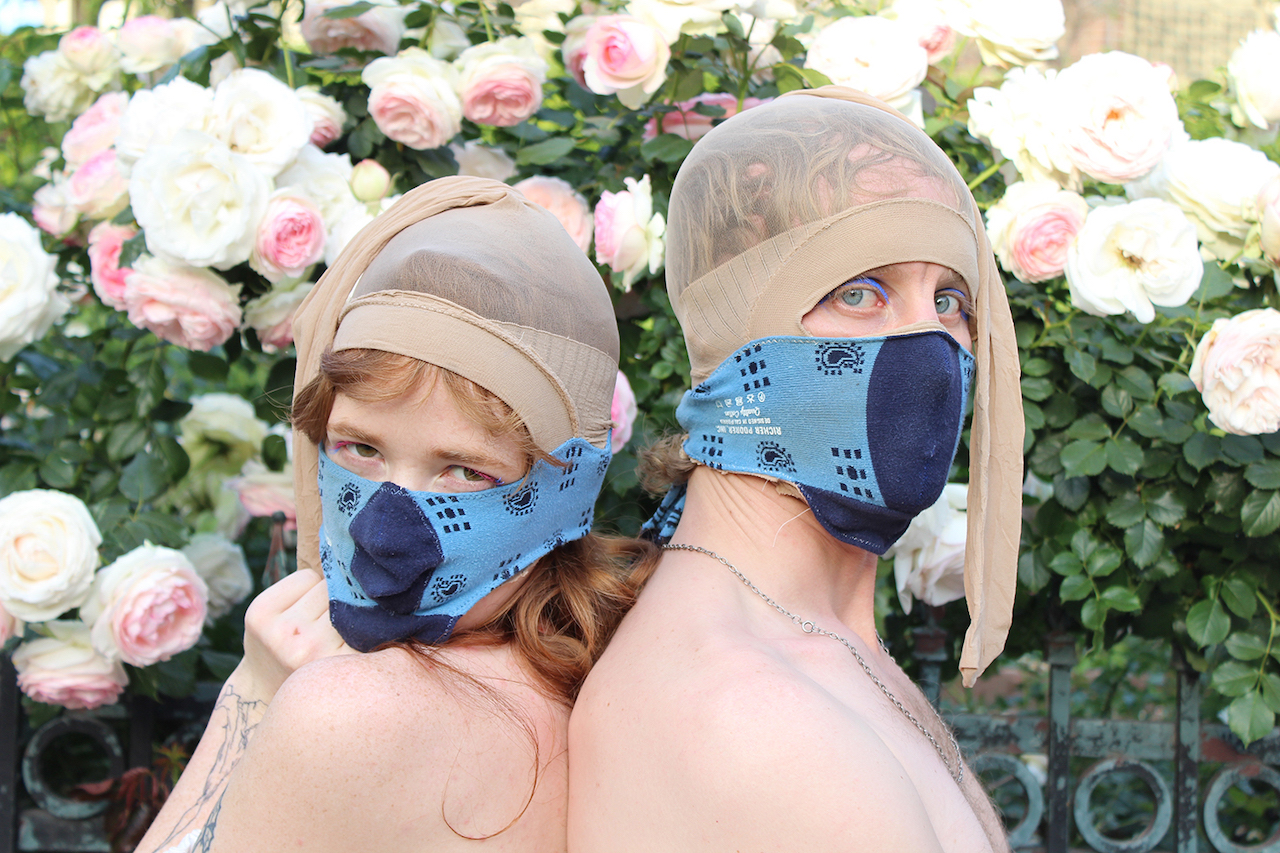
Warehouse Wear | The Face Mask Series I
By Femail Forever
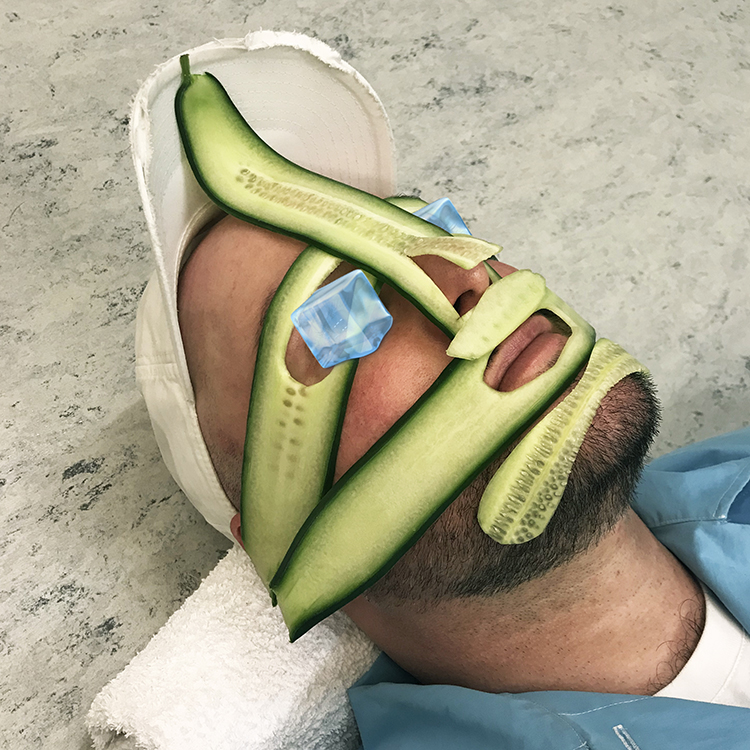
Warehouse Wear | The Face Mask Series II
By Schueller de Waal
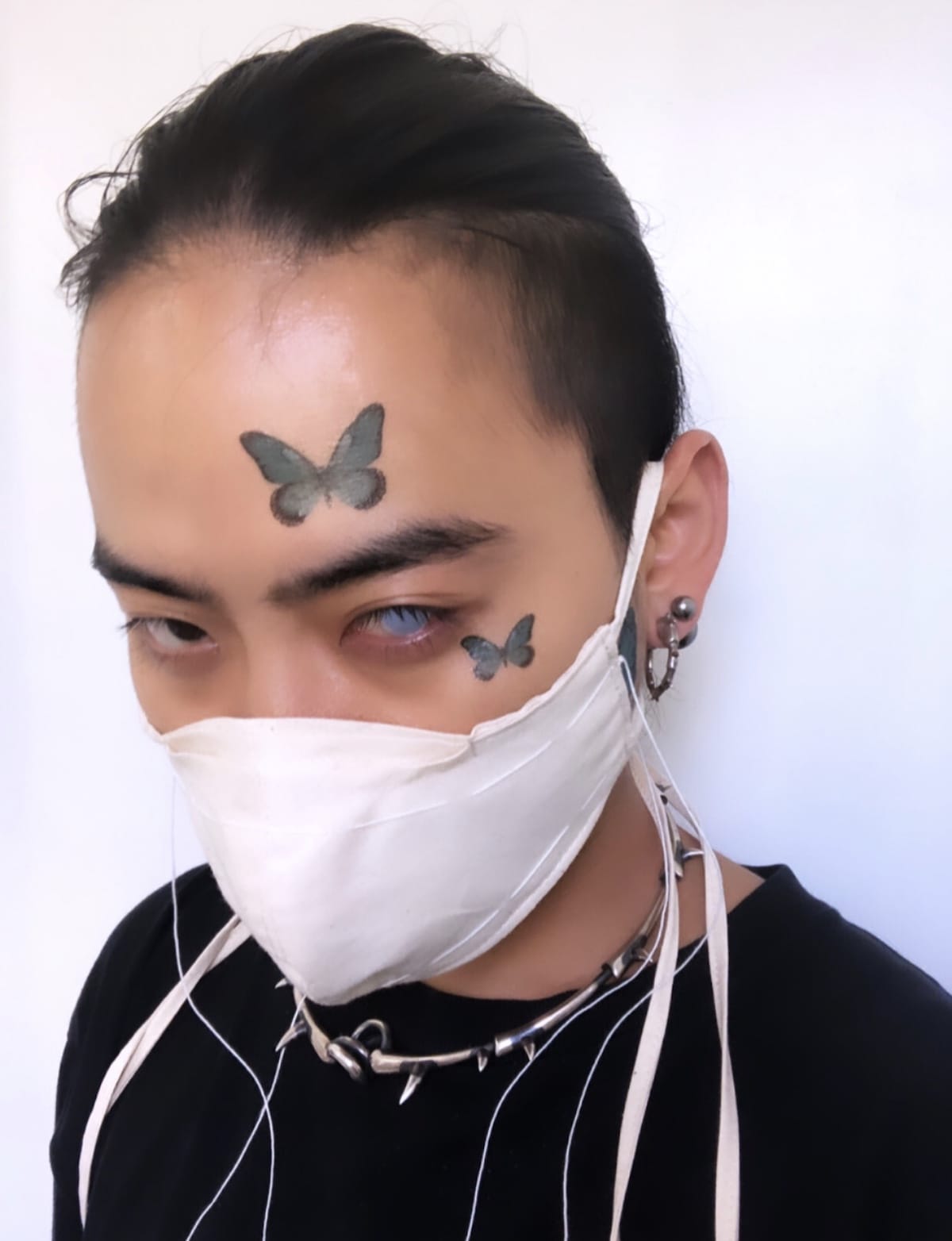
Warehouse Wear | The Face Mask Series III
By Sho Konishi
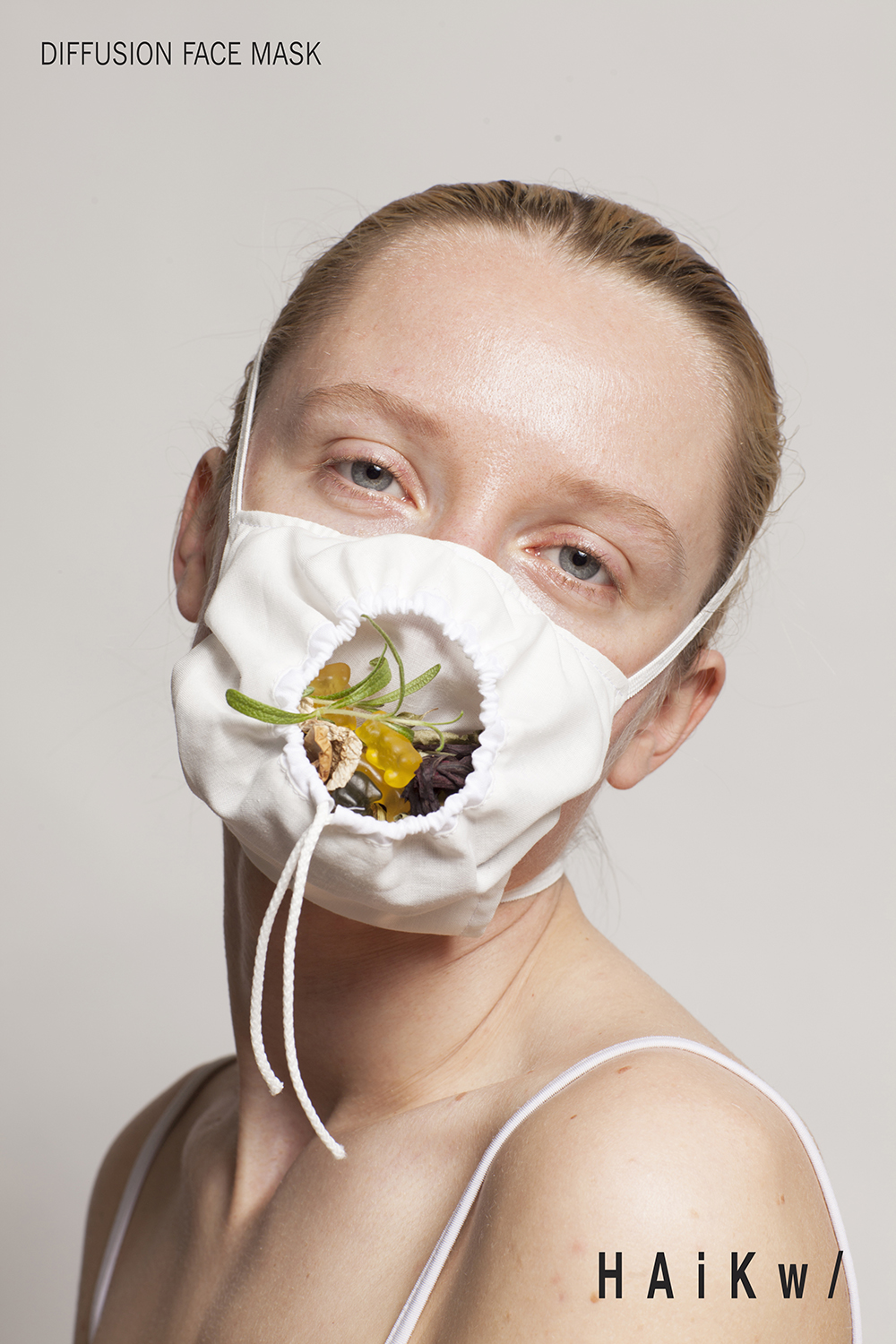
Warehouse Wear | The Face Mask Series IV
By HAiKw/
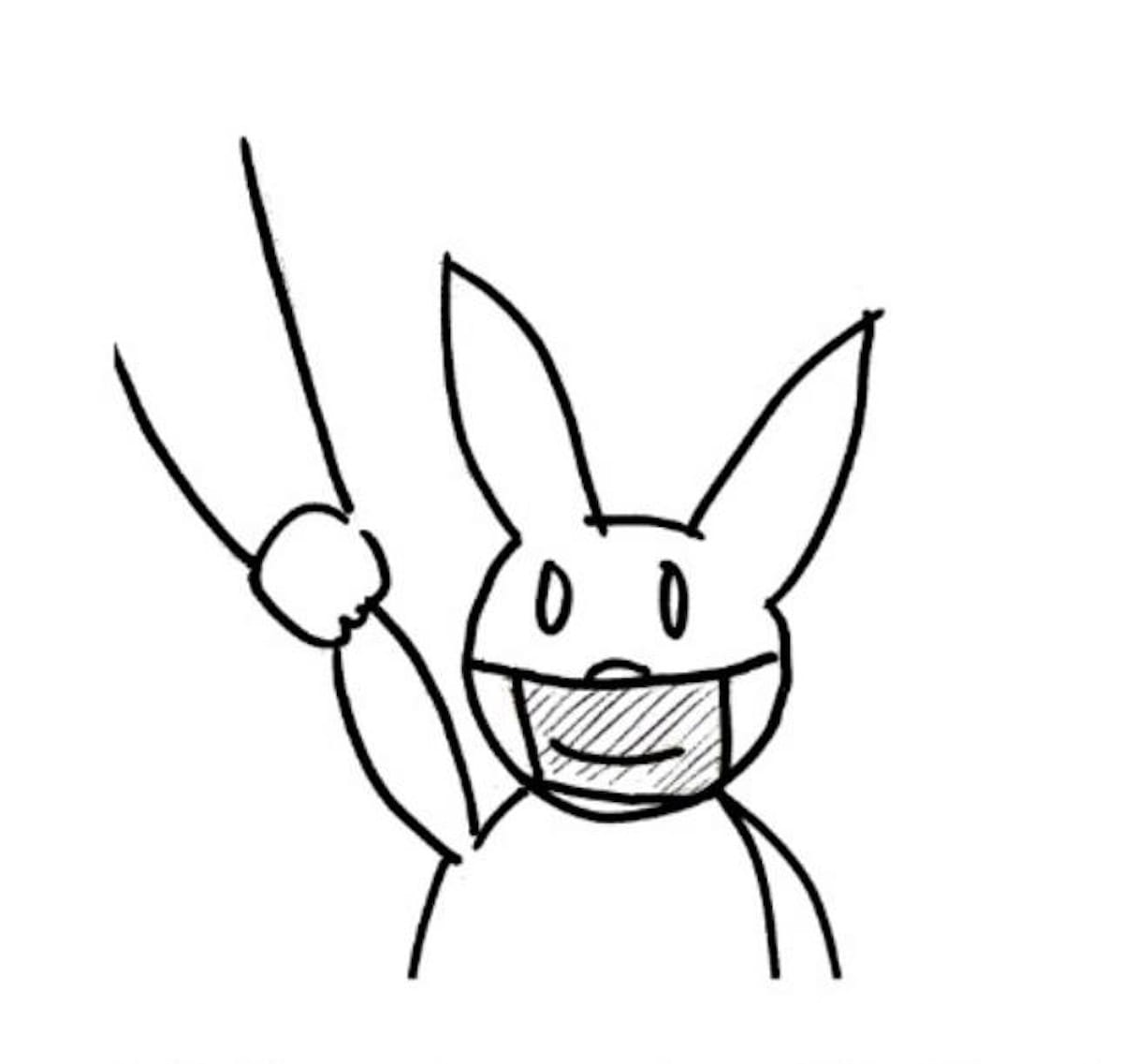
Warehouse Wear | The Face Mask Series V
By Lucia Cuba
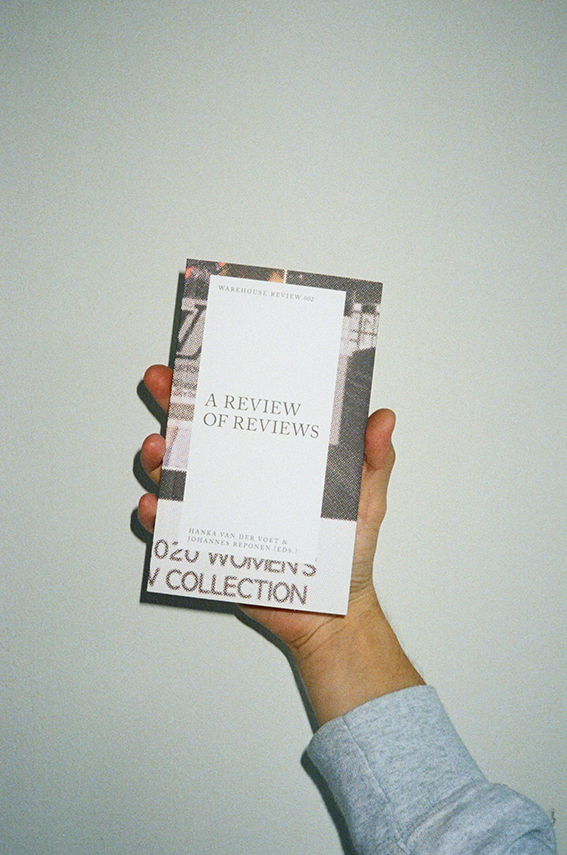
[Sold Out] Warehouse Review 002 | A Review of Reviews
By Hanka van der Voet & Johannes Reponen (eds.)
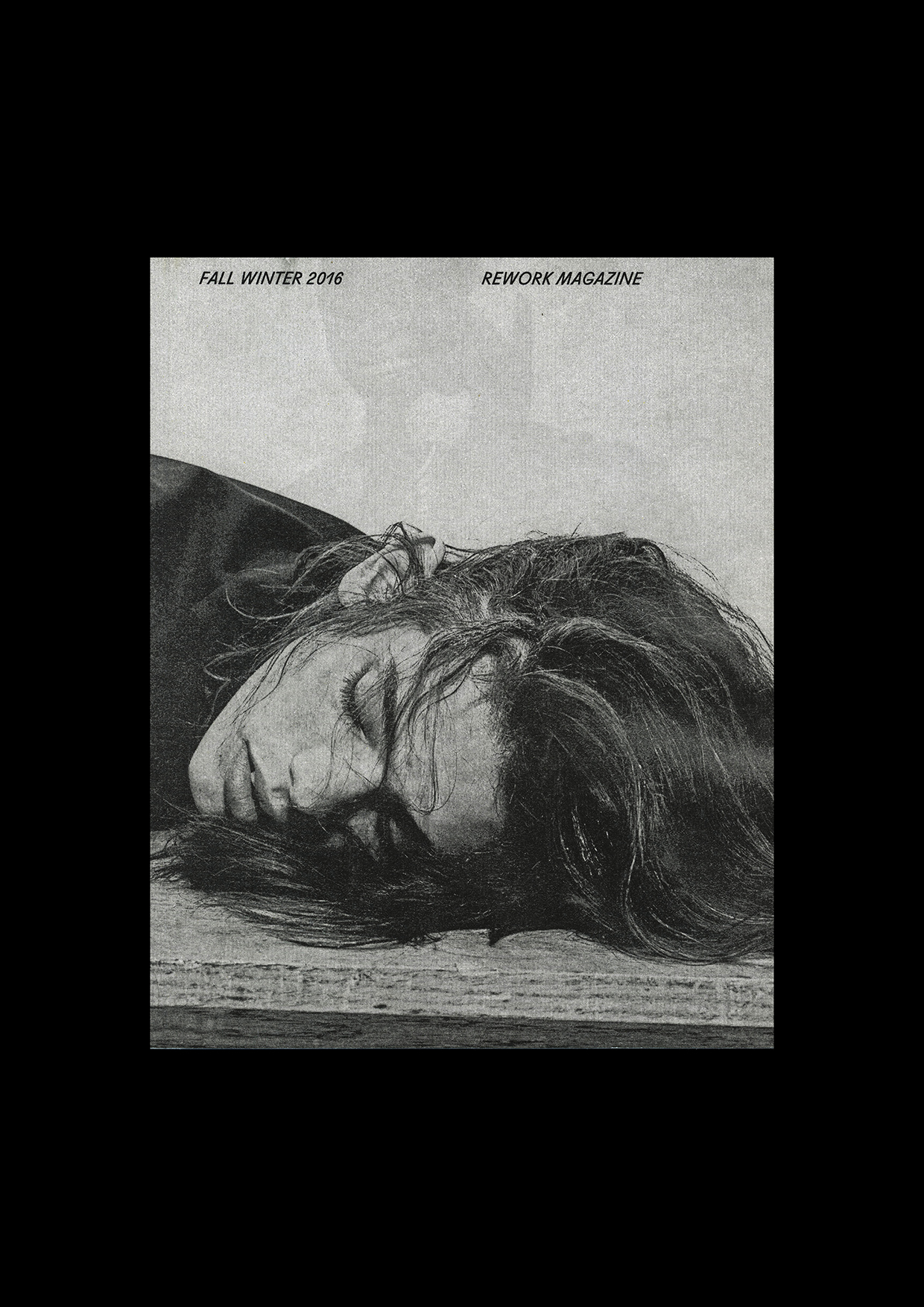
Rework Magazine
By Edwin van Gelder and Johann Tangyong (eds.)
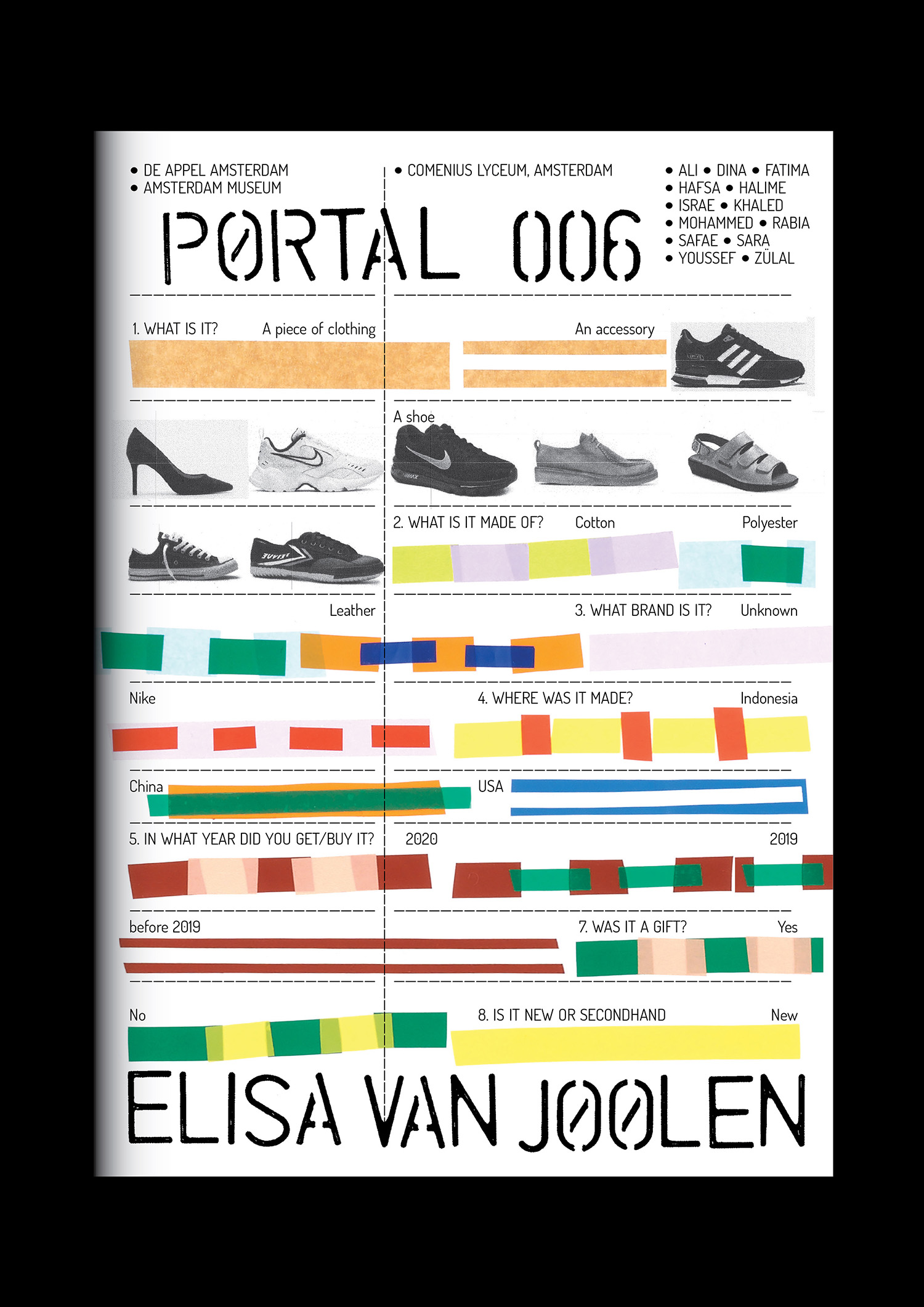
PORTAL 006 Reader
By Elisa van Joolen (ed.)
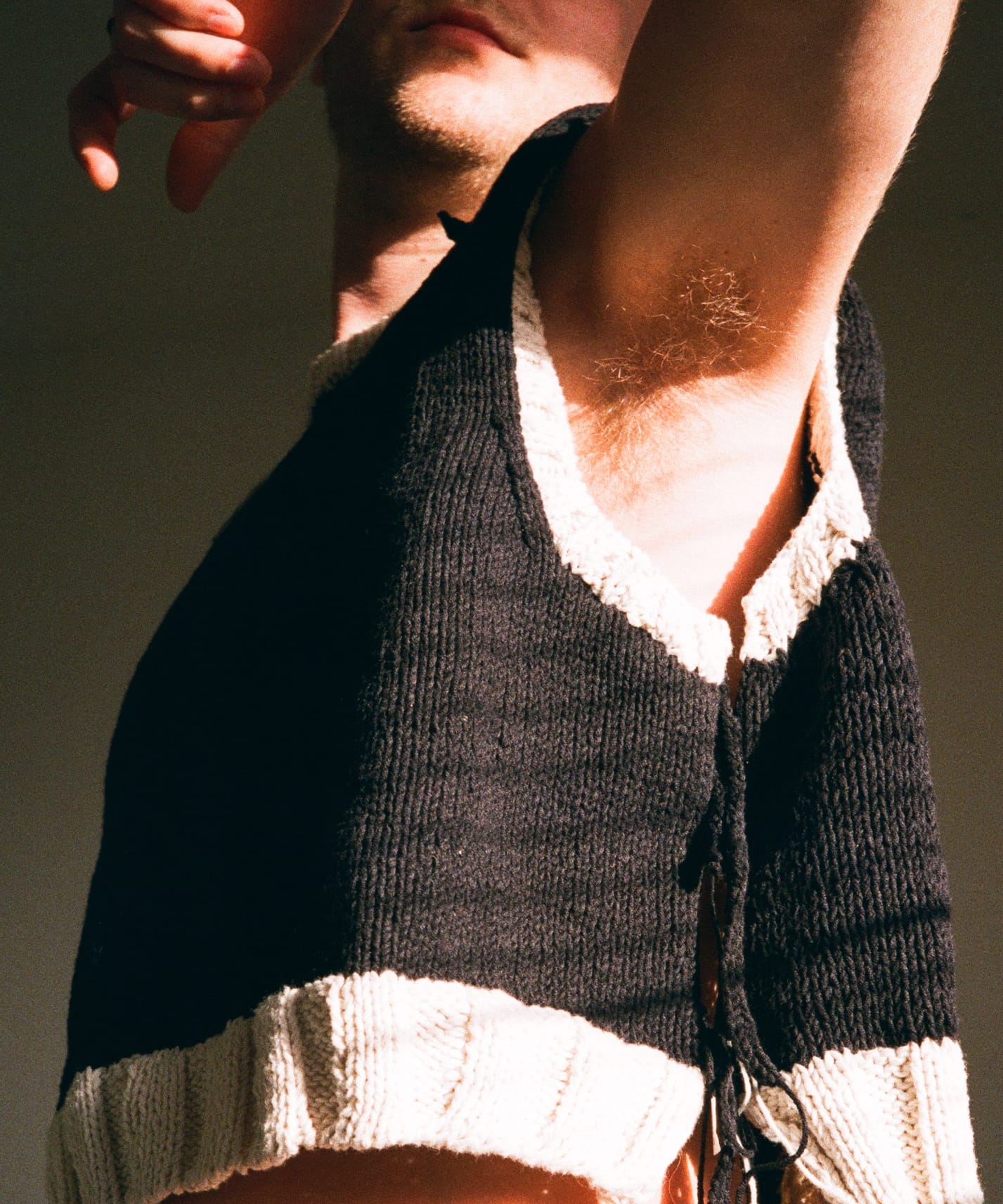
JOIN Collective Clothes | JOIN-top Knit Pattern
By Anouk Beckers & Roos Mol
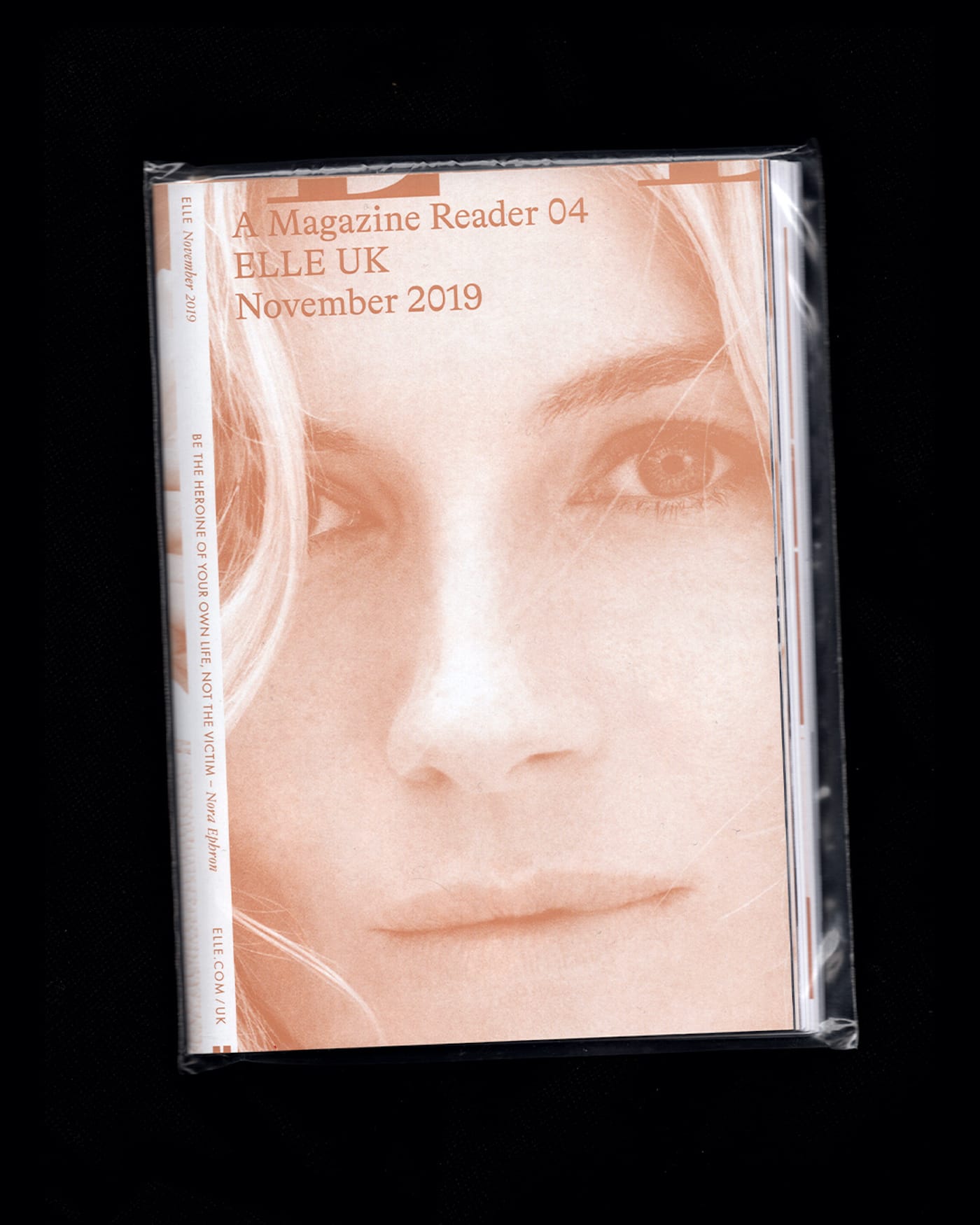
A Magazine Reader 04
By Femke de Vries & Hanka van der Voet (eds.)
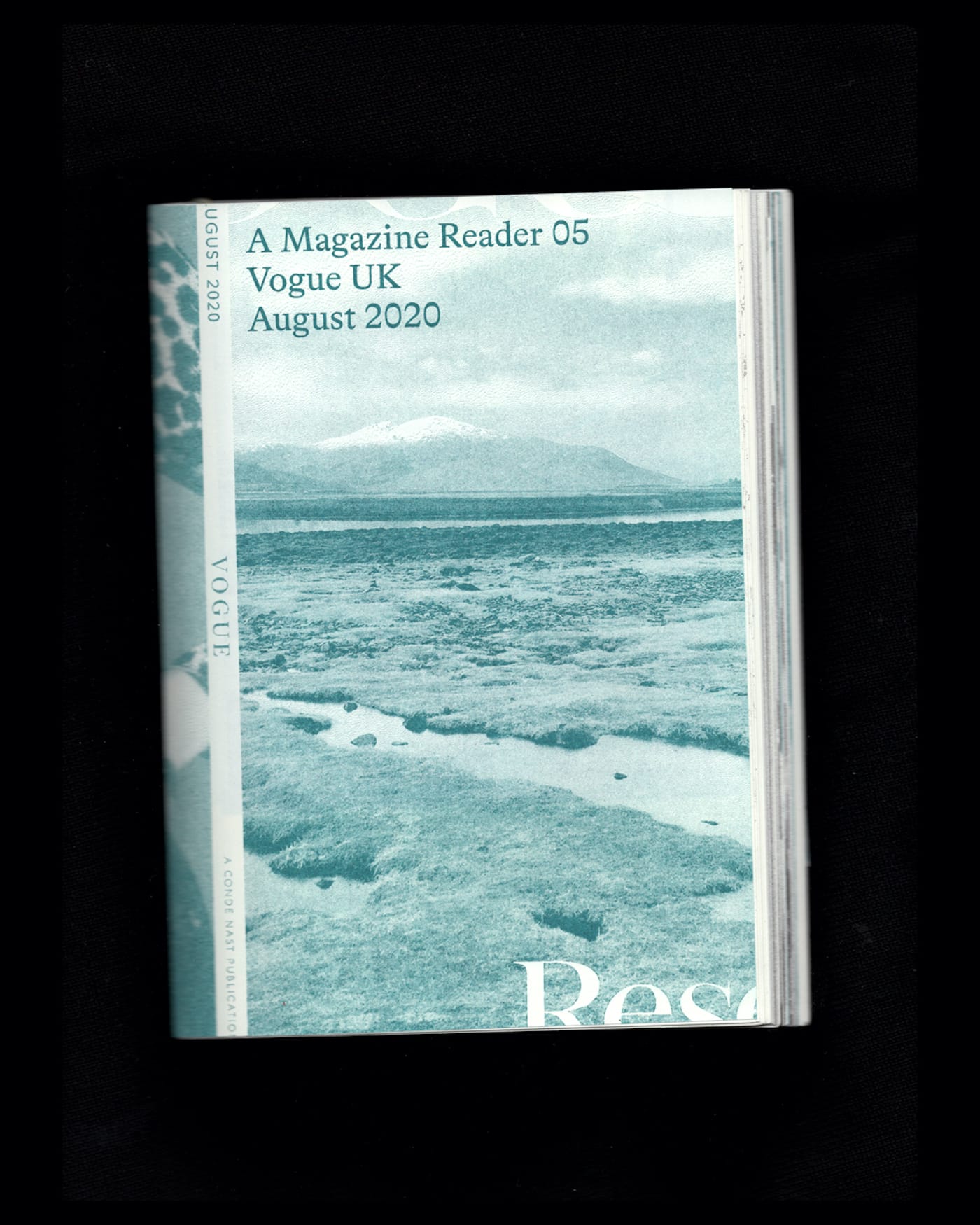
A Magazine Reader 05
By Femke de Vries & Hanka van der Voet (eds.)
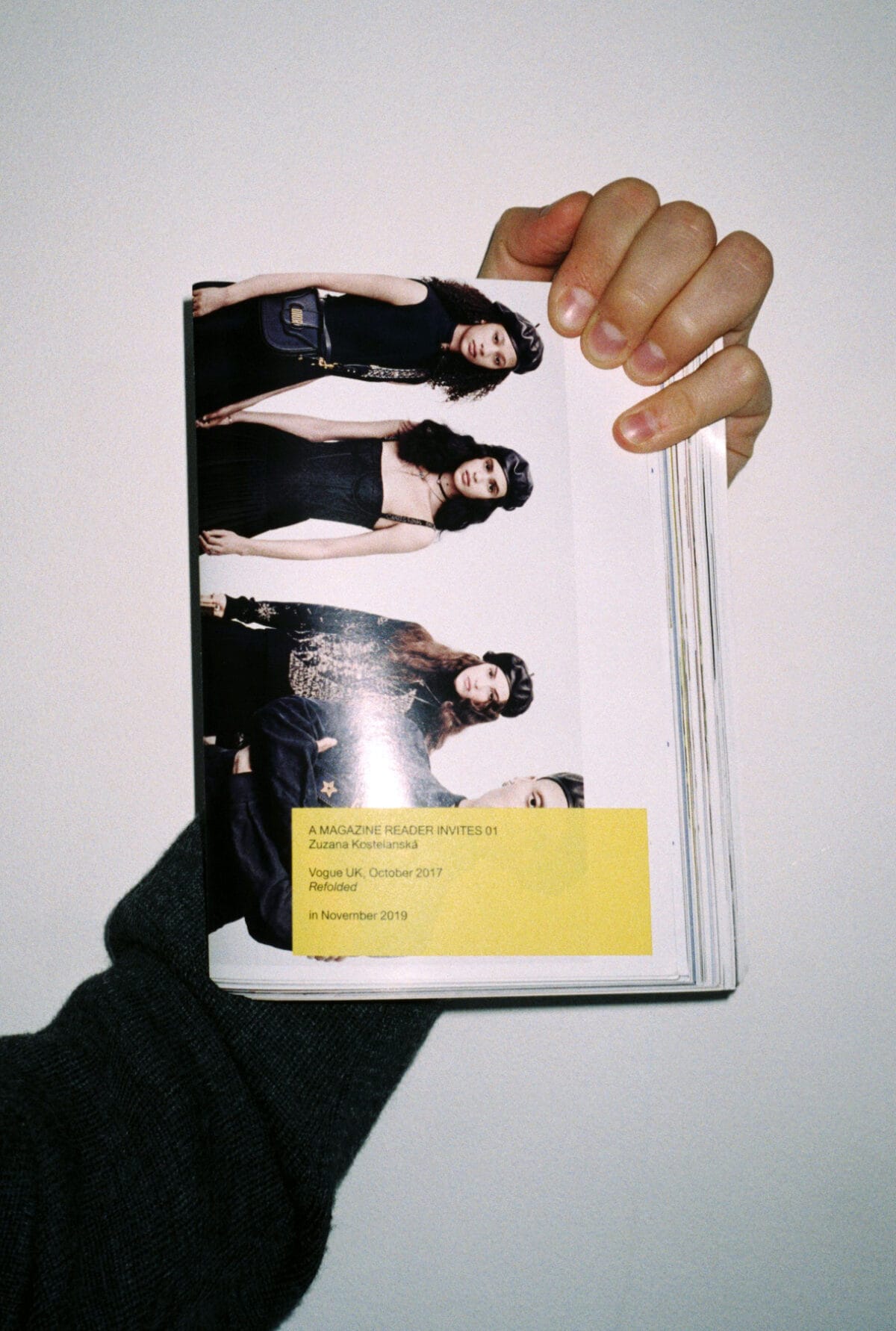
A Magazine Reader Invites 01
By By Zuzana Kostelanská and Femke de Vries & Hanka van der Voet (eds.)
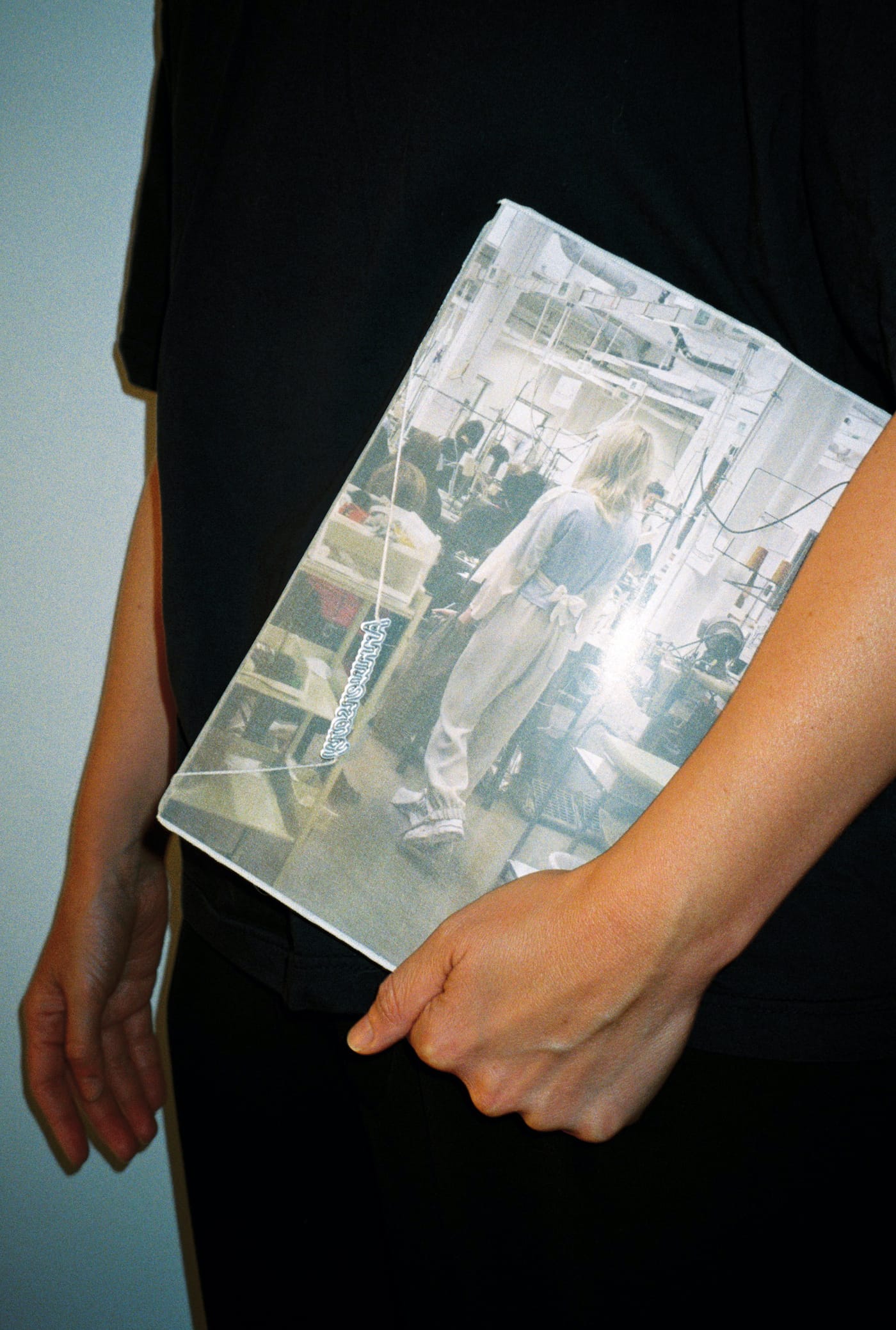
[Sold Out] D&K Look Book 2019 | All or Nothing | Special Edition Cover
By Ricarda Bigolin (ed.)
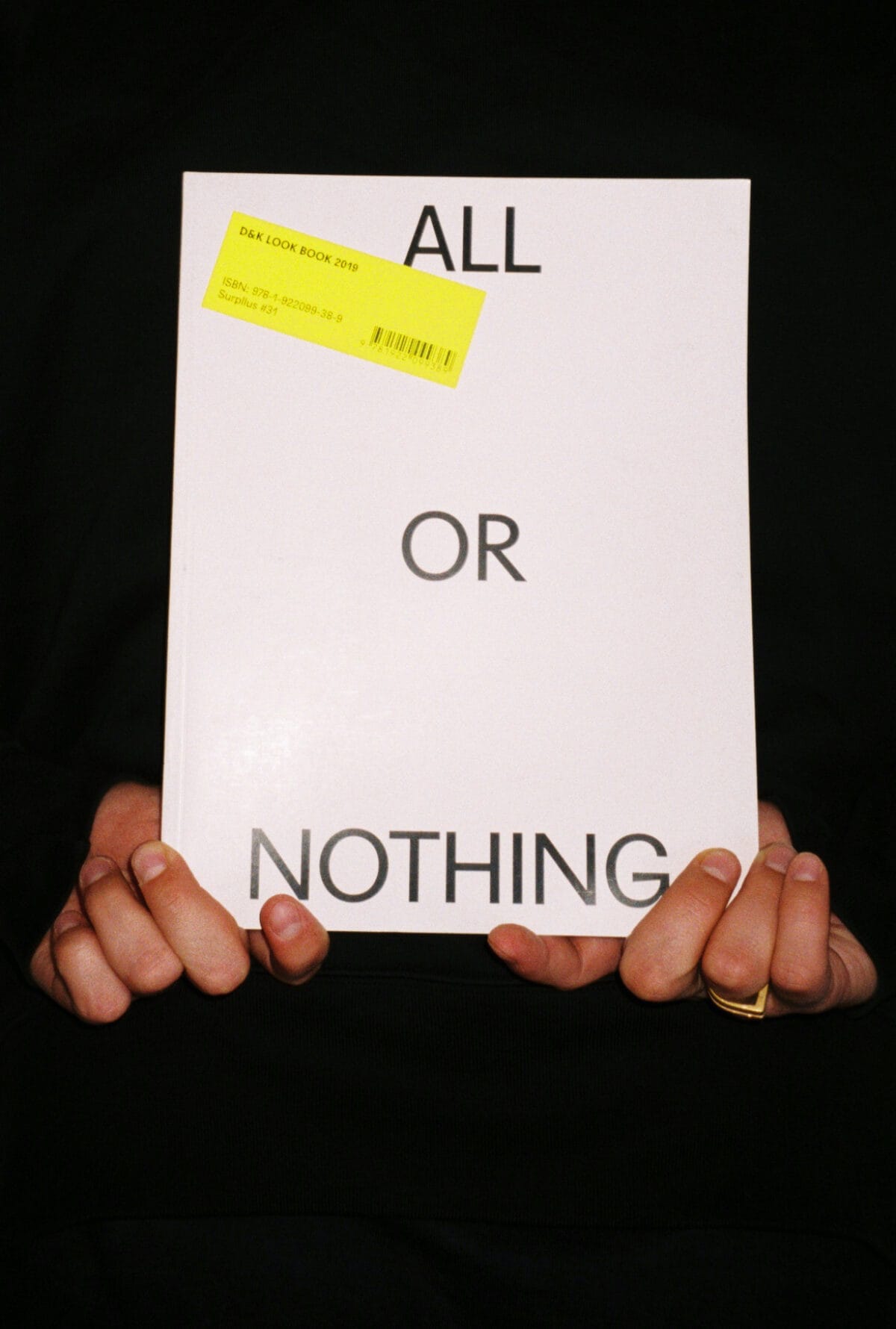
D&K Look Book 2019 | All or Nothing
By Ricarda Bigolin (ed.)
JOIN Collective Clothes Manual
By Anouk Beckers
Mode and Mode #7 | ‘D&K LOOKBOOK 2019’
By Laura Gardner (ed.)
Monument Issue #1 | Rozema/Teunissen
By Mary-Lou Berkulin (ed.)
Monument Issue #2 | Keupr/van Bentm
By Mary-Lou Berkulin (ed.)
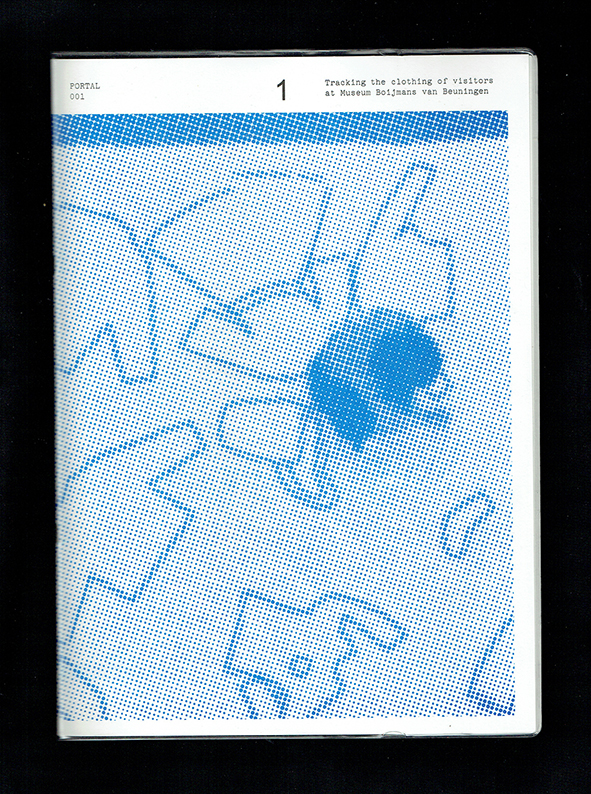
PORTAL 001 Reader
By Elisa van Joolen (ed.)

PORTAL 002 Reader
By Elisa van Joolen (ed.)
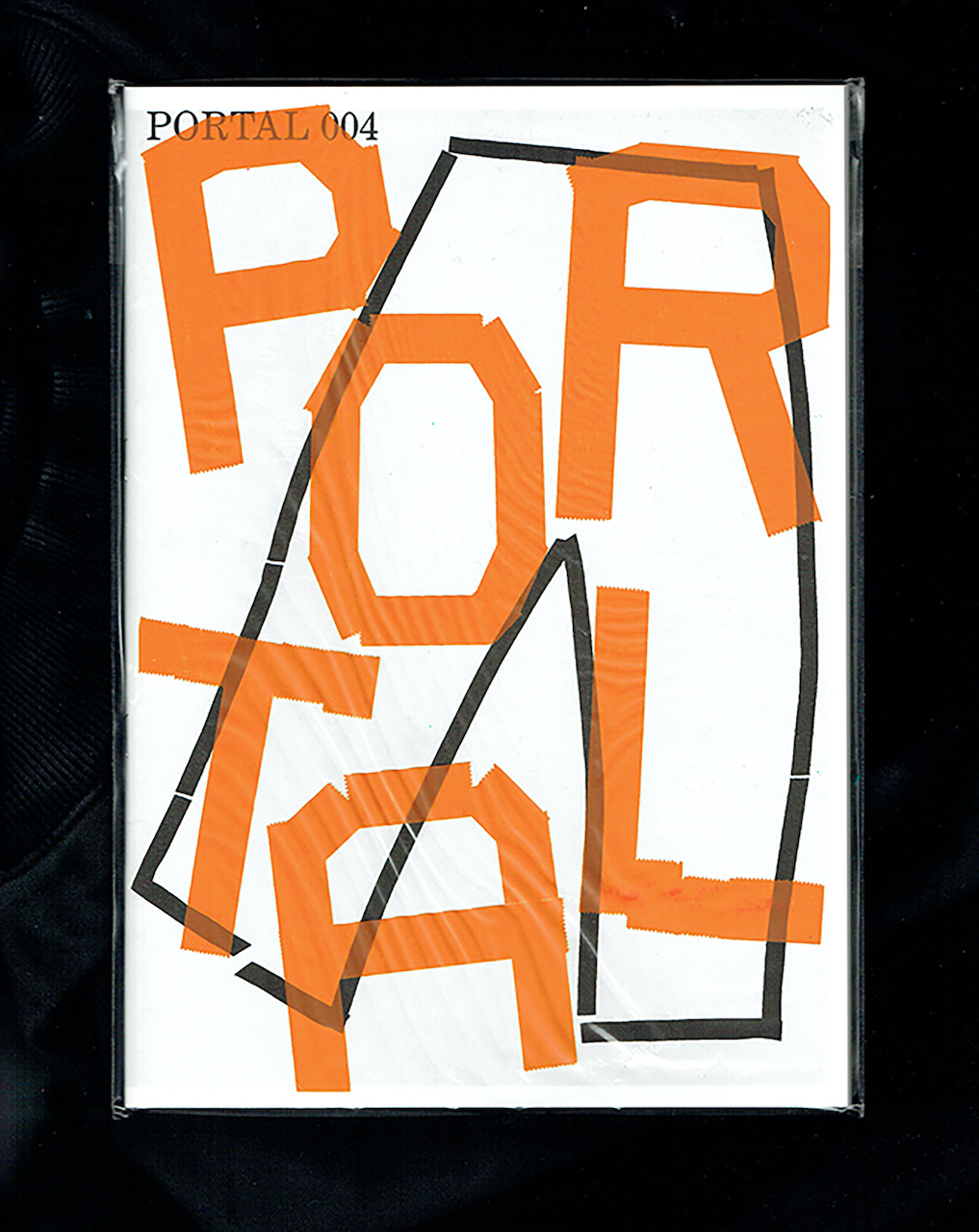
PORTAL 004 | Exercise and Coloring Book
By Elisa van Joolen (ed.)
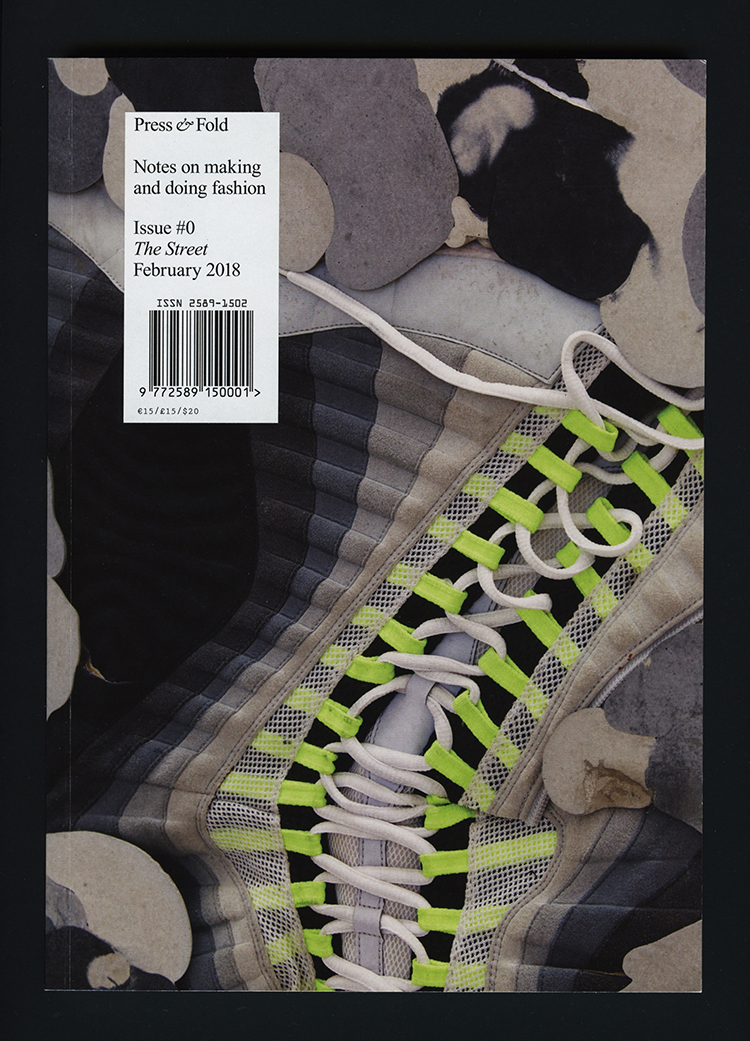
Press & Fold Issue #0 | The Street Issue
By Hanka van der Voet (ed.)
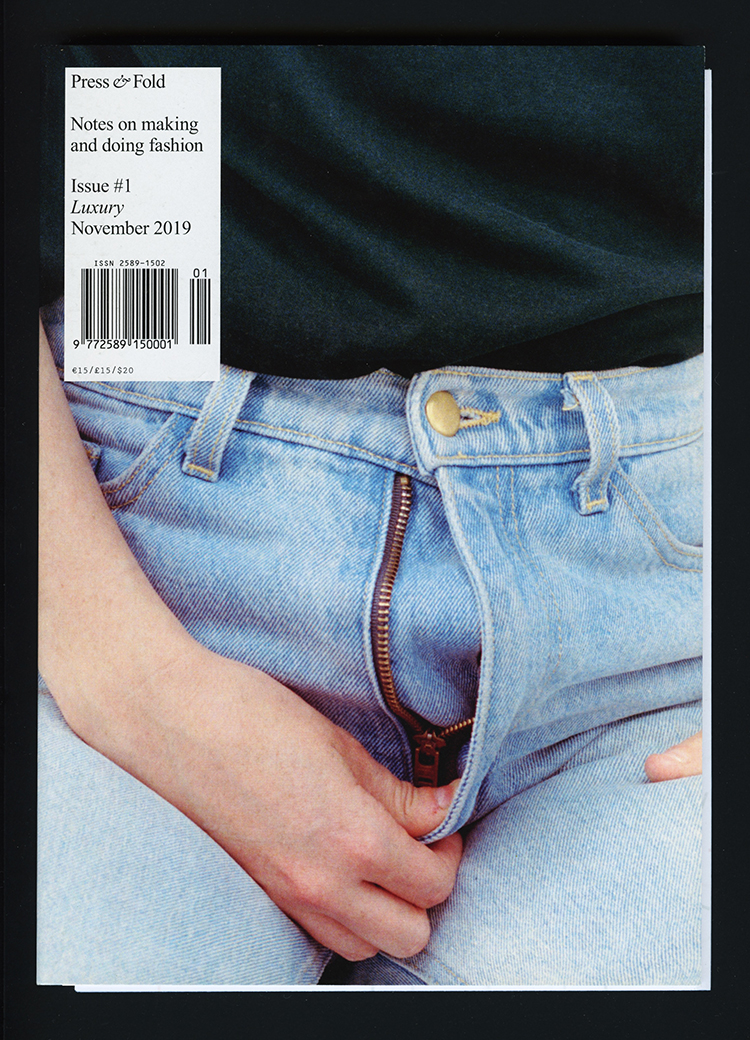
Press & Fold Issue #1 | The Luxury Issue
By Hanka van der Voet (ed.)
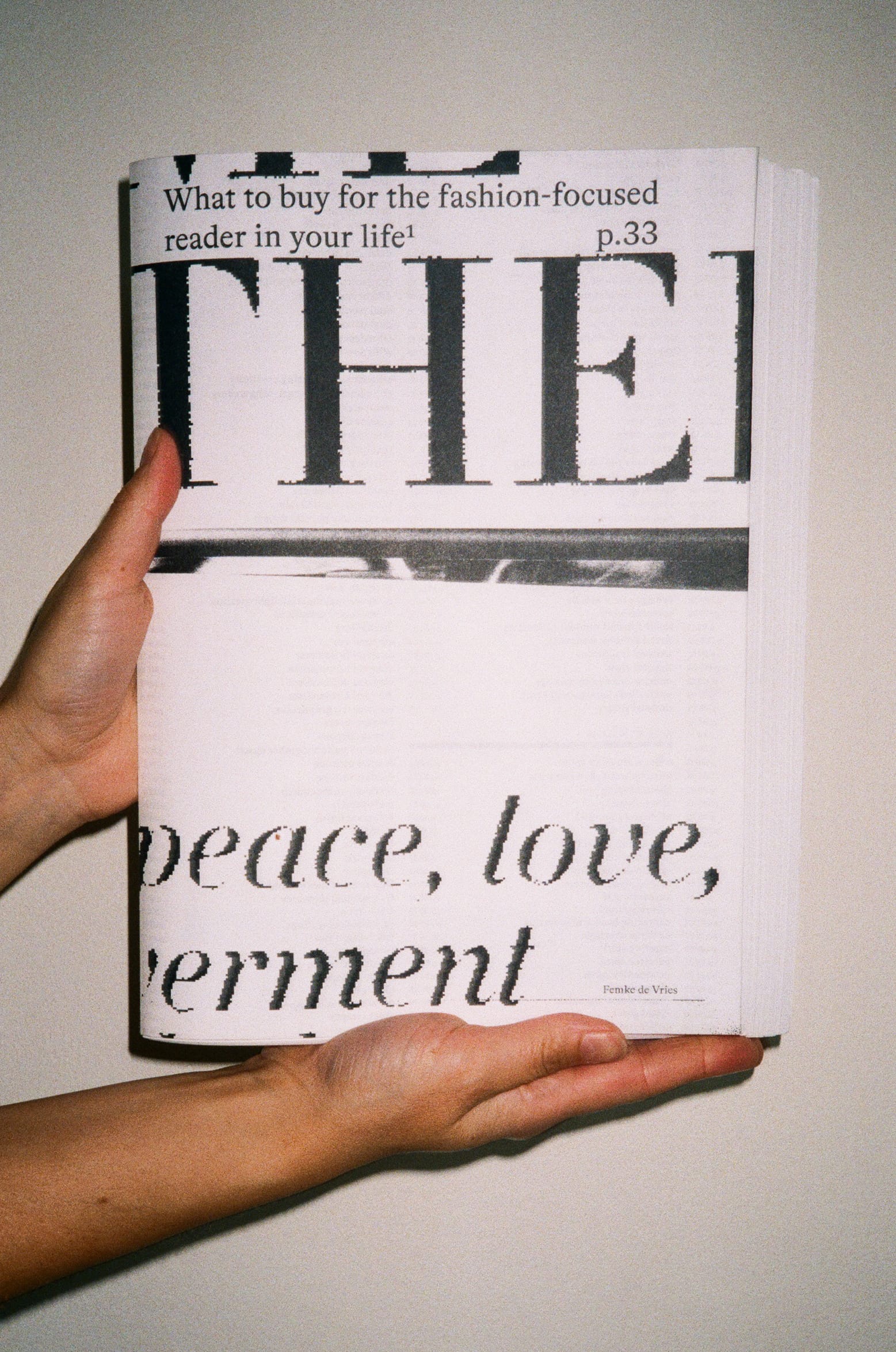
What To Buy For The Fashion-Focused Reader In Your Life p.33
By Femke de Vries
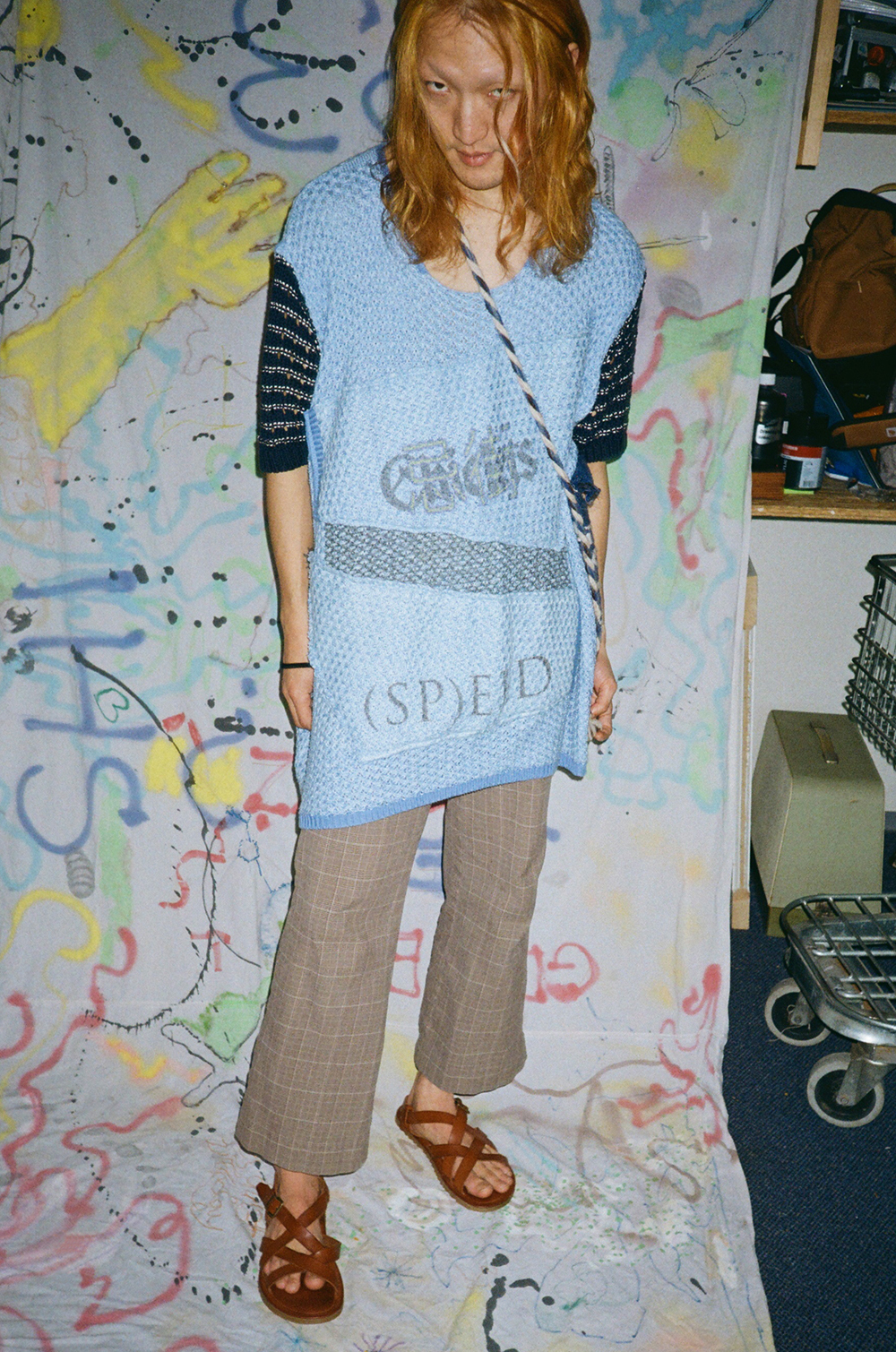
[Sold Out] SPEED OVERSIZED DRESS
By AVOIDSTREET (Eduardo Leon)
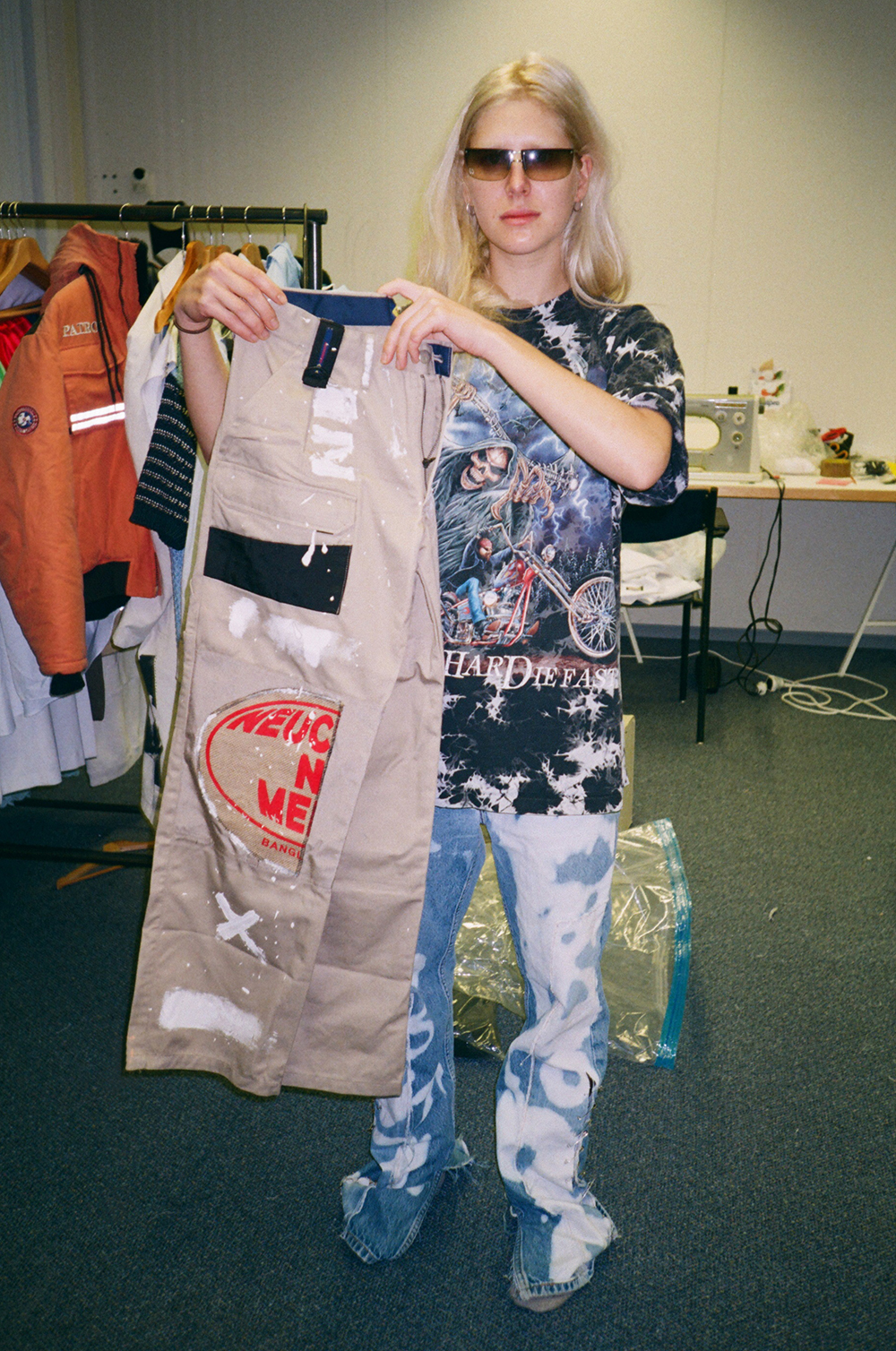
[Sold Out] NEUCLEAR NO MERCY BANGLADESH
By AVOIDSTREET (Eduardo Leon)
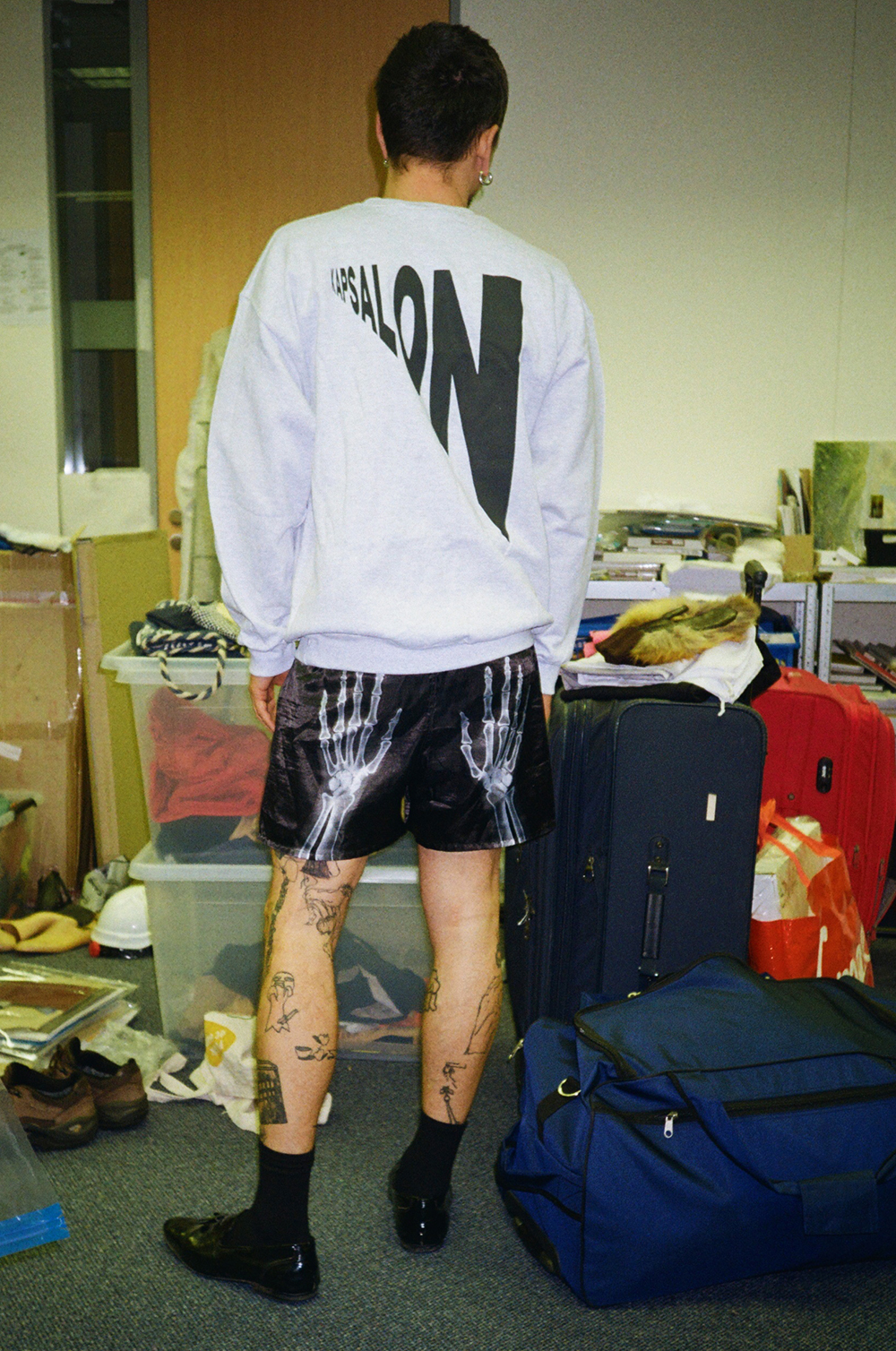
[Sold Out] KAPSALON SWEATER
By AVOIDSTREET (Eduardo Leon)
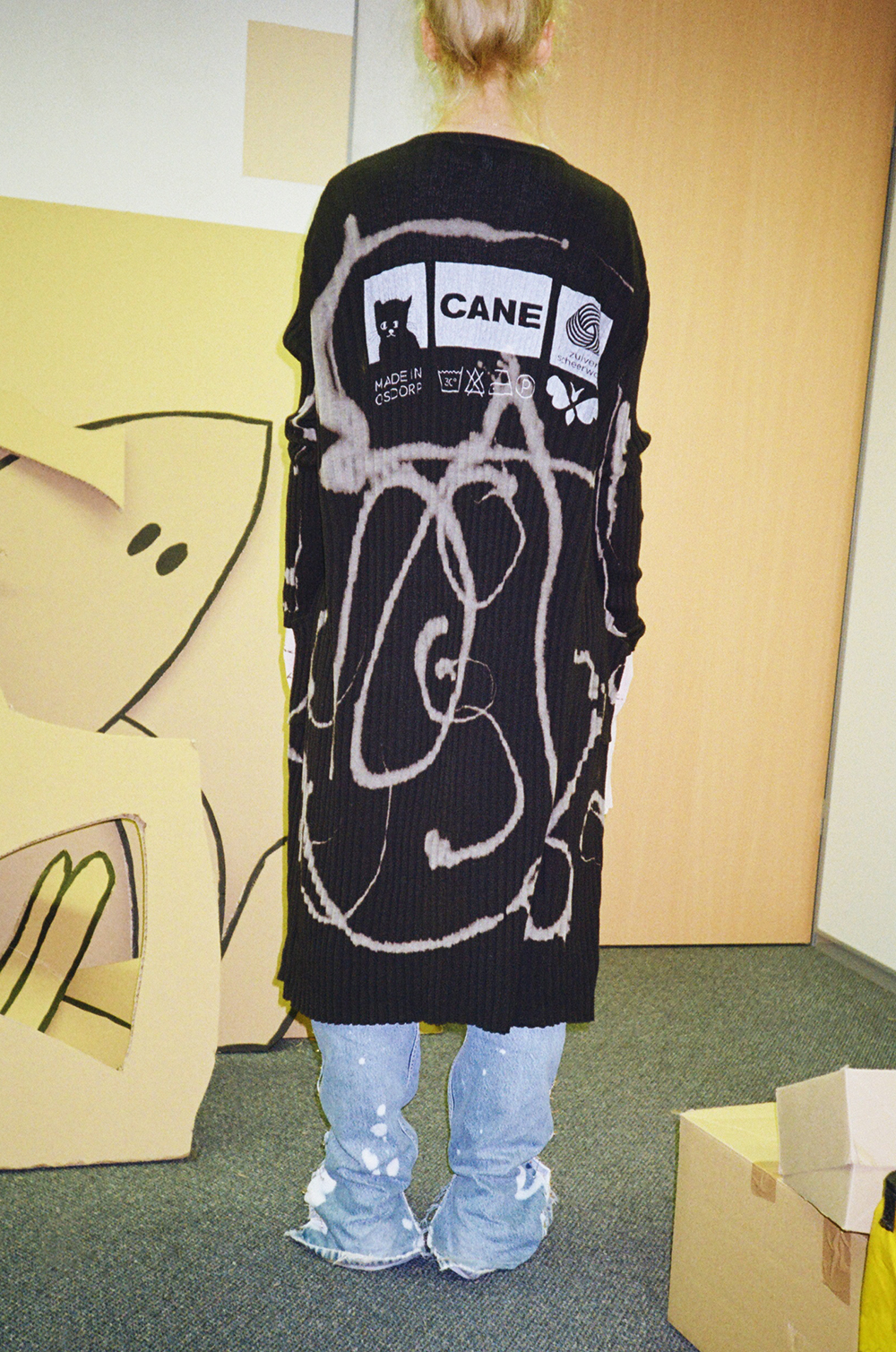
[Sold Out] CANE RITUALS
By AVOIDSTREET (Eduardo Leon)
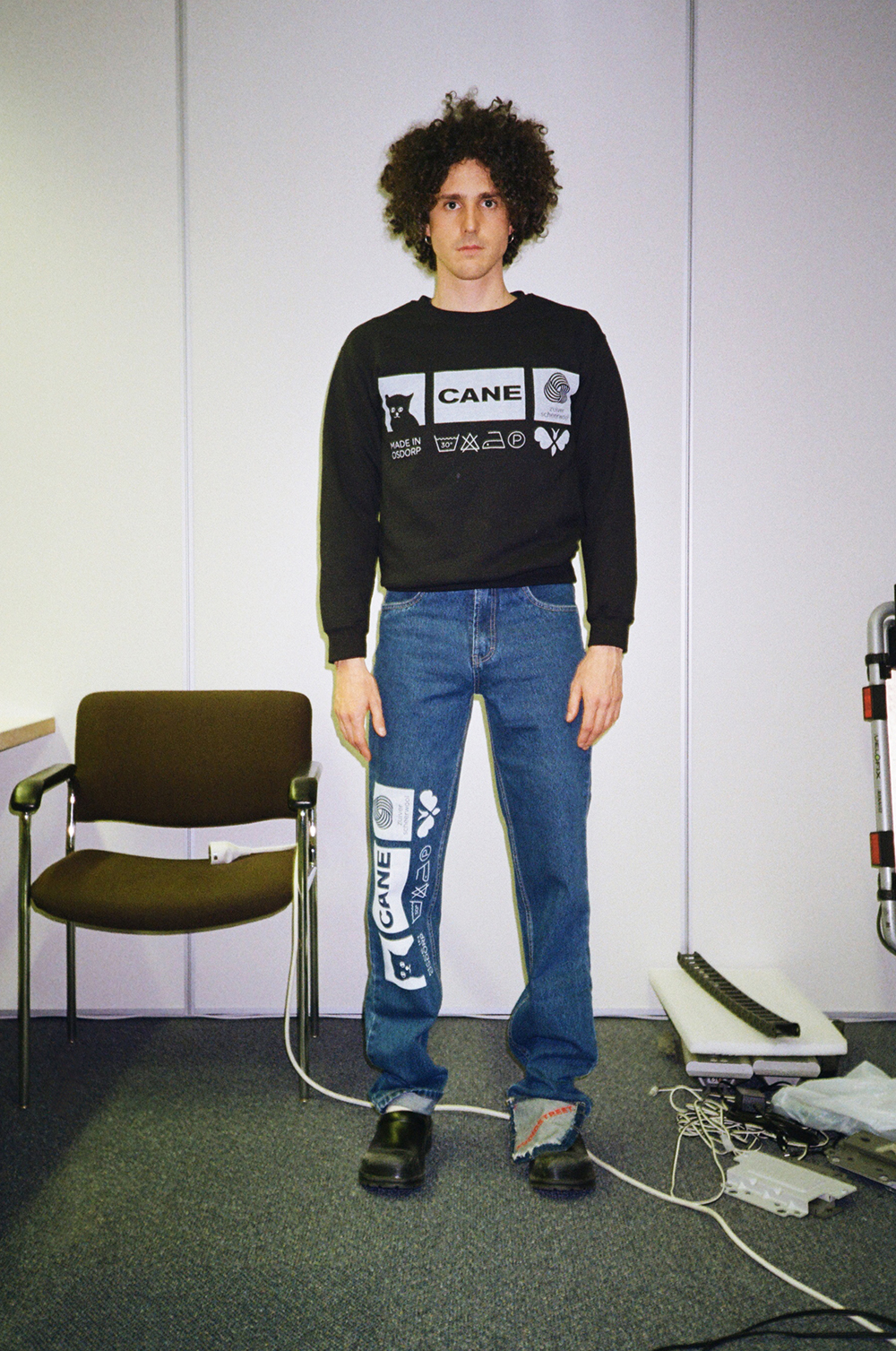
[Sold Out] CANE ESSENTIALS
By AVOIDSTREET (Eduardo Leon)
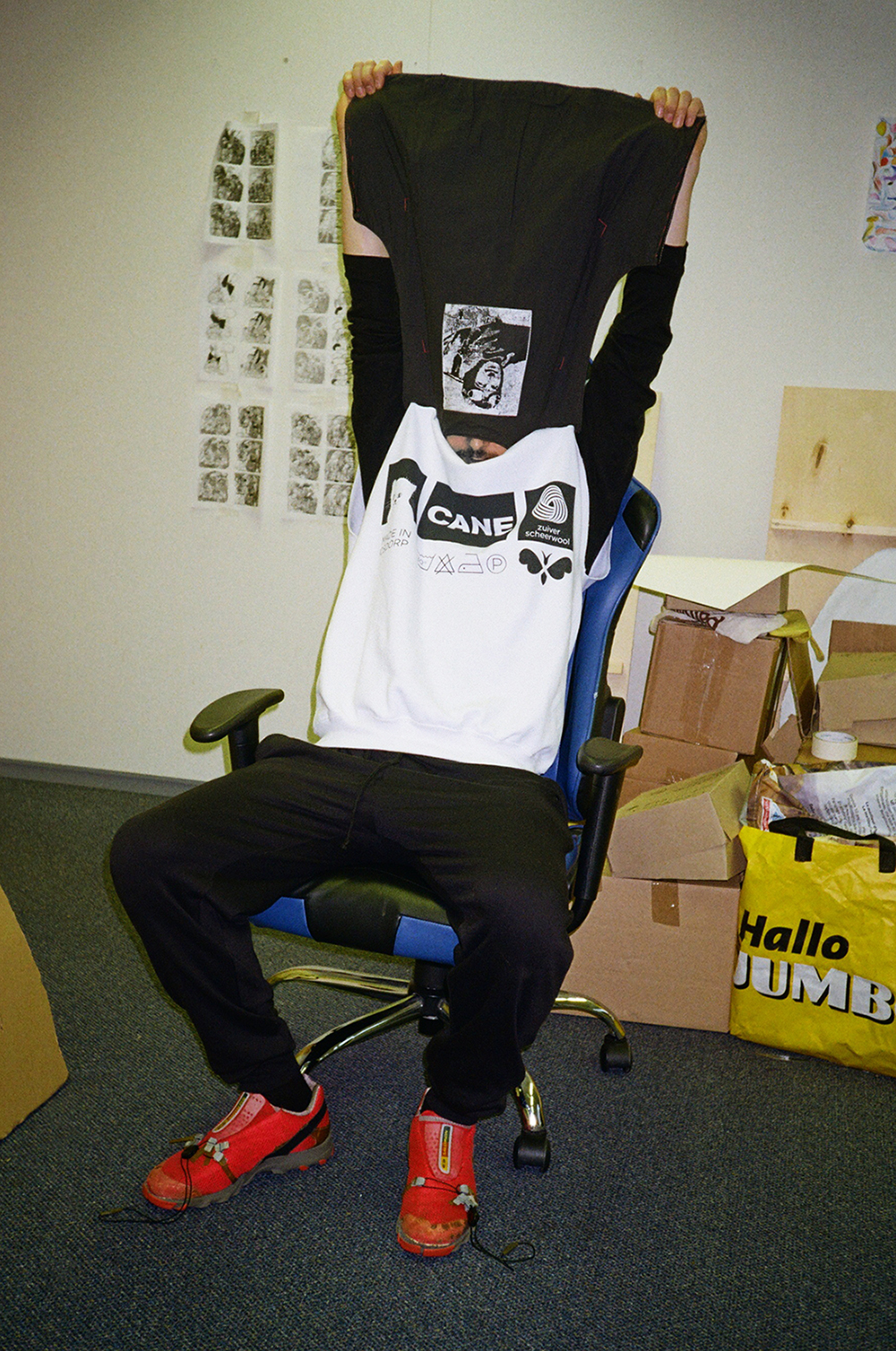
[Sold Out] CANE DOPPIO PETTO
By AVOIDSTREET (Eduardo Leon)
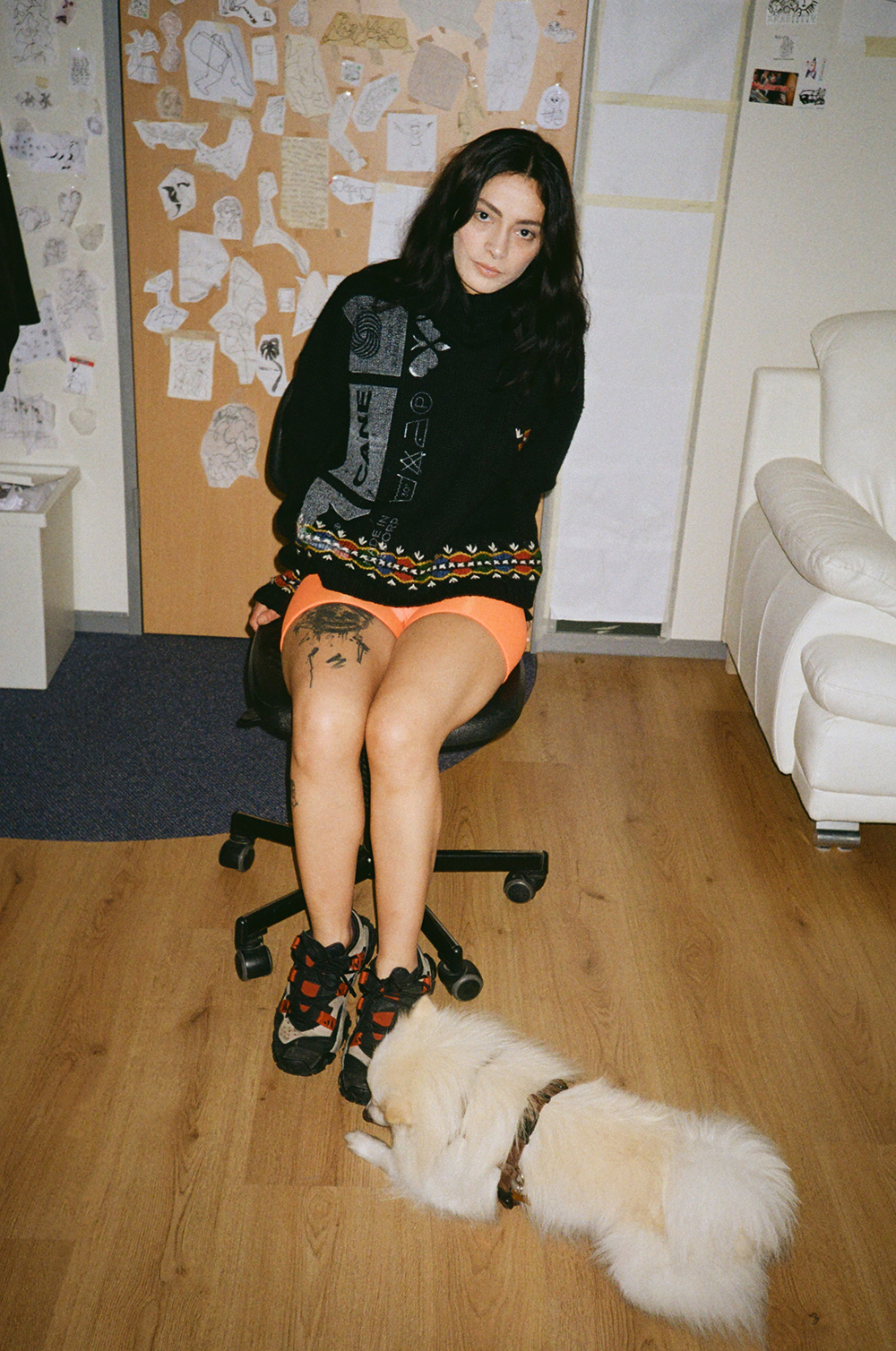
[Sold Out] CANE ALPES
By AVOIDSTREET (Eduardo Leon)
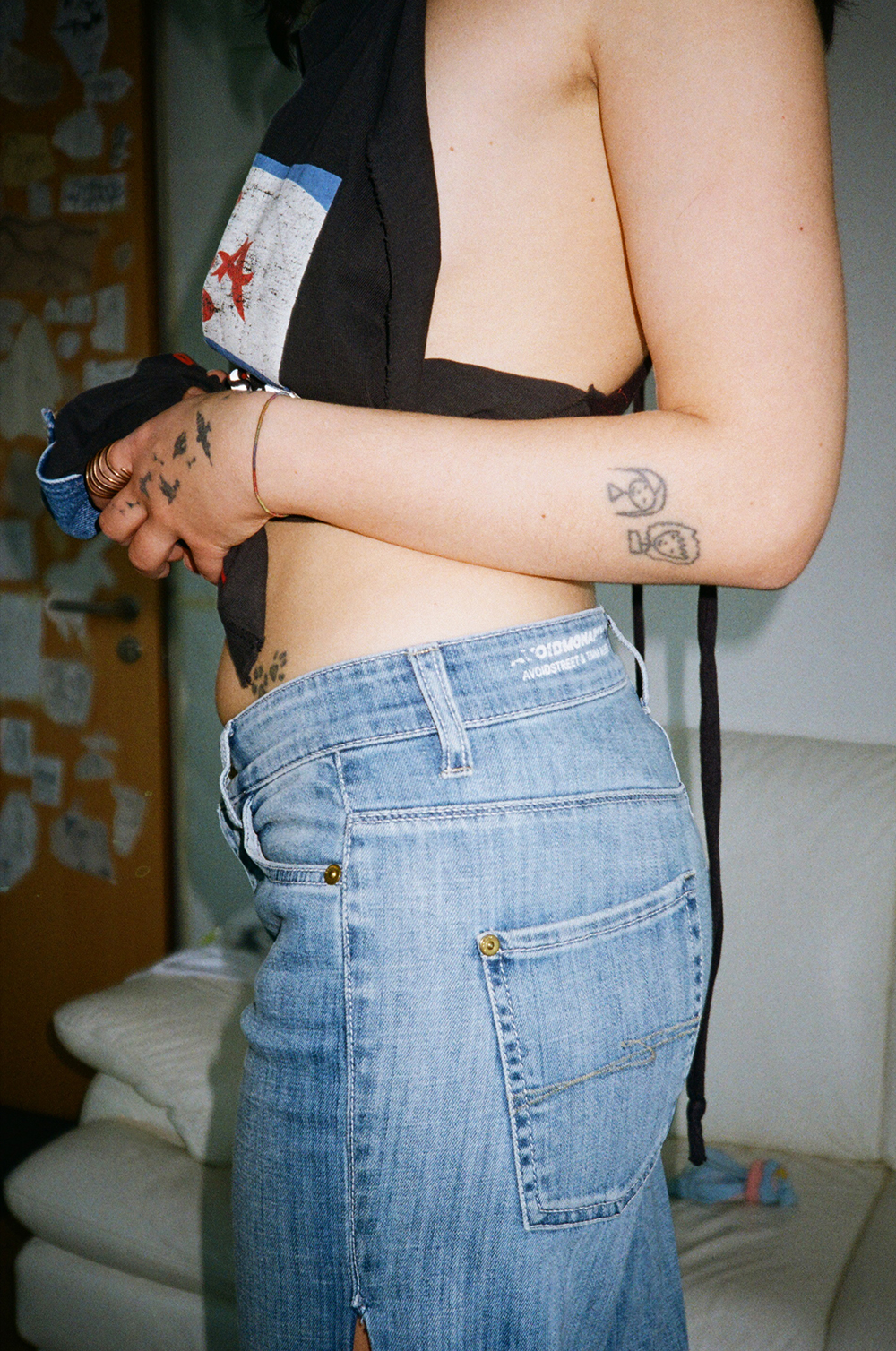
[Sold Out] AVOIDMONARCHY PINK LADY
By AVOIDSTREET (Eduardo Leon)
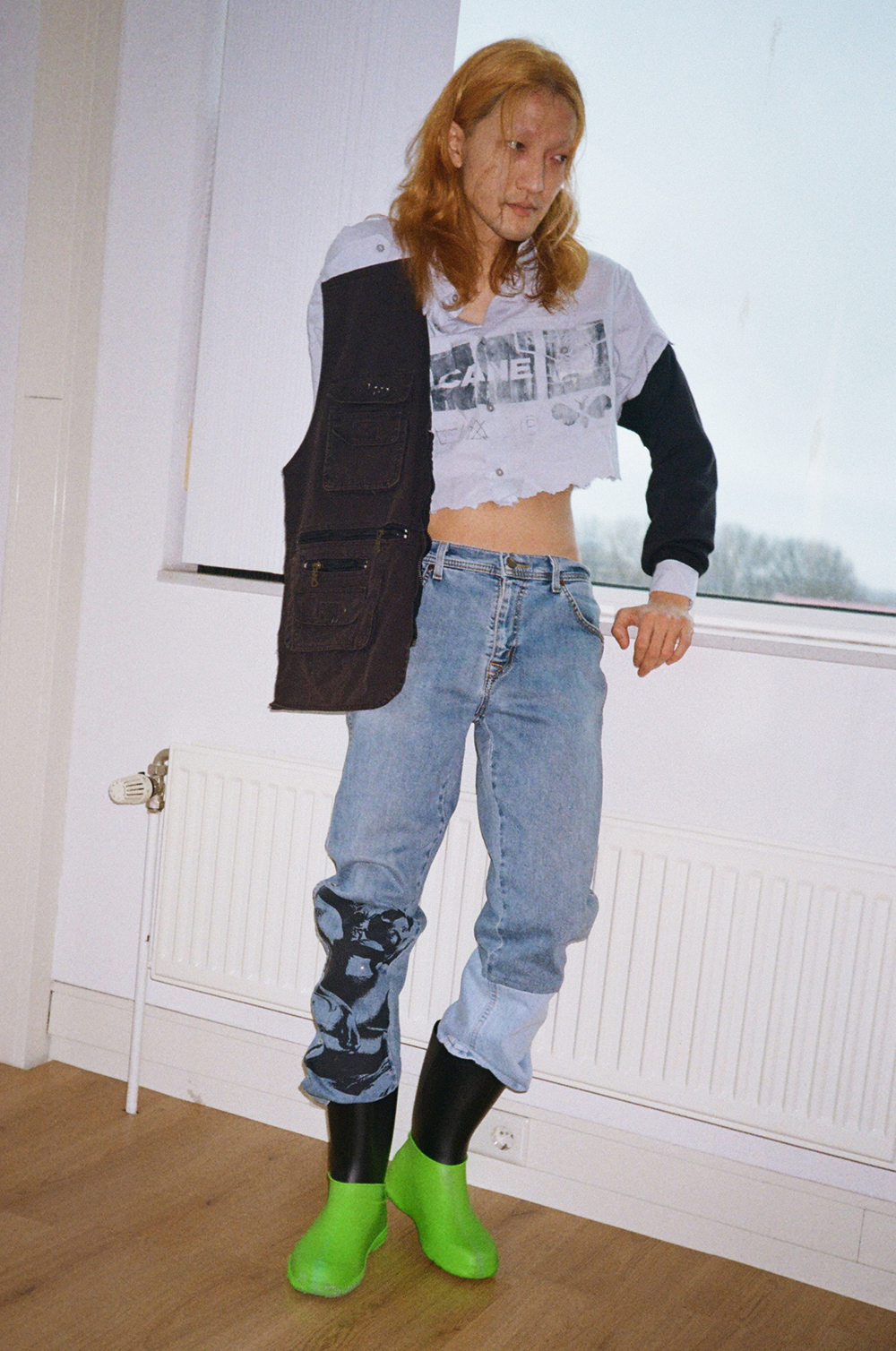
[Sold Out] AVOIDMONARCHY CHEEKY DEVIL
By AVOIDSTREET (Eduardo Leon)
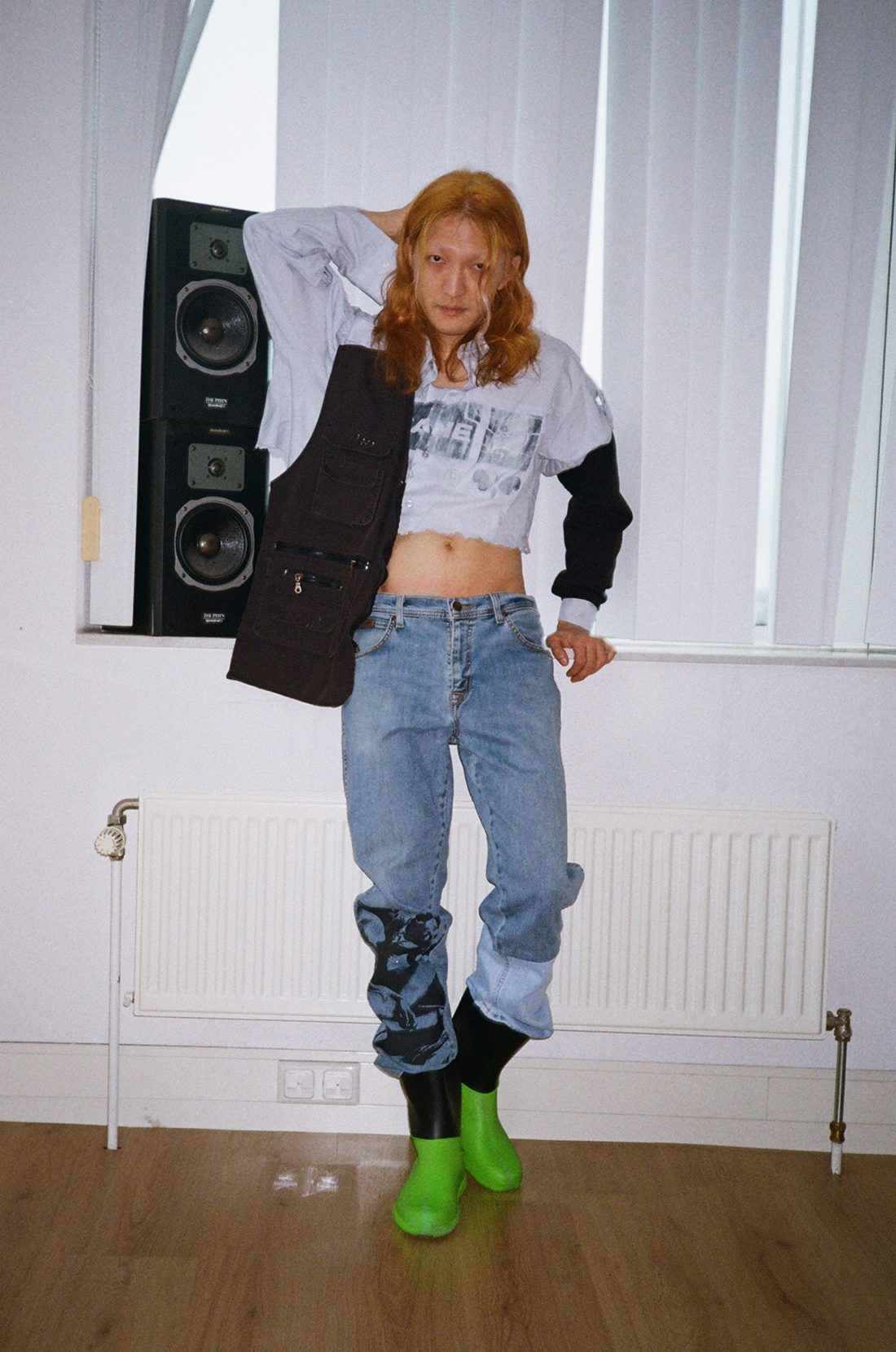
[Sold Out] CANE XPERIENCE
By AVOIDSTREET (Eduardo Leon)
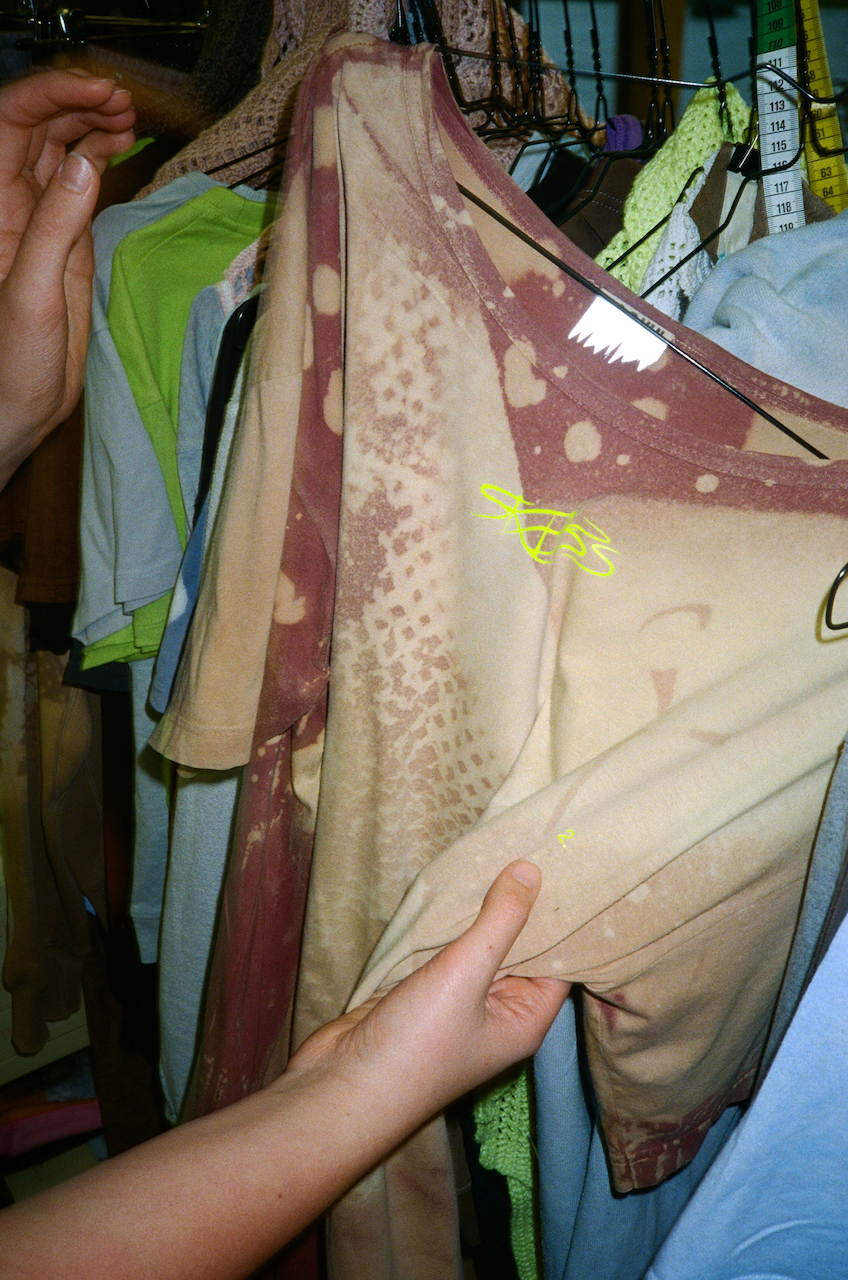
[Sold] One Shoulder Shear T-shirt
By SKHSS (Lejla Vala Verheus and Mika Perlmutter)
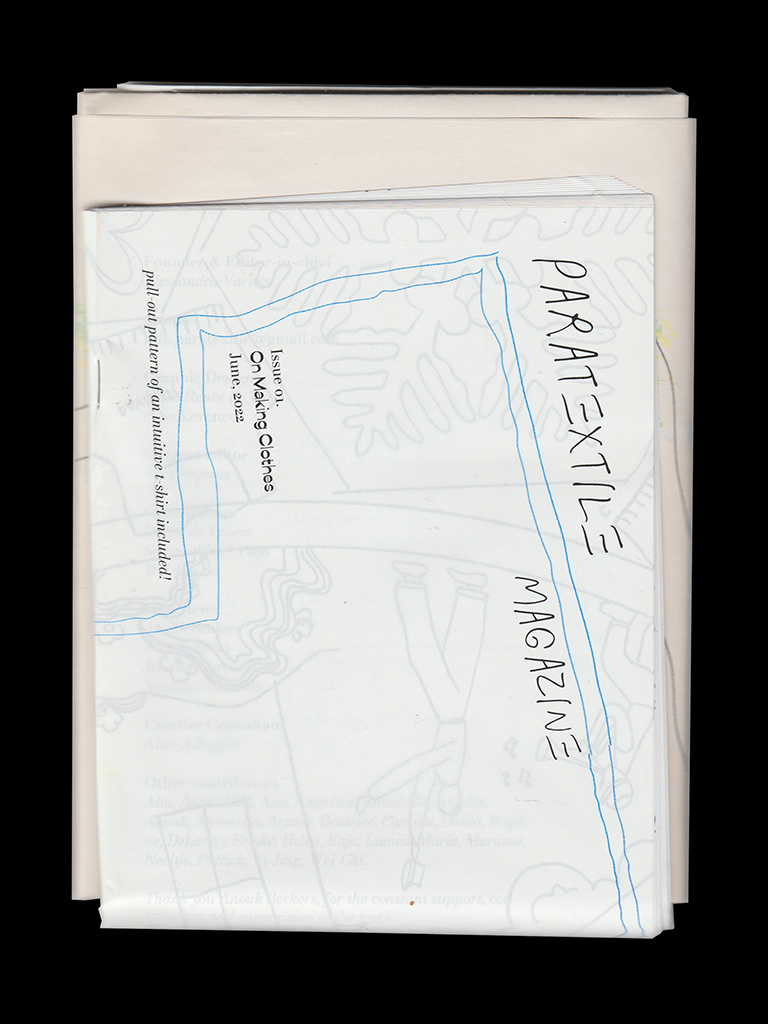
[Sold Out] Paratextile Magazine
By Alessandra Varisco
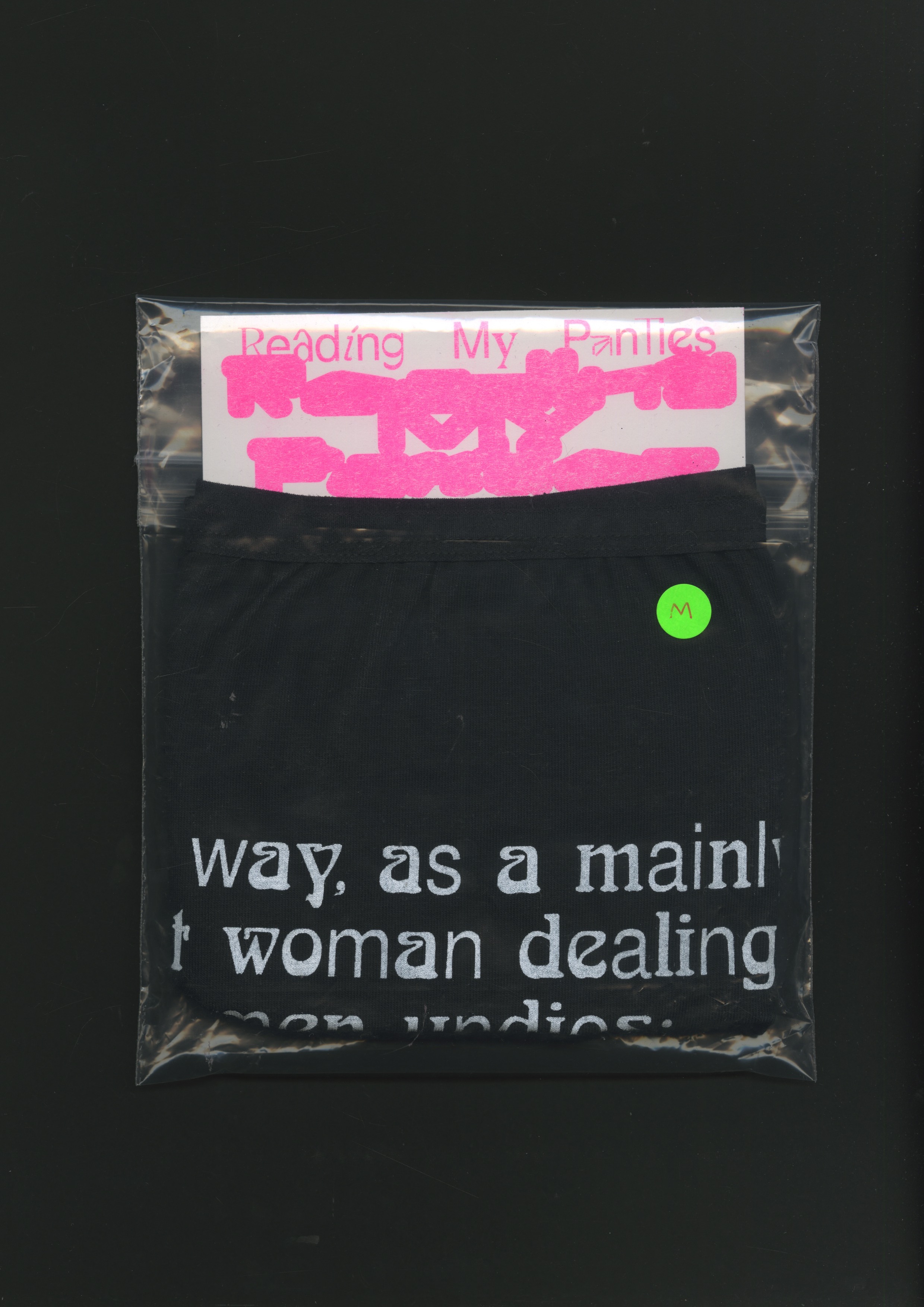
[Sold Out] Reading my Panties granny panty
By Lu Lin
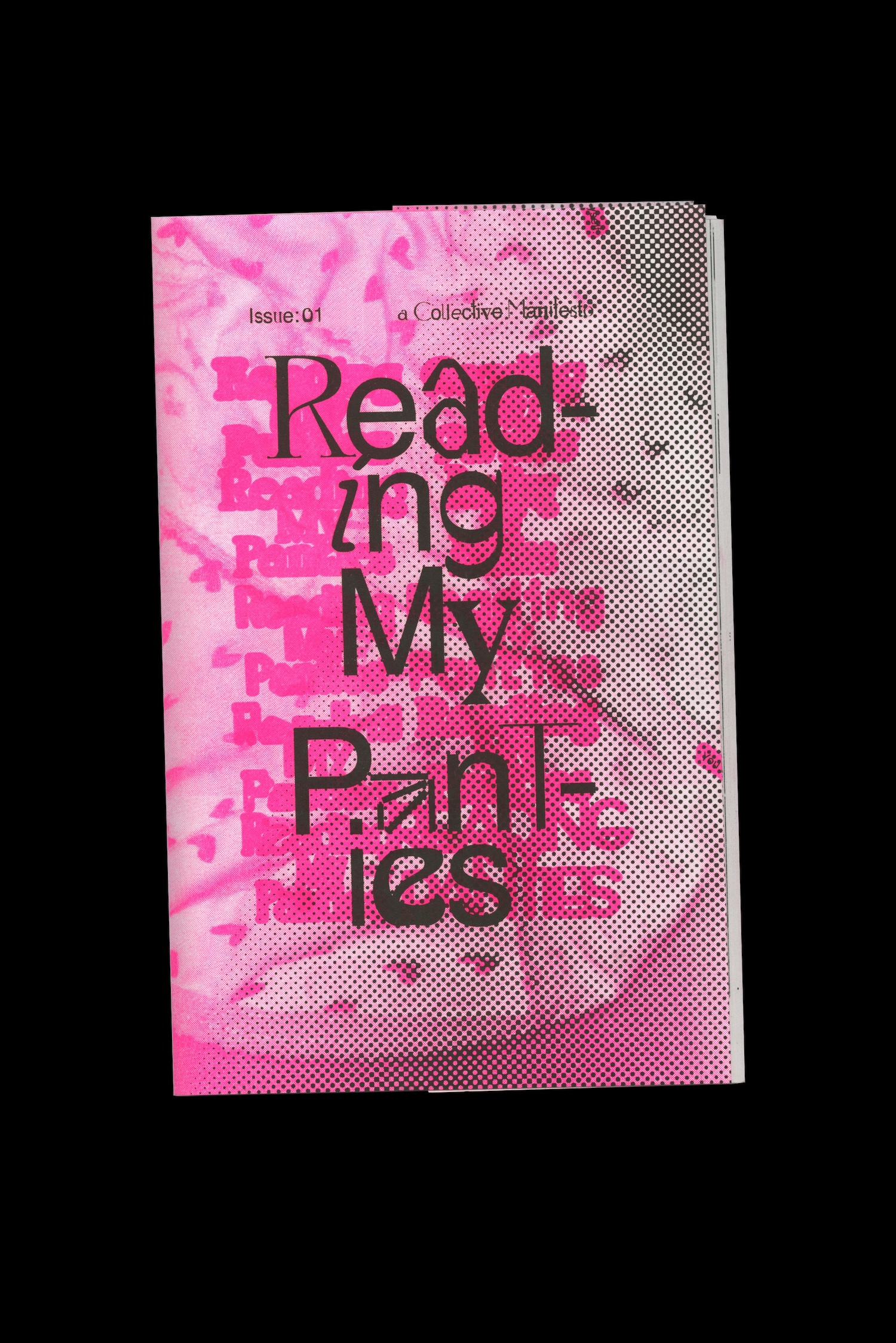
Reading My Panties Issue #1 | A Collective Manifesto
By Lu Lin (ed.)
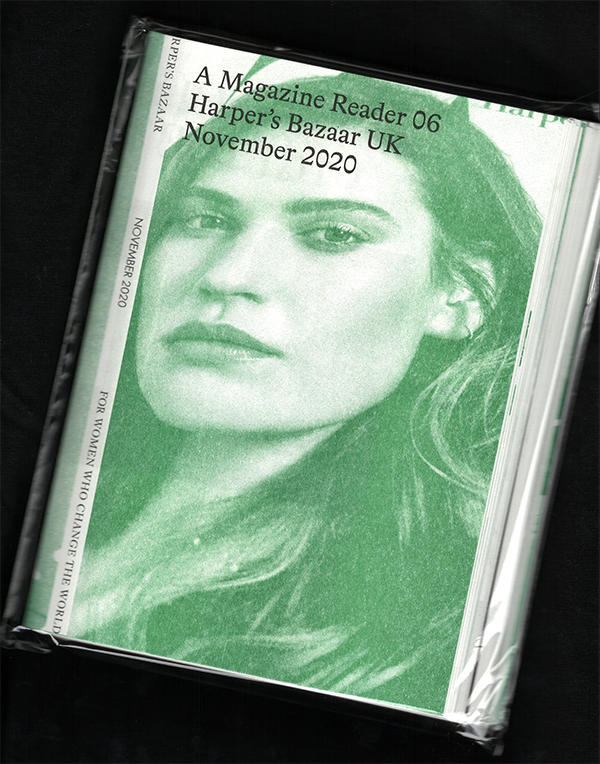
A Magazine Reader 06
By Femke de Vries & Hanka van der Voet (eds.)
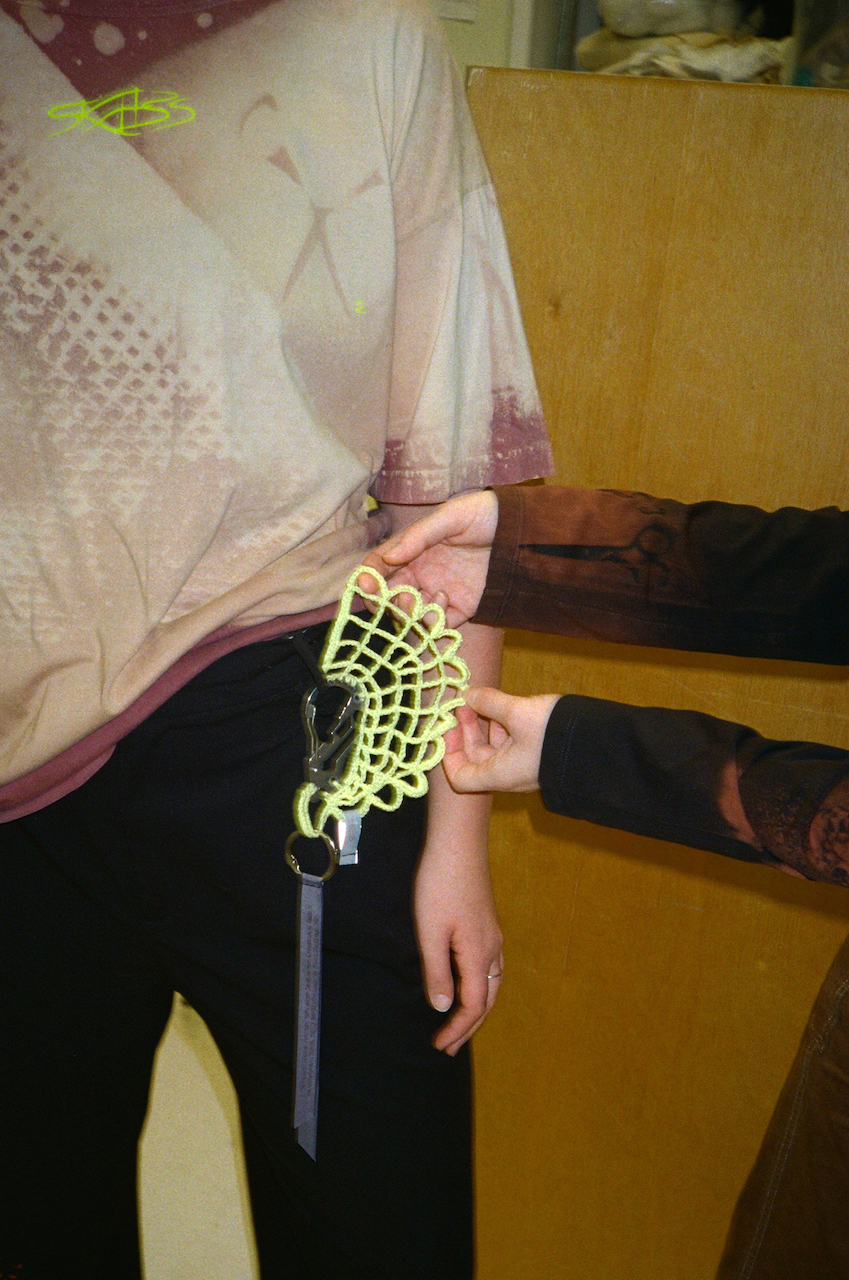
[Sold] The Hooked Carabiner
By SKHSS (Lejla Vala Verheus and Mika Perlmutter)
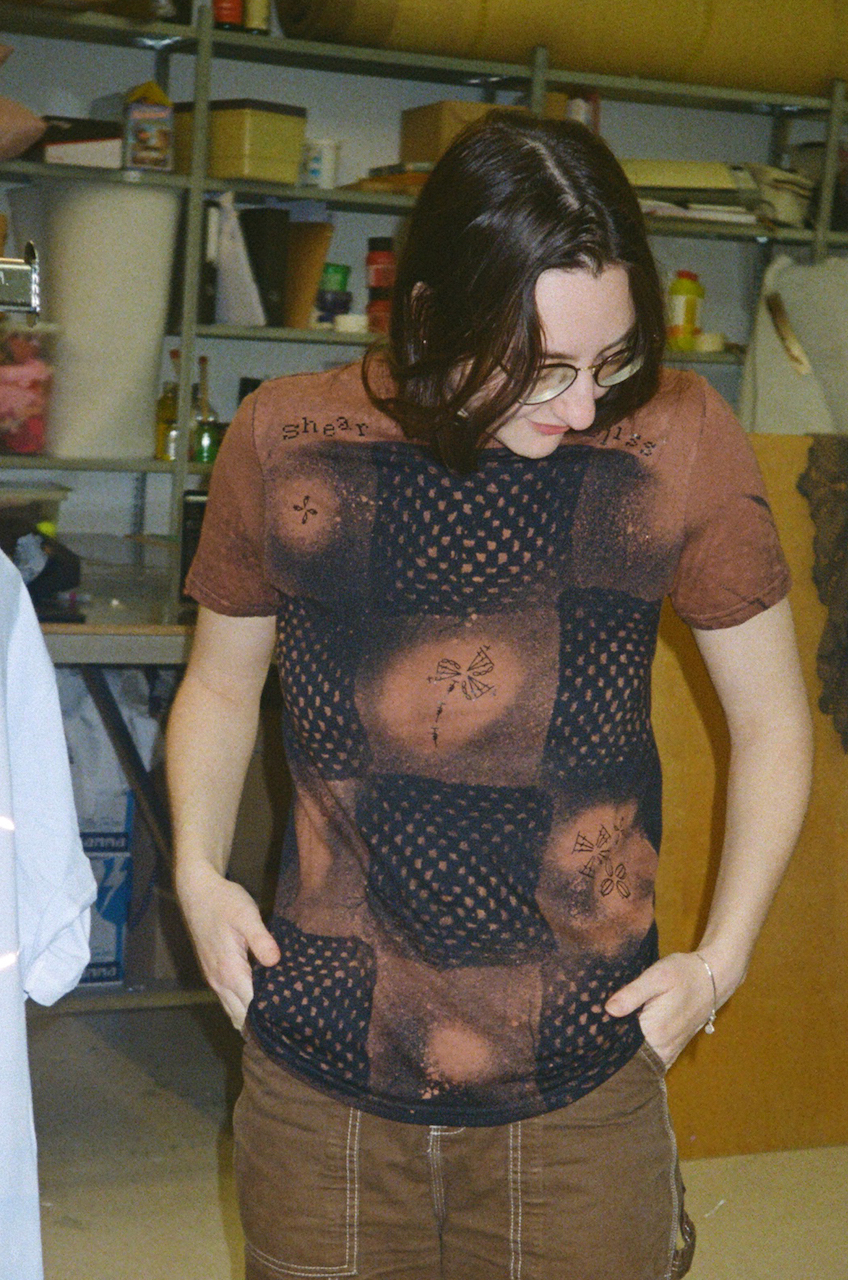
[Sold] Shear Bliss Granny Square T-shirt
By SKHSS (Lejla Vala Verheus and Mika Perlmutter)

[Sold] Pineapple Doily Sweatshirt
By SKHSS (Lejla Vala Verheus and Mika Perlmutter)
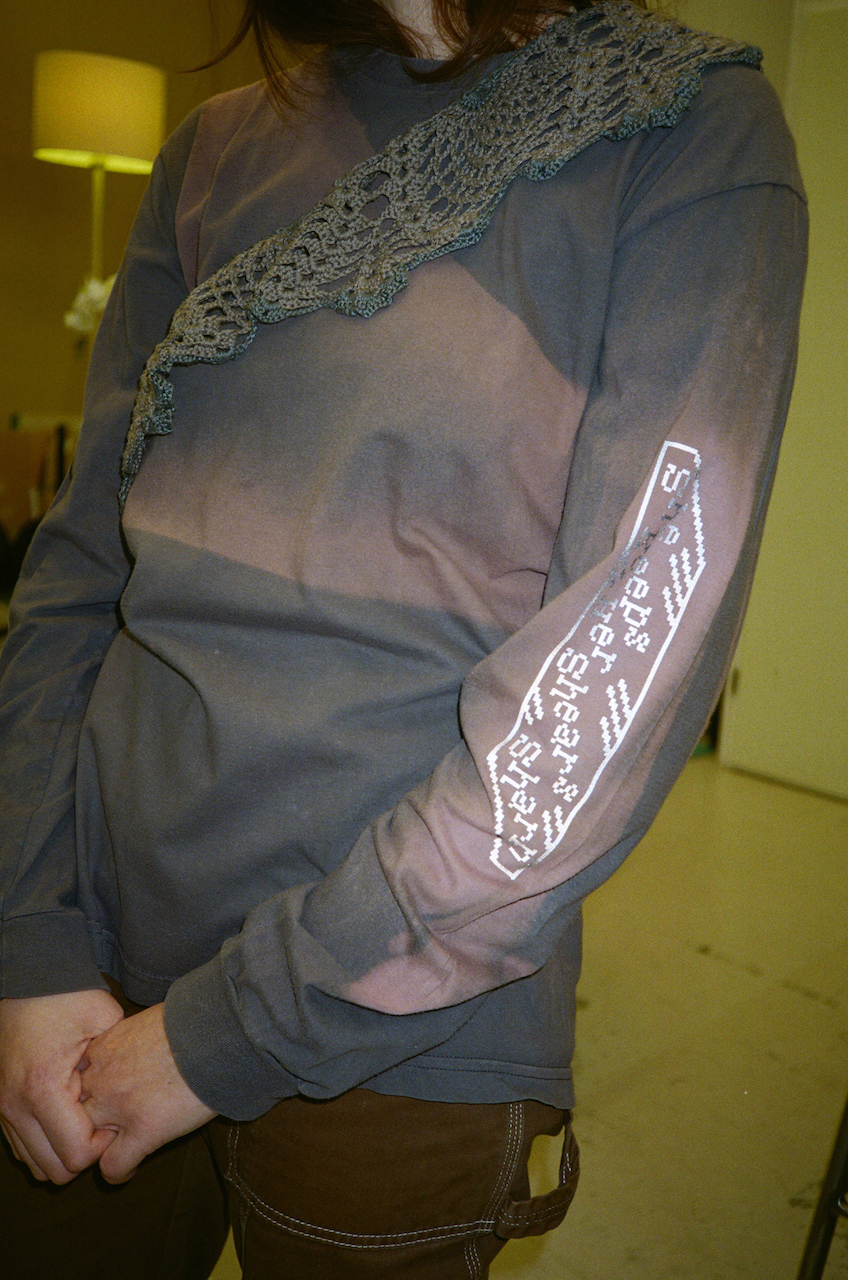
[Sold] One Shoulder Logo LS T-shirt
By SKHSS (Lejla Vala Verheus and Mika Perlmutter)
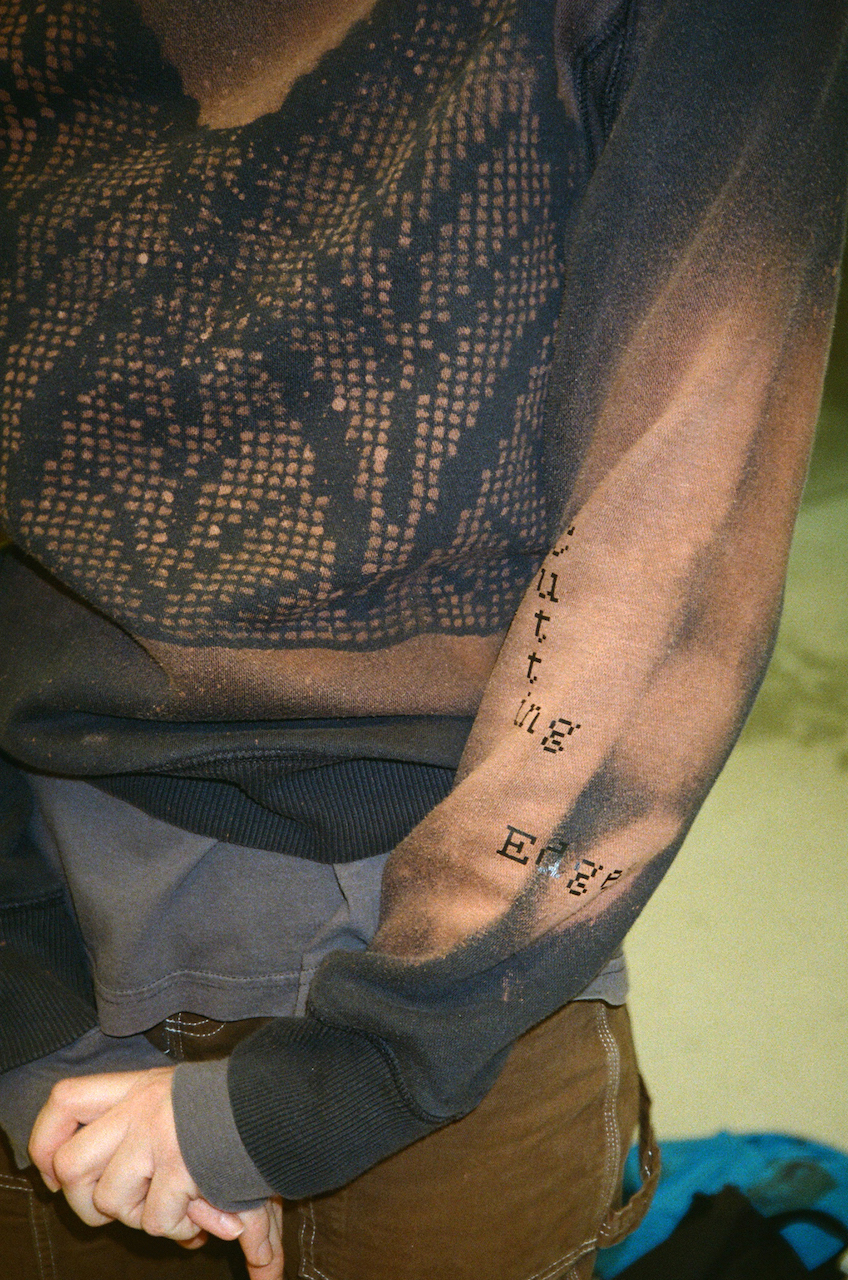
[Sold] Mom Filet Crochet Jersey
By SKHSS (Lejla Vala Verheus and Mika Perlmutter)
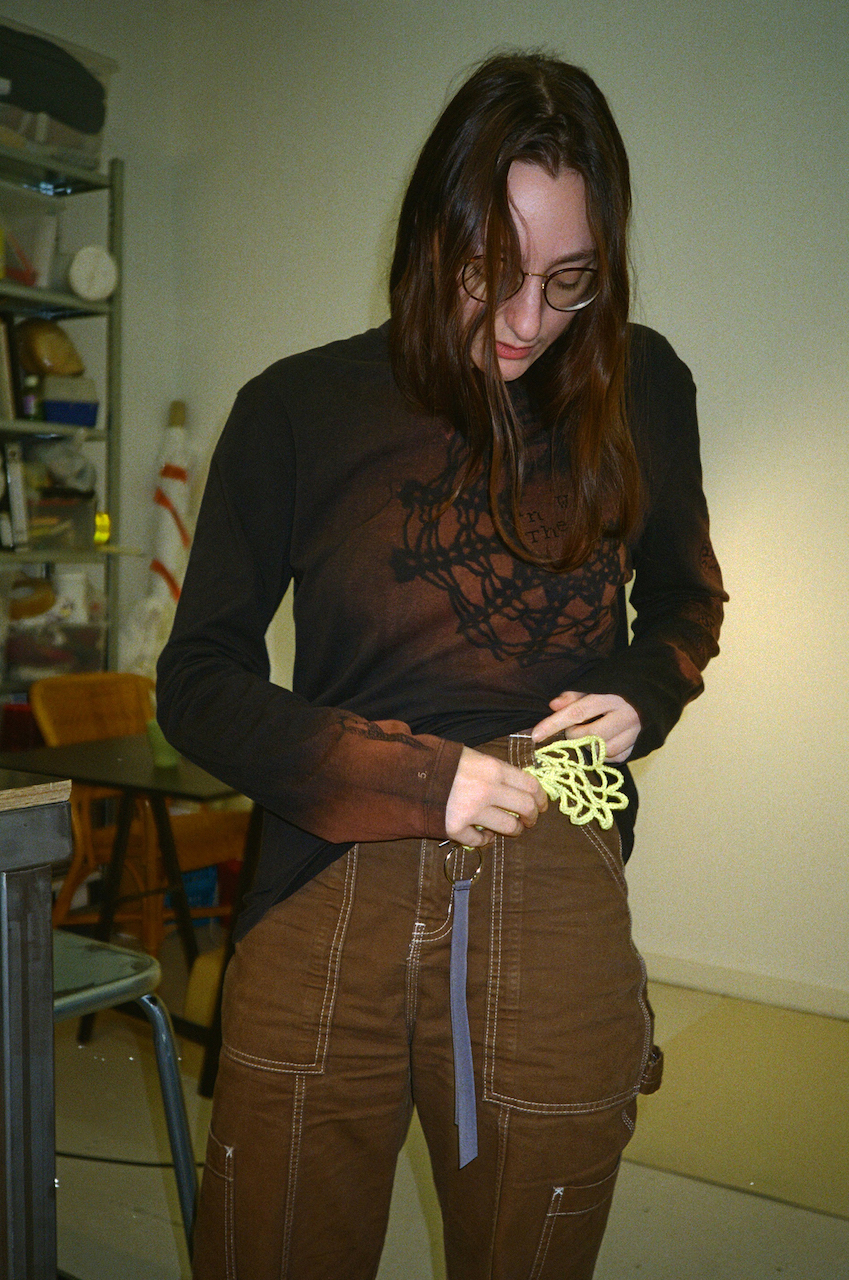
[Sold] In With the Old LS T-shirt
By SKHSS (Lejla Vala Verheus and Mika Perlmutter)
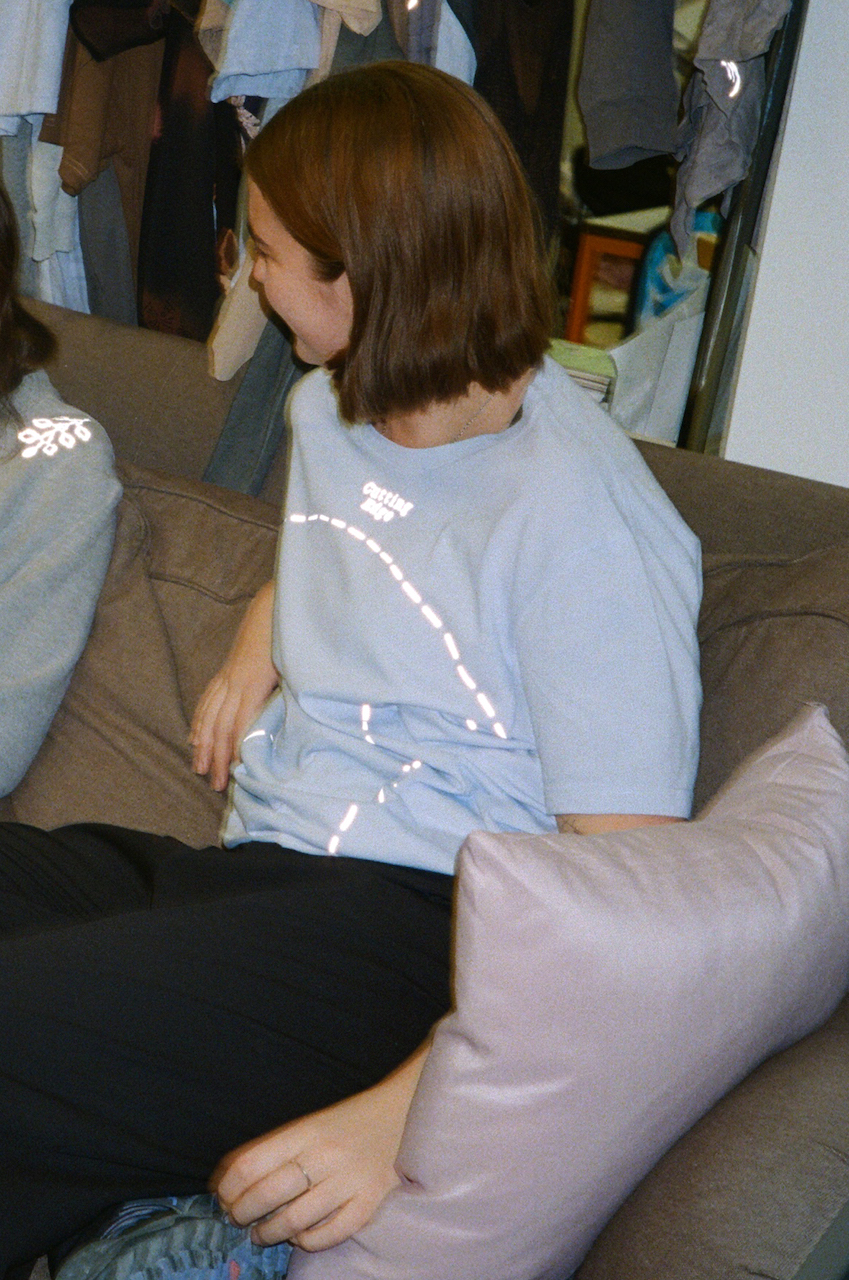
[Sold] Cutting Edge T-shirt
By SKHSS (Lejla Vala Verheus and Mika Perlmutter)
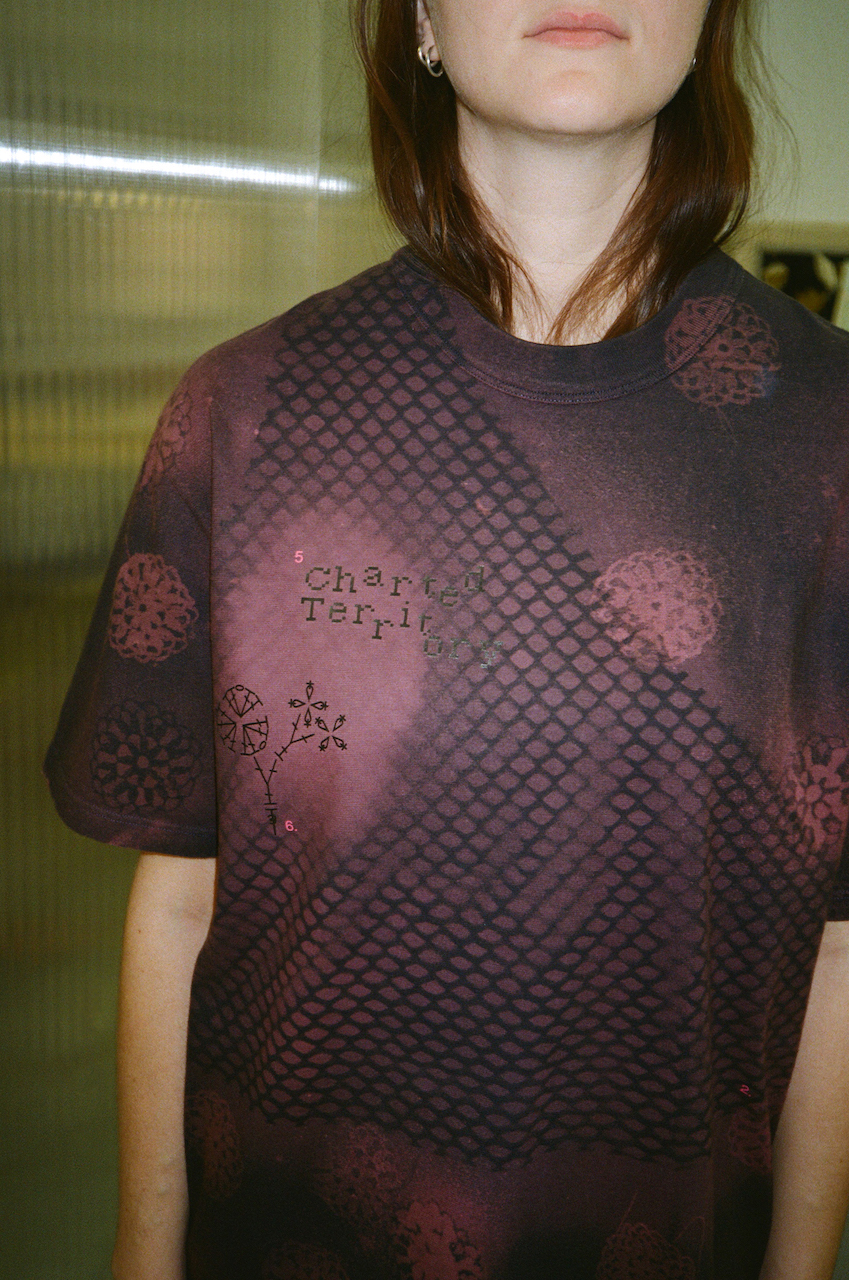
[Sold] Charted Territory Flower Doily T-shirt
By SKHSS (Lejla Vala Verheus and Mika Perlmutter)
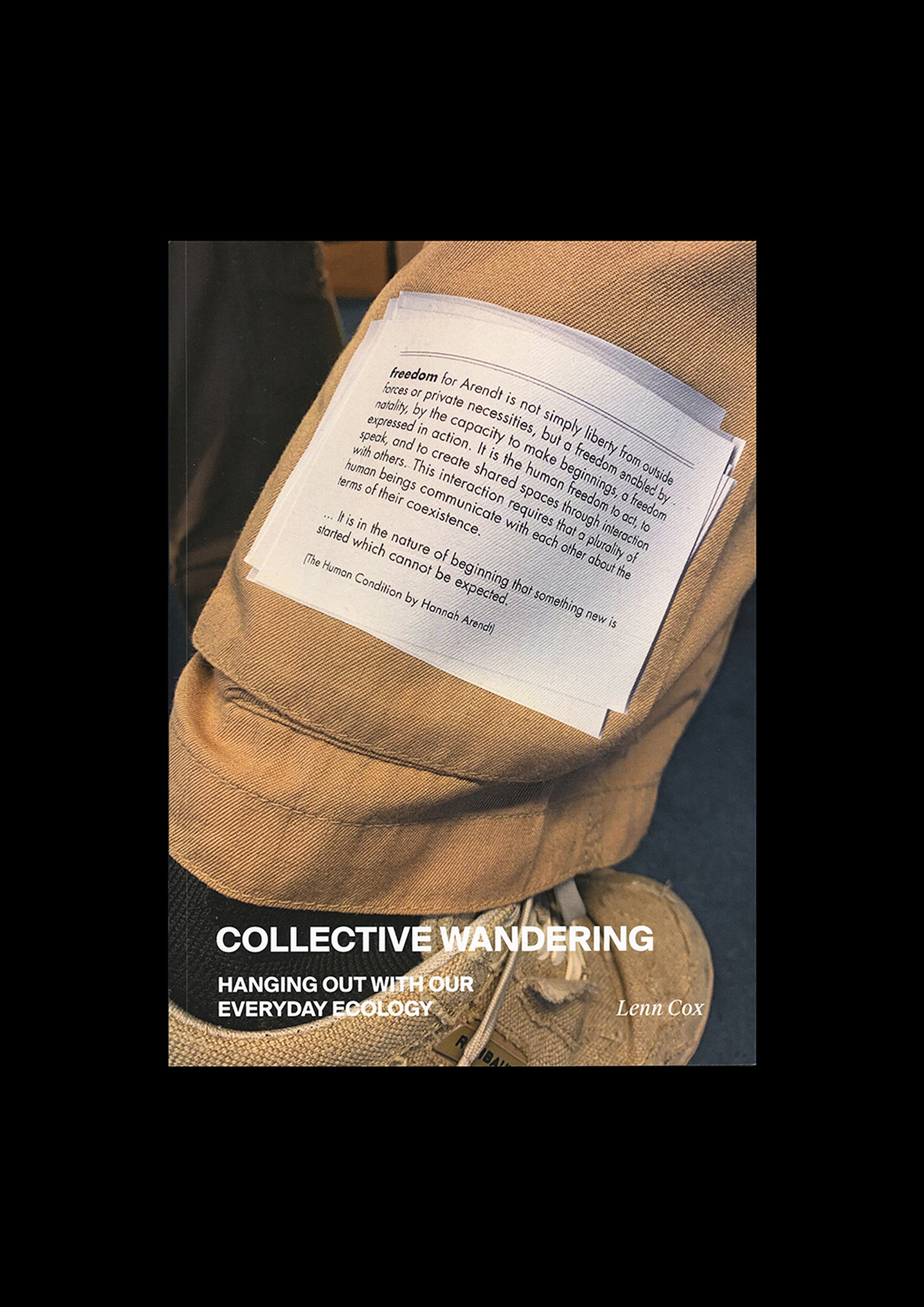
[Sold Out] COLLECTIVE WANDERING | Hanging Out with Our Everyday Ecology
By Lenn Cox (ed.)
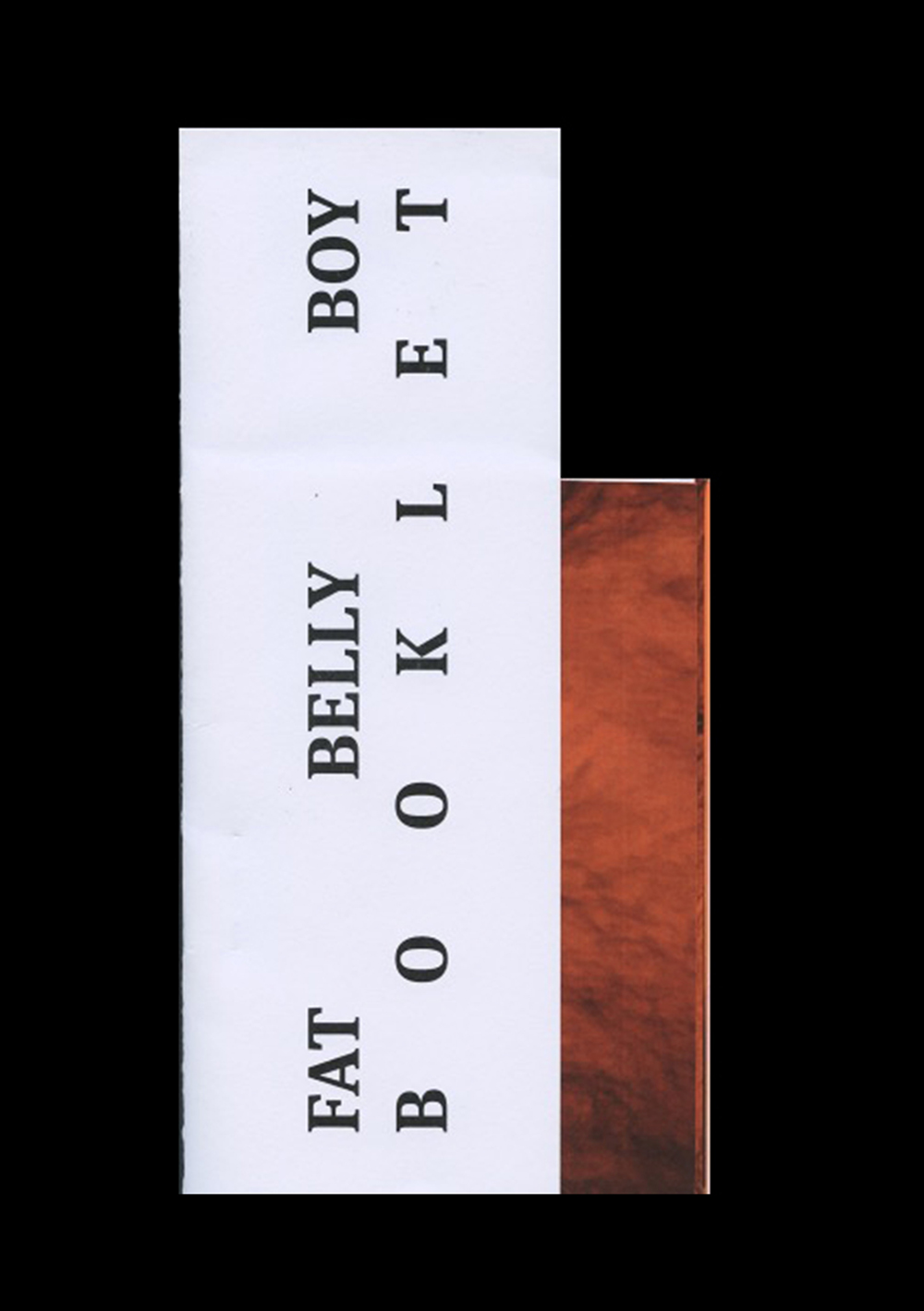
[Sold Out] Fat Belly Boy Booklet
By Chet Bugter
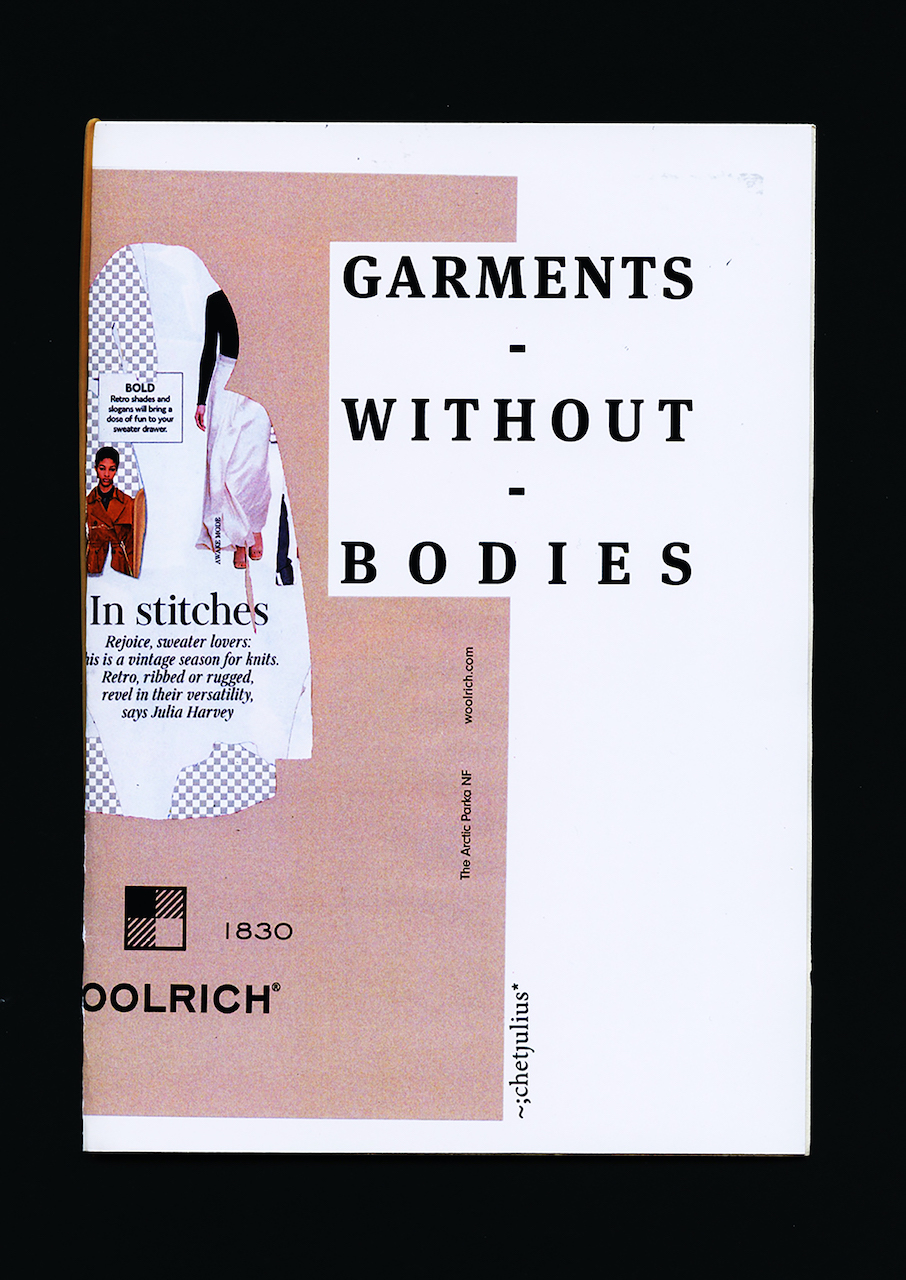
[Sold Out] Garments Without Bodies
By Chet Bugter
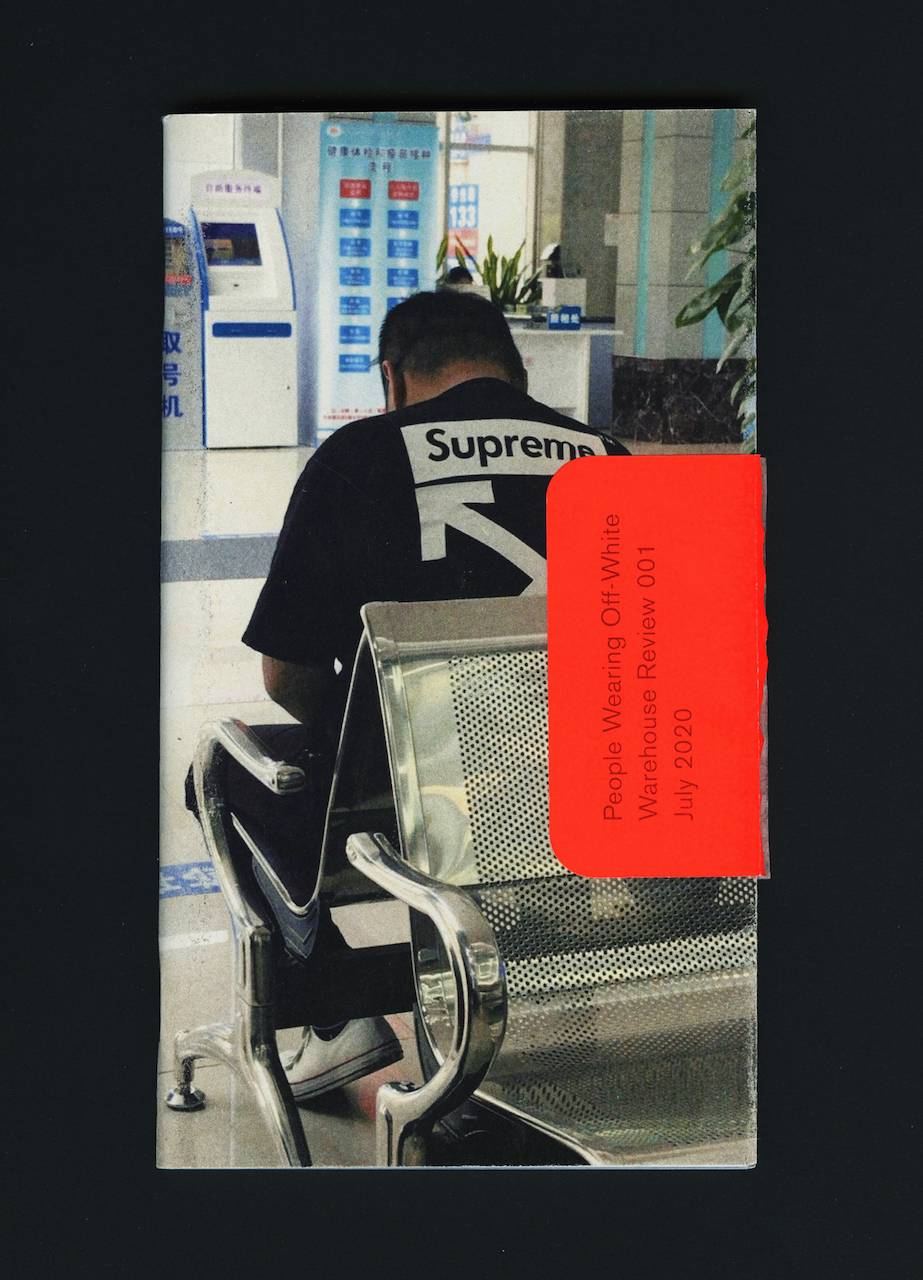
[Sold Out] Warehouse Review 001 | People Wearing Off-White
By Hanka van der Voet (ed.)
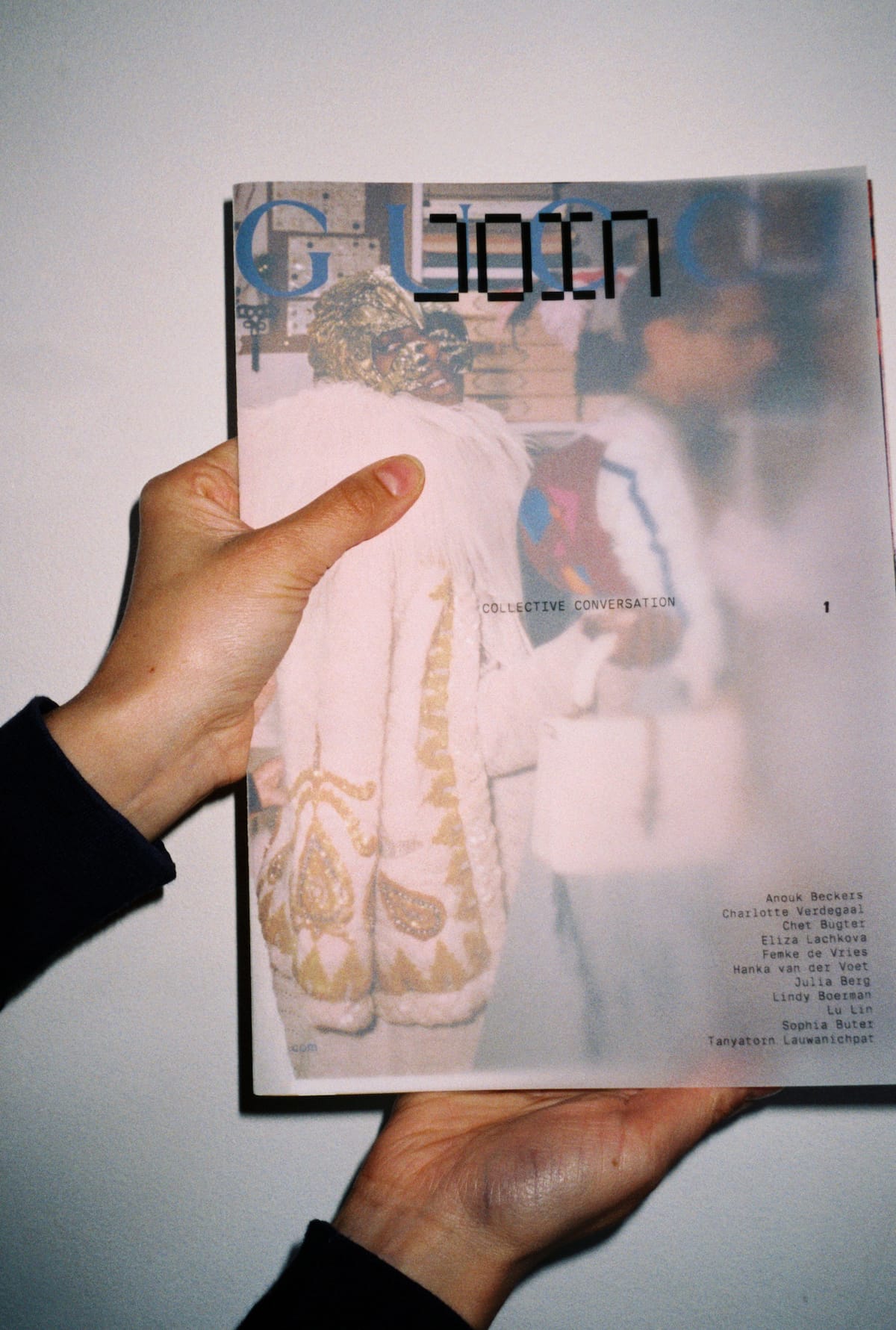
[Sold Out] JOIN Collective Conversation Magazine
By Anouk Beckers, Chet Bugter, Femke de Vries & Hanka van der Voet (eds.)
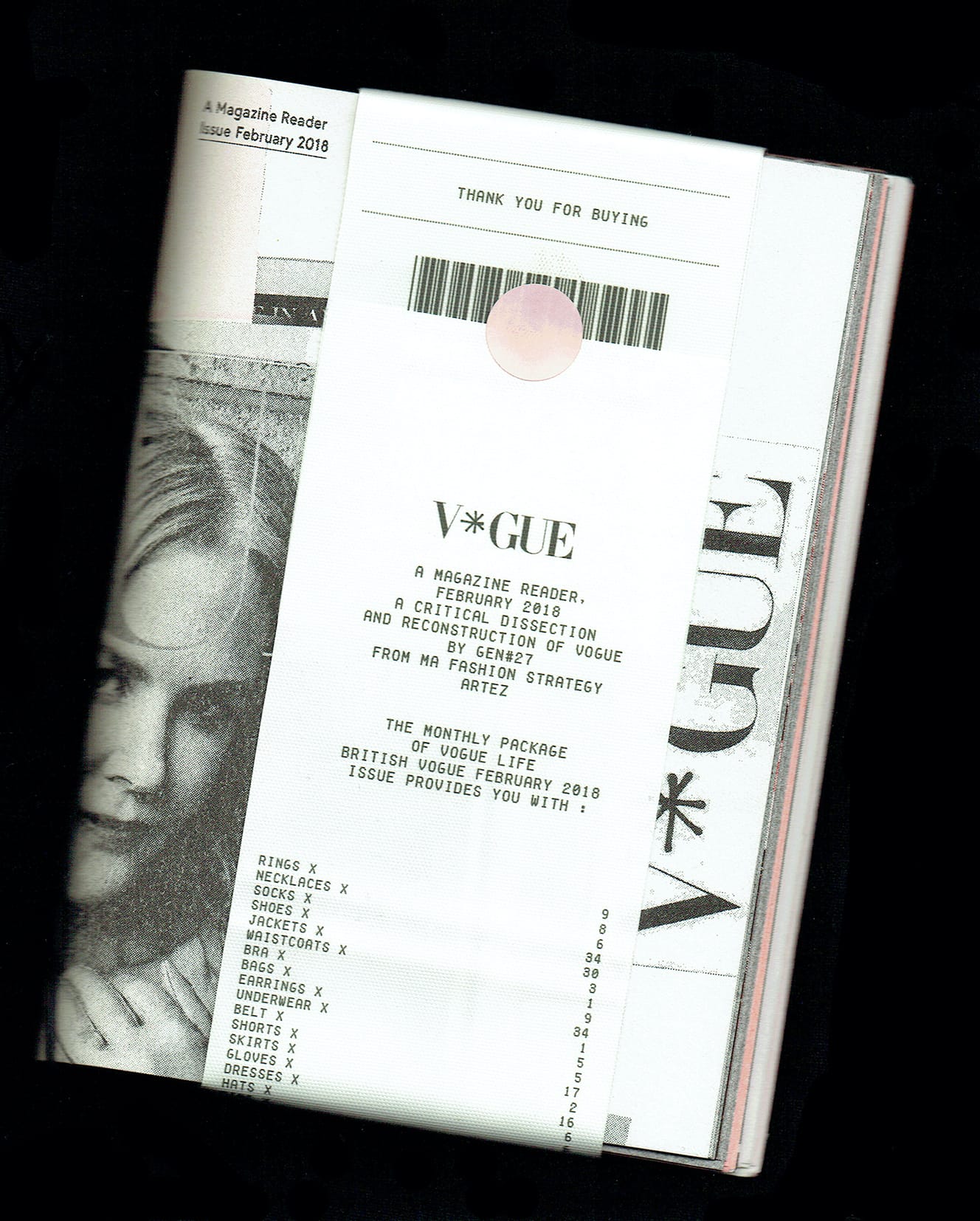
[Sold Out] A Magazine Reader 01
By Femke de Vries and Hanka van der Voet (eds.)
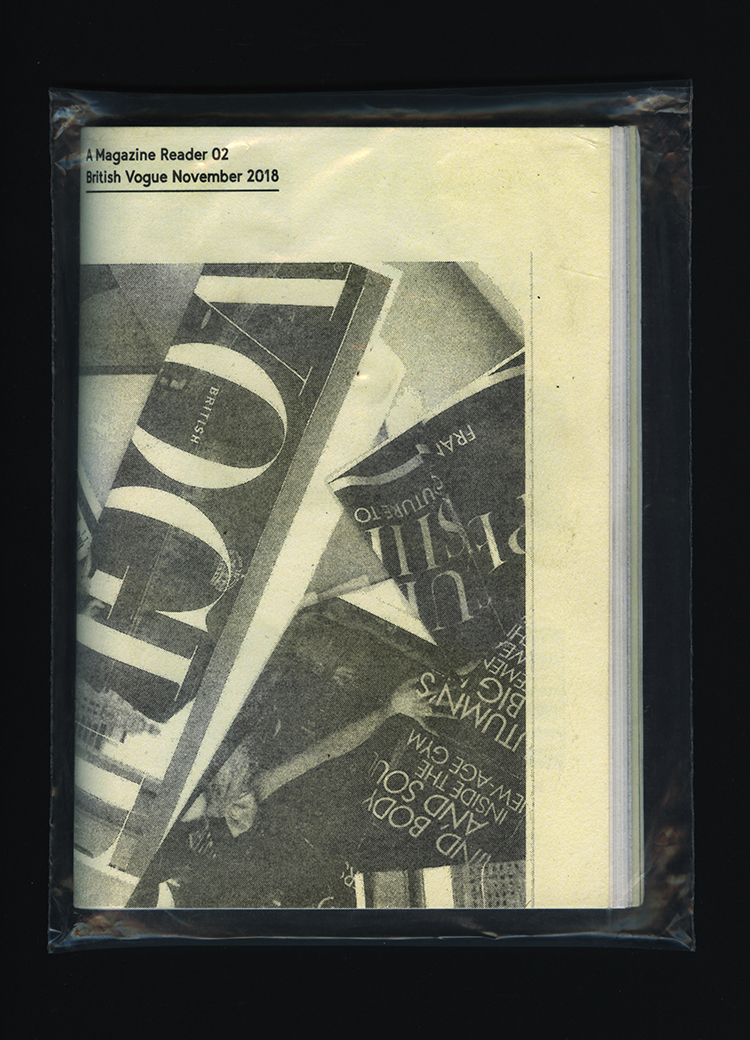
[Sold Out] A Magazine Reader 02
By Femke de Vries, Ruby Hoette & Chet Bugter (eds.)
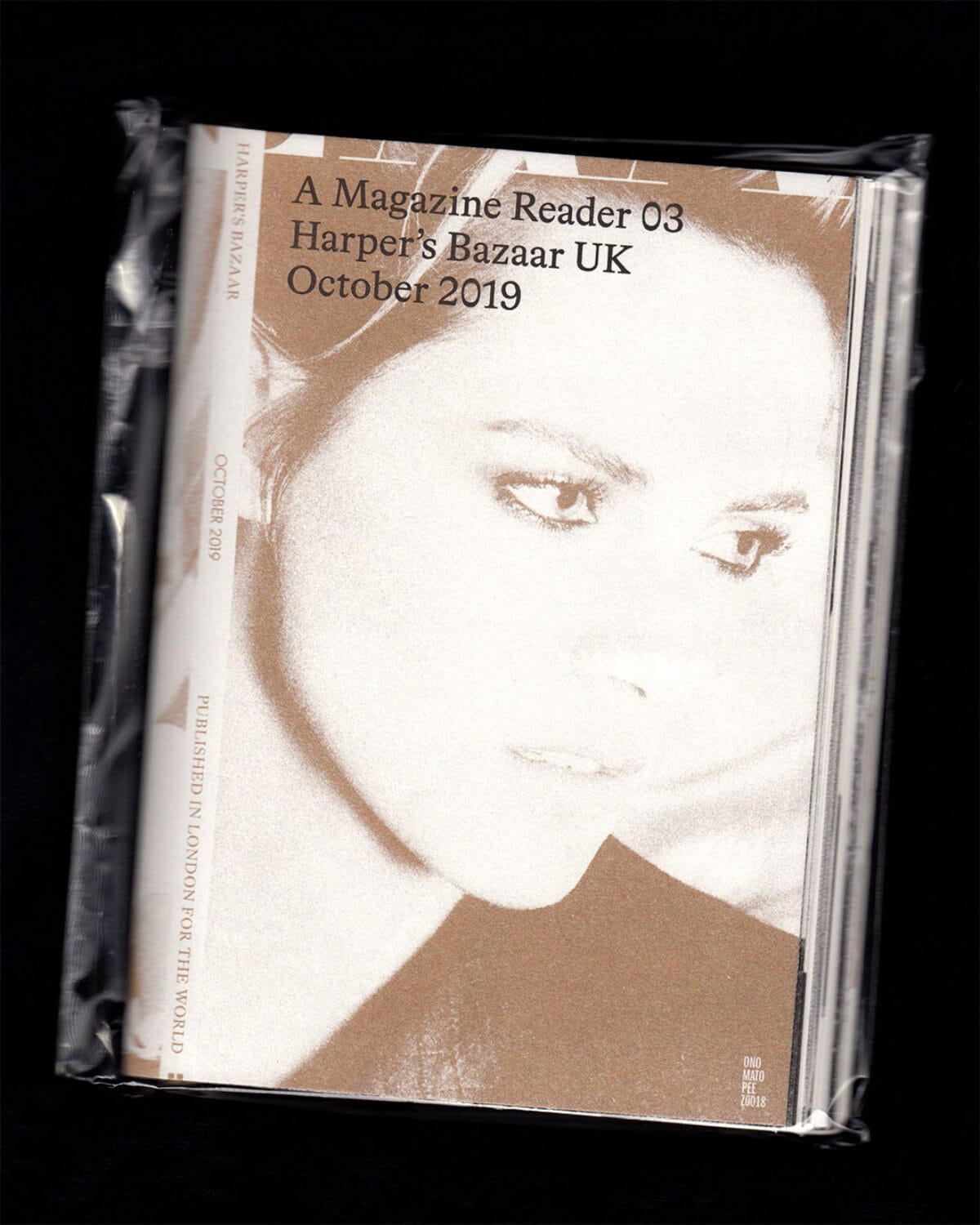
[Sold Out] A Magazine Reader 03
By Femke de Vries & Hanka van der Voet (eds.)
Issue 3: Booklook Speespak - English
Booklook issue 3 folded into jacket and trousers. Photo: Scheltens & Abbenes.
55.05 EUR
This publication is availble in both Engligsh or Dutch. If you are looking for the publication in Dutch, you can order this version here.
Discover how a trouser leg can spark a revolution
For this third issue, with title SpeesBookLookPak, Booklook initiator Anouk Beckers (1990) teams up with artist Iris de Leeuw (1944), who designed the Speespak in 1966. Booklook issue 3 is a two-part publication and unfolds into a jacket (the cover, publication part 1) and a pair of trousers (publication part 2).
The topic discussed in this issue is Speespak, an artwork made by Iris de Leeuw in 1966. It was a ‘playsuit’ for Homo Ludens: the playful human of the future. This modular suit provoked contact and created personal space. The trouser legs can be swapped with other players.
The text on the jacket, with title SpeesBookLookPak, is written by Anouk Beckers and Iris de Leeuw. It’s a conversation and correspondence between Anouk and Iris and affords an intergenerational glimpse of their activism and reclamation of space as artists and women.
The trousers share the chronicle in 14 modules Speespak: From Attic to Rijksmuseum, written by Rijksmuseum curator Harm Stevens (1969). The text describes the political, cultural, artistic and personal context in which the Speespak originated as a product of the Maastricht (NL) artist collective Luuks. Below you can read two fragments from Harm Stevens’ text.
This publication publishes the patterns of the iconic Speespak ’66 as an invitation to make the suit yourself. This Booklook edition also launches the Speespak ’66 into the present. Unfolded, SpeesBookLookPak becomes a pattern for the jacket and trousers of the brand-new Speespak ’26. To present us, through play, with an alternative future.
With 'an introduction to the playsuit of the future' by Tony Sudiono.
Graphic design by Anouk Beckers, Iris de Leeuw in close collaboration with Chen Jhen.
This publication is screenprinted on Offset paper, 80 g/m2
This issue includes an extra set of full-color stickers for the screenprinted images.
Published in a limited edition of 300 copies
NL (100 copies)
ENG (200 copies)
Dimensions publication, jacket (folded): 21 x 30 cm
Dimensions publication, trousers (folded): 17 x 30 cm
Dimensions publication, jacket and trousers(unfolded): 85 x 120 cm
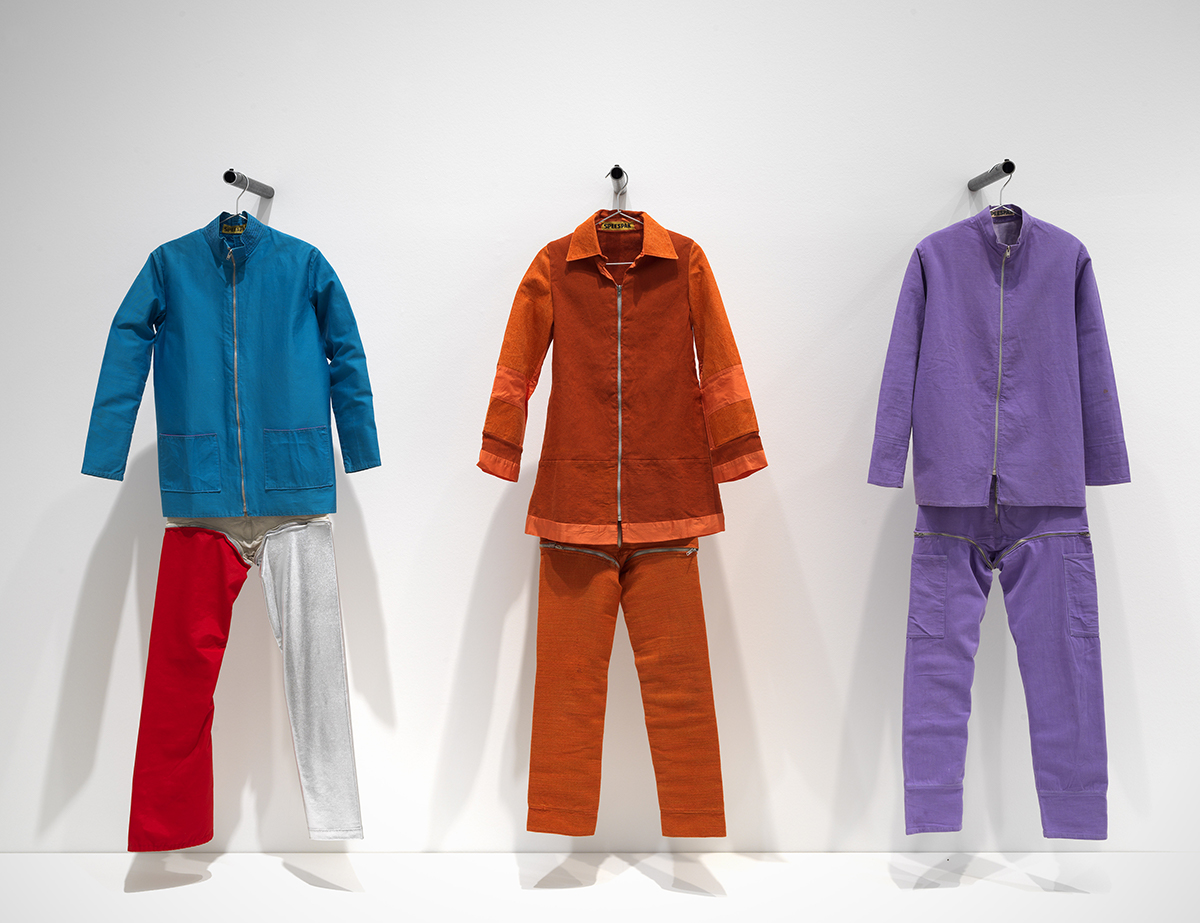
Speespakken 1966 at the exhibition Amsterdam Magic Centre-Art and Counterculture 1967-1970, Stedelijk Museum Amsterdam, 2018. Photo: Gert-Jan van Rooij.
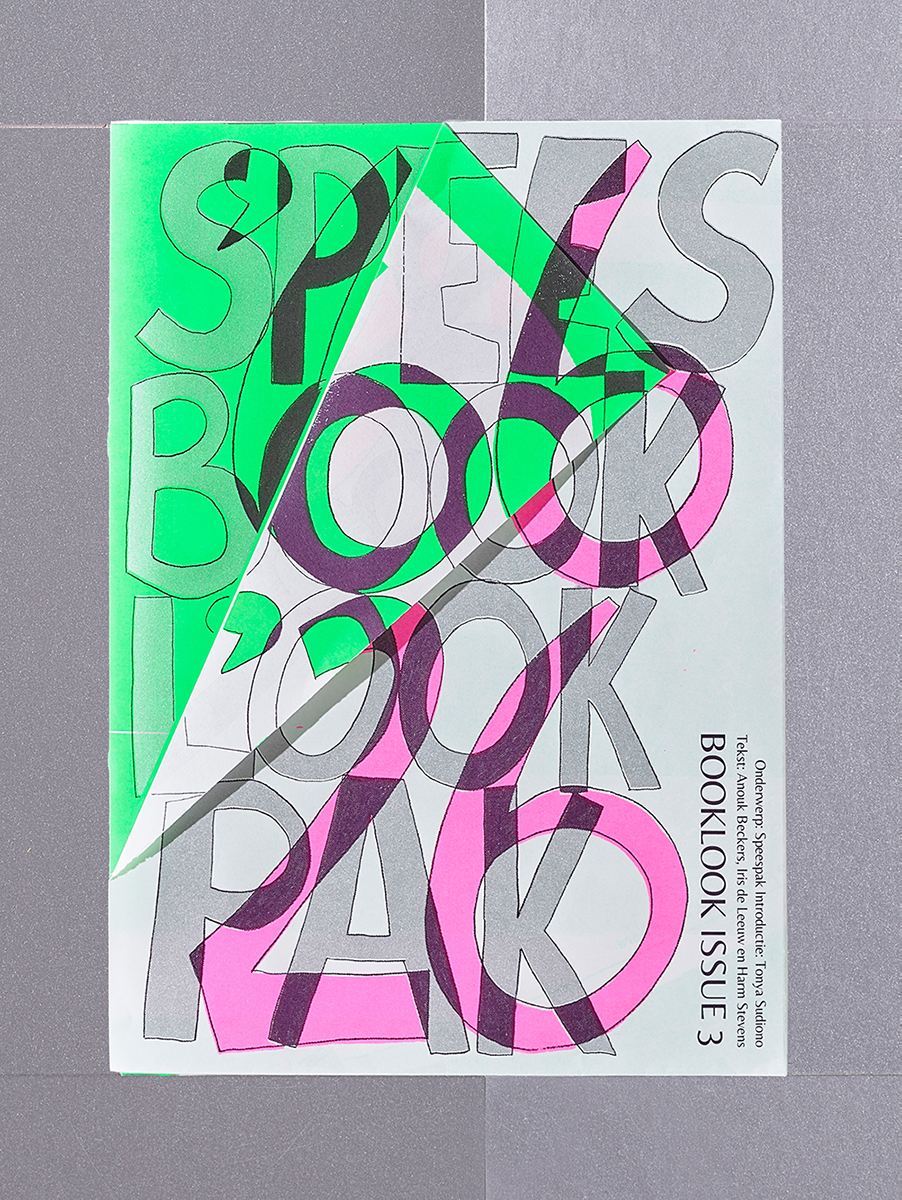
Booklook issue 3: the jacket folded into the cover, publication part 1. Photo: Scheltens & Abbenes.
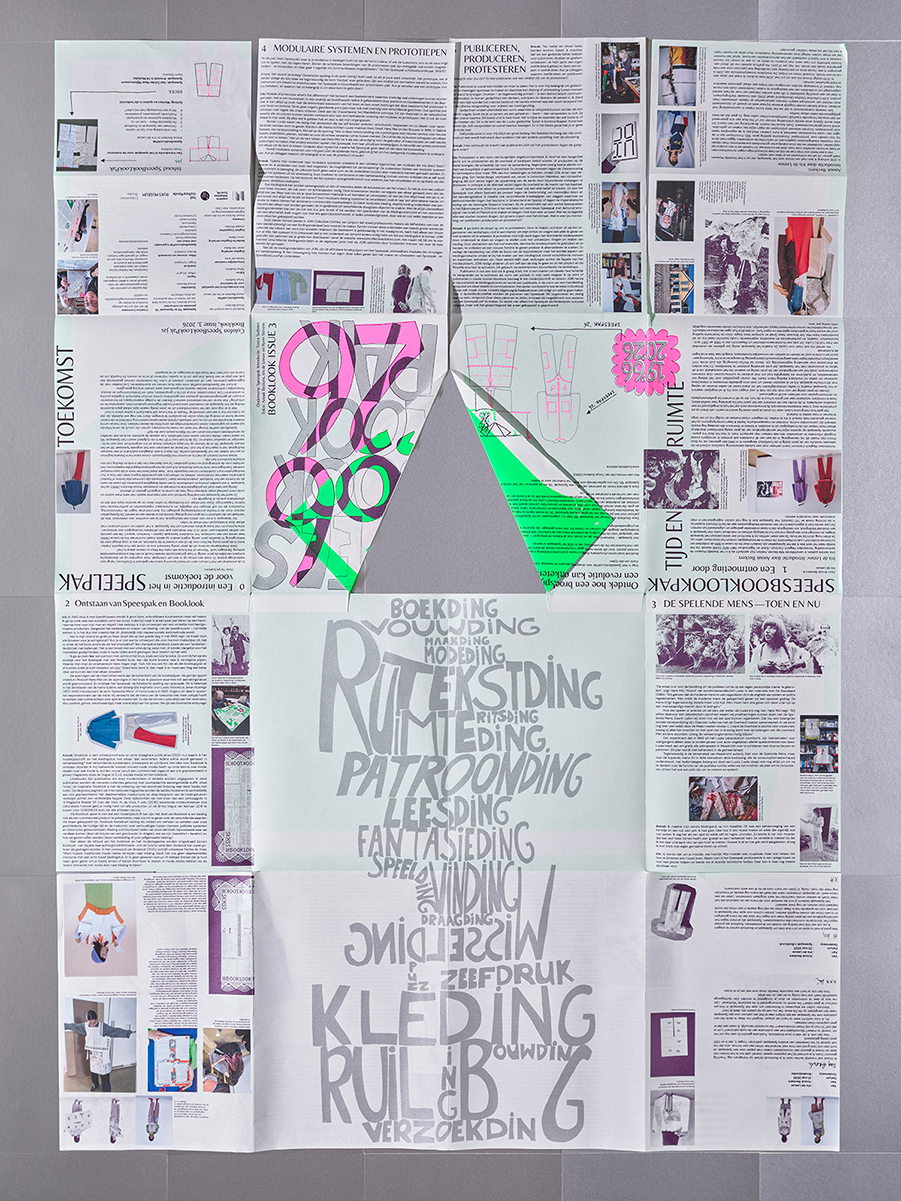
Booklook issue 3: the cover, publication part 1 unfolded with text by Anouk Beckers and Iris de Leeuw. Photo: Scheltens & Abbenes.
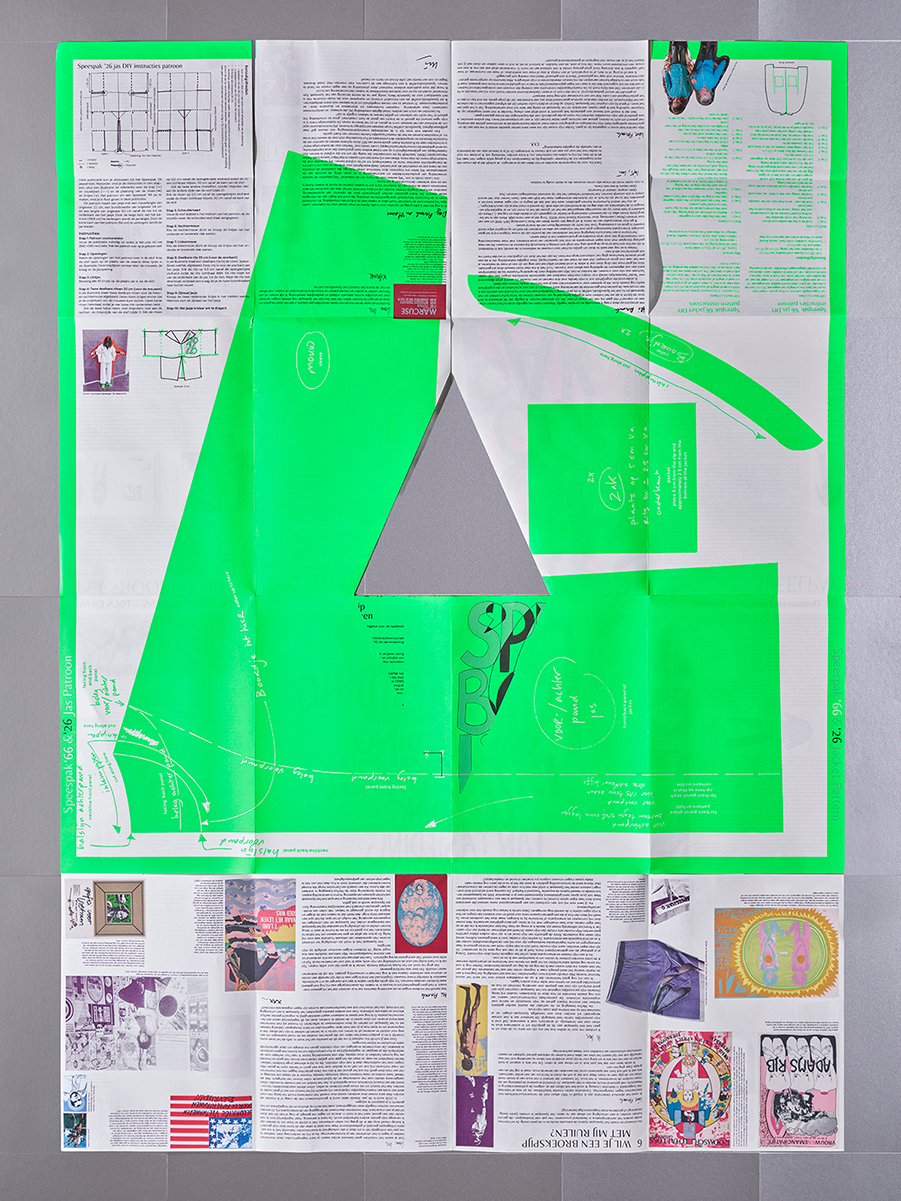
Booklook issue 3: the cover, publication part 1 unfolded with text by Anouk Beckers and Iris de Leeuw, Speespak '66 jacket pattern in fluor green. Photo: Scheltens & Abbenes. Photo: Scheltens & Abbenes.
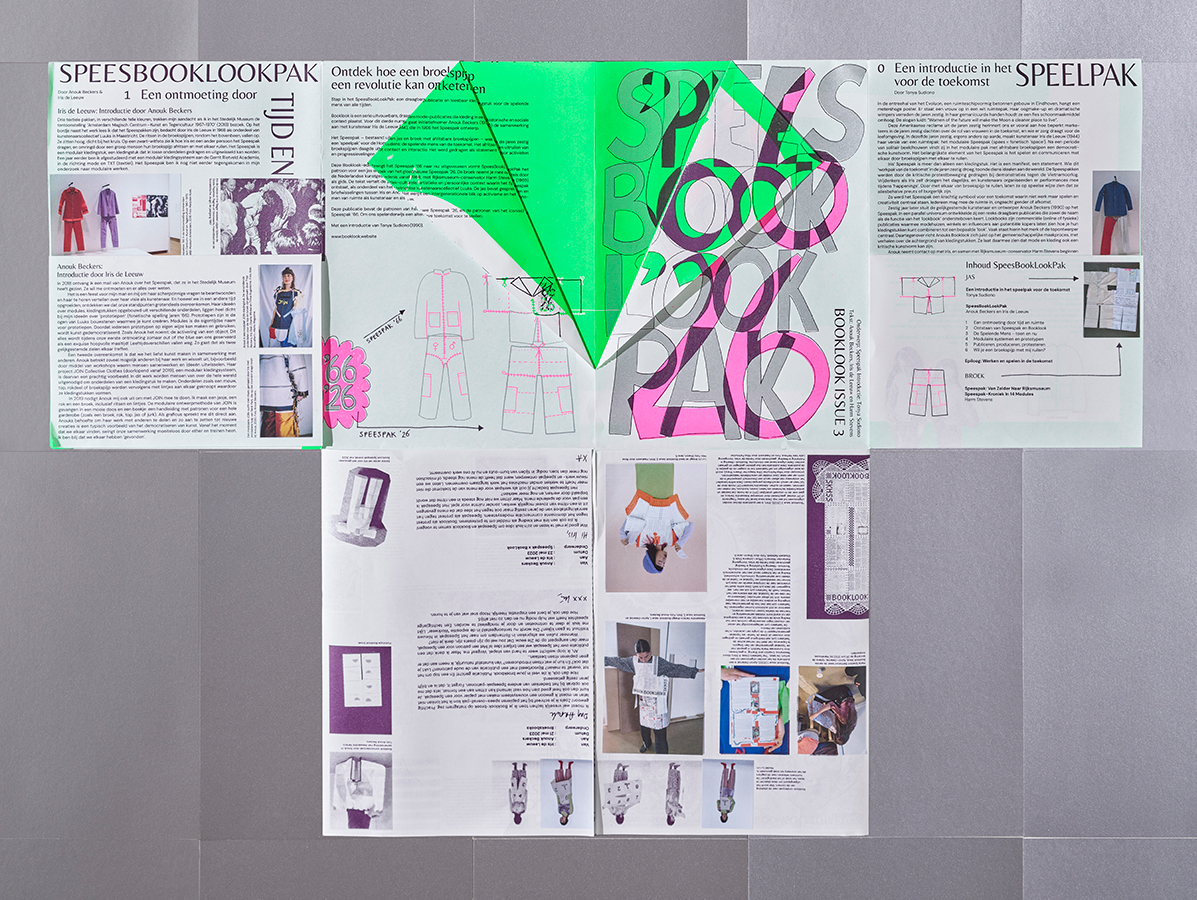
Booklook issue 3: the cover, publication part 1 folded into jacket Speespak '26. Photo: Scheltens & Abbenes.
Booklook issue 3: the trousers, publication part 2 folded. Photo: Scheltens & Abbenes.
Fragment from Chronicle SPEESPAK: FROM ATTIC TO RIJKSMUSEUM
By Harm Stevens, Curator History Department, Rijksmuseum
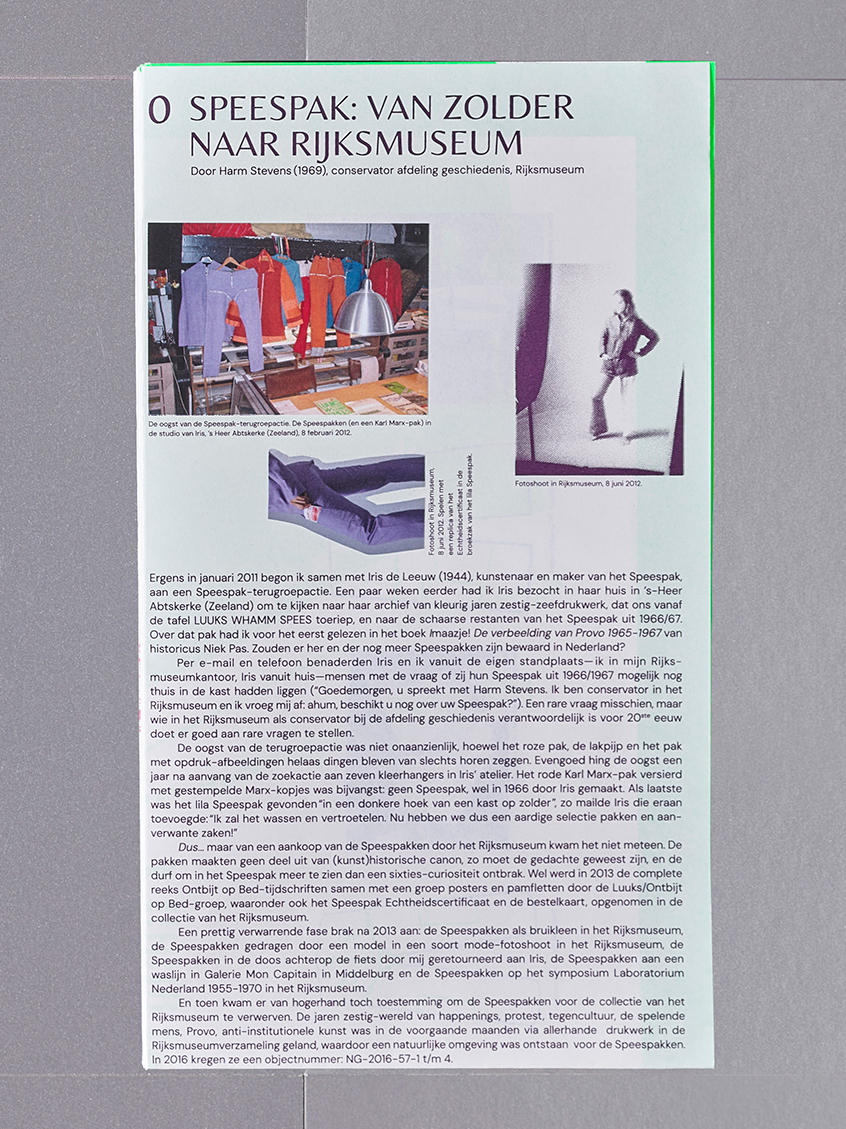
One day in January 2011, I embarked on a Speespak (Spacesuit) recall campaign together with artist Iris de Leeuw (1944), the maker of the Speespak. A few weeks earlier, I had visited Iris at her home in ’s-Heer Abtskerke in the Dutch province of Zeeland to see her archive of colourful sixties’ screen-printing work, which screamed LUUKS WHAMM SPEES at us from the table, and to take a look at the rare remains of the 1966/67 Speespak. I had first read about the Speespak in the book Imaazje! De verbeelding van Provo 1965-1967 (Imaazje! The Imagination of Provo 1965-1967) by historian Niek Pas. Could other Speespakken have been preserved here and there in the Netherlands?
From our own workplaces – I from my office at the Rijksmuseum, Iris from her home – Iris and I approached people by e-mail and telephone to ask whether they perhaps still had their 1966/67 Speespak hanging in their wardrobes (“Good morning, my name is Harm Stevens, I am a curator at the Rijkmuseum and – hum – I was wondering whether you might still have your Speespak?”). An odd question perhaps, but as a curator responsible for the twentieth century at the Rijksmuseum’s History department it does well to ask odd questions.
The yield from the recall initiative was not inconsiderable, although the pink suit, the lakpijp (vinyl leg) and the suit with printed images sadly remained things we still only knew about from hearsay. Nonetheless, a year after the start of the recall appeal, the outcome hung on seven coat hangers in Iris’s studio. The red Karl Marx suit decorated with stamped heads of Karl Marx was a windfall: not a Speespak but nevertheless a garment Iris had made in 1966. The last one to be retrieved was the lilac Speespak that was discovered “in a dark corner of a cupboard in the attic,” Iris mailed, adding: “I will wash it and pamper it. So, we now have a pretty good selection of suits and related objects!”
However, the Rijksmuseum did not commit to purchasing the Speespakken straight away. The initial reaction was no doubt that the suits were not part of the (art)historical canon, and no-one was prepared to stick their neck out and see the Speespak as more than a sixties’ curiosity. In 2013, however, the complete series of Ontbijt op Bed (Breakfast in Bed) magazines along with a group of posters and pamphlets by the Luuks/Ontbijt op Bed group, including the Speespak Echtheidscertificaat (Spacesuit Certificate of Authenticity) and order form, were incorporated into the Rijksmuseum Collection.
A pleasantly eccentric and confusing phase followed, with the Speespakken on loan at the Rijksmuseum, the Speespakken worn by a model in a quasi-photoshoot at the Rijksmuseum, my returning the Speespakken to Iris in their box on the back of my bike, the Speespakken on a washing line in the Mon Capitaine Gallery in Middelburg, and the Speespakken at the Laboratorium Nederland 1955-1970 symposium at the Rijksmuseum.
And then permission was granted from on high to acquire the Speespakken for the Rijksmuseum Collection. In the preceding months, the sixties’ world of happenings, protests, counterculture, homo ludens, Provo, and anti-institutional art had found its way into the Rijksmuseum Collection via all manner of printed matter, creating a natural context for the Speespakken. In 2016 they were assigned an object number: NG-2016-57-1 t/m 4.
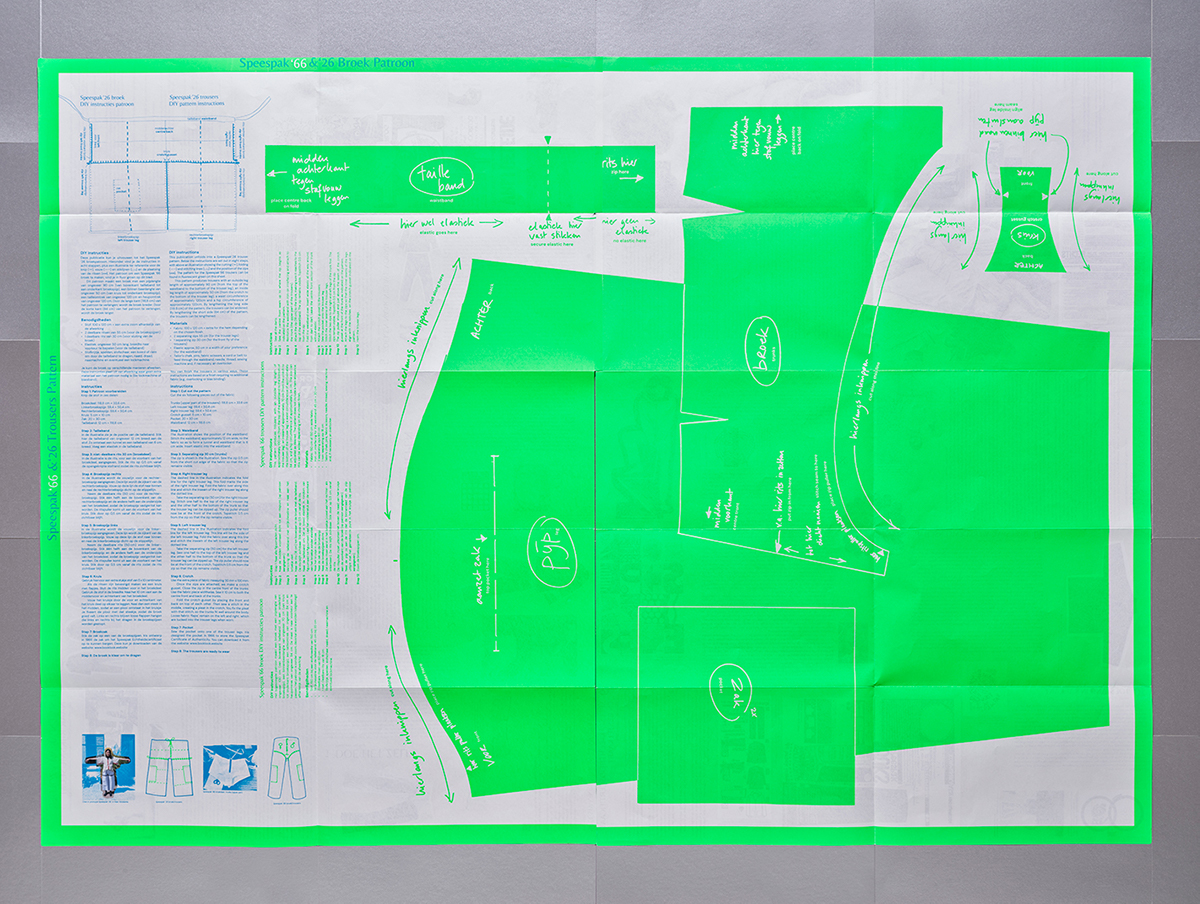
Booklook issue 3: the trousers, publication part 2 unfolded Speespak '66 trousers pattern in fluor green. Photo: Scheltens & Abbenes. Photo: Scheltens & Abbenes.
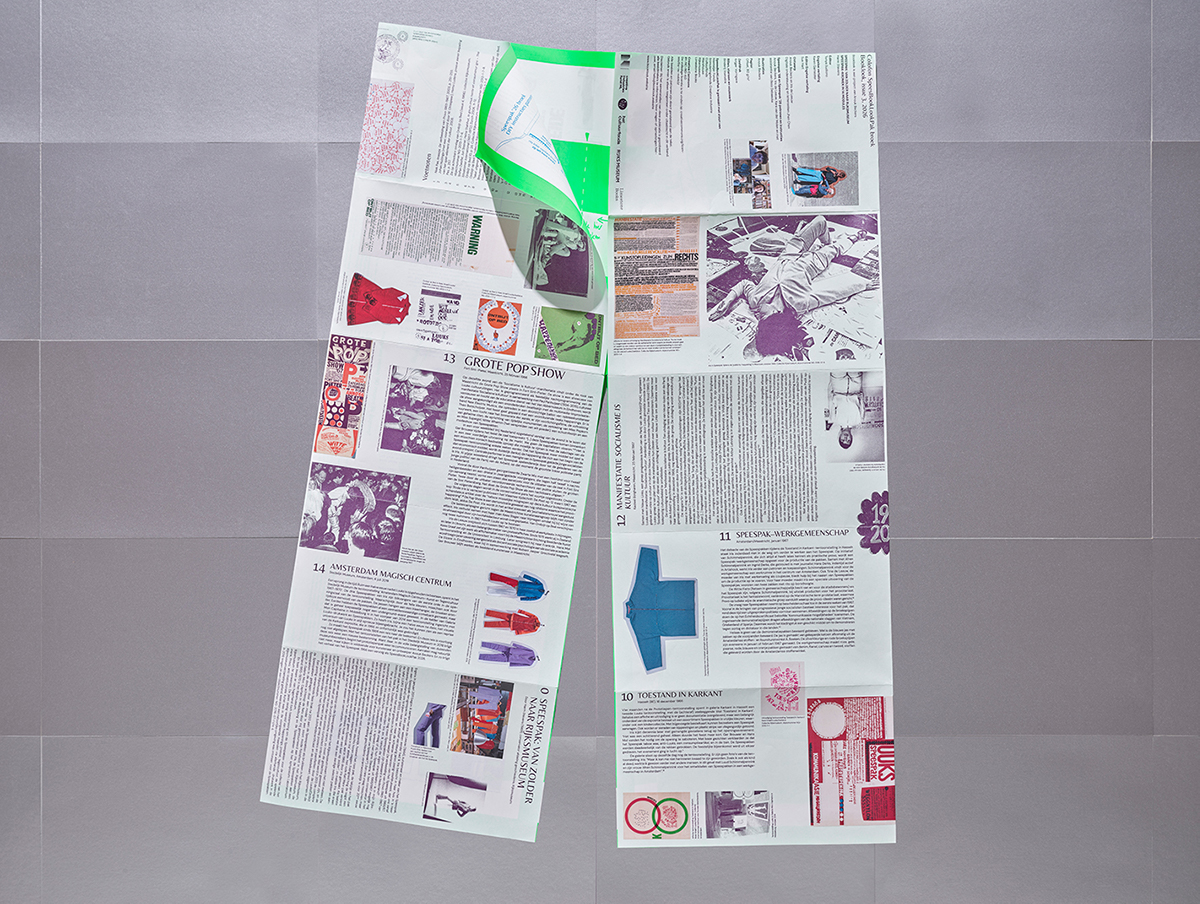
Booklook issue 3: publication part 2 folded into trousers Speespak '26. Photo: Scheltens & Abbenes.
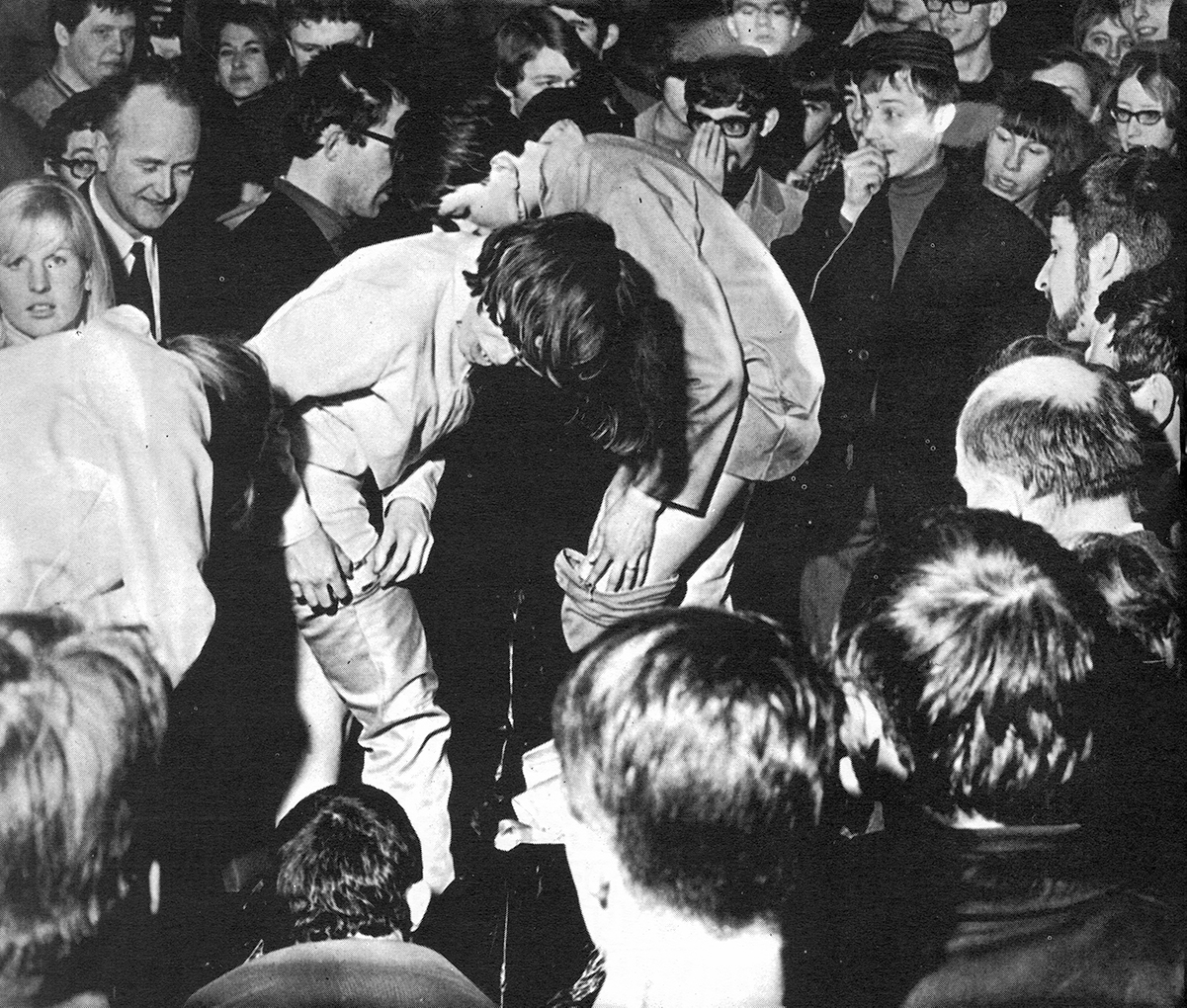
Iris de Leeuw and Ina van der Zwan swap trouser legs during the Great Pop Show. Page from Voorwaarts. Maandblad van de Socialistische Jeugd, vol 4, 1967.
Module 2. THE FIRST SPEESPAK
Maastricht, June 1966
The earliest surviving complete Speespak, a jacket and trousers ensemble, is made in June 1966, mainly from orange curtaining, with silk-trimmed hems. The jacket has a cotton label screen-printed with the word Speespak, which becomes its trademark. The name Speespak is the outcome of discussions within the playful ‘laboratory’ of the Luuks artists collective (1966-1967) (the phonetically spelled Dutch word luxe meaning ‘luxury’), to which Hans Mol (1938-2019), Ger Brouwer (1938), Kees Graaf, Iris de Leeuw and – indirectly - Kees Slager belong. Mol, Brouwer and Graaf know one another from the Maastricht art scene around Artishock, an independent foundation for fine artists from which they had broken away in 1965 under the name Space Group.1
The Speespak is the prototiep (protoype) of a future garment with which they experiment. It is a leisure suit with unzippable components, designed for adaptation and for play. It is a suit for homo ludens, Latin for man at play. This cultural phenomenon is the brainchild of the Dutch historian Johan Huizinga (1872-1945) who in his study Homo Ludens. Proeve eener bepaling van het spel-element der cultuur (Homo Ludens. Attempt to define the play element of culture, 1938) postulates the idea of play as the primary creative force.2
Space travel and Space Age aesthetics are an inspiring prospect for modern designers and popular culture in the mid-sixties. Playing with language is also popular in 1966, and written phonetically in Dutch, the English word ‘space’ is spelled spees and ‘spacesuit’ Speespak. The garment is designed to renew the stifling space between people. It is not a fashion product nor a consumer item, but workwear for the playful man/woman of the future, who according to Luuks exists in 1966.
1.
Niek Pas, Imaazje. De verbeelding van Provo 1965-1967, 2003, pp. 251-255.
2. Johan Huizinga (with a foreword by W. Ottespeer), Homo Ludens, proeve eener bepaling van het spel-element der cultuur, 2008.